Concerning Salt and Substances Comprehended Under Salt
Listen Audio Book Study the Art with Us Buy me CoffeeConcerning Salt and Substances Comprehended Under Salt
THE
HERMETIC AND ALCHEMICAL
WRITINGS
OF
AUREOLUS PHILIPPUS THEOPHRASTUS BOMBAST,
OF HOHENHEIM, CALLED
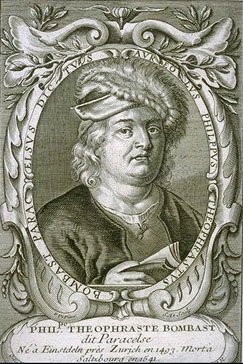
PARACELSUS THE GREAT.
NOW FOR THE FIRST TIME FAITHFULLY TRANSLATED INTO ENGLISH.
EDITED WITH A BIOGRAPHICAL PREFACE, ELUCIDATORY NOTES, A COPIOUS HERMETIC
VOCABULARY, AND INDEX,
By ARTHUR EDWARD WAITE.
IN TWO VOLUMES.
VOL. I.
HERMETIC CHEMISTRY.
London :
JAMES ELLIOTT AND CO.,
TEMPLE CHAMBERS, FALCON COURT, FLEET STREET, E.C.
1894
APPENDIX II,
[The alchemical importance which attaches to a proper conception of the four so-called elementary substances is explained in a note appended to the Philosophy of Paracelsus Concerning the Generation of Elements. The origin, nature, and operation of the three prime principles are, however, of no less moment. As these principles are evidently to be distinguished from salt, sulphur, and mercury of the vulgar kind, it is requisite to accentuate the distinction by contrasting at some length the references to the principles which are contained in the text of the present volume with the knowledge exhibited by Paracelsus on the subject of ordinary salt, sulphur, and mercury. The treatise concerning the first of these substances, which has been here selected for translation, is derived from a collection entitled De Naturalibus Rebus, which will be found in the second volume of the Geneva folio.]
CONCERNING SALT AND SUBSTANCES COMPREHENDED UNDER SALT.
GOD has driven and reduced man to such a pitch of necessity and want that he is unable in any way to live without salt, but has most urgent need thereof for his food and eatables. This is man’s need and condition of compulsion. The causes of this compulsion I will briefly explain.
Man consists of three things: sulphur, mercury, and salt. Of these consists also whatever anywhere exists, and of neither more nor fewer constituents. These are the body of every single thing, whether endowed with sense or deprived thereof. Now, since man is divided into species, he is therefore subject to decay, nor can he escape it except in so far as God has endowed him with a congenital balsam which also itself consists of three ingredients. This is salt, preserving man from decay; where salt is deficient, there that part which is without salt decays. For as the flesh of cattle which is salted is made free from decay, so also salt as naturally infused into us by God preserves our body from putrefaction. Let that theory stand, then, that man consists of three bodies, and that one of these is salt, as the conservative element which prevents the body born with it from decaying. As, therefore, all created things, all substances, consist of these three, it is necessary that they should be sustained and conserved by their nutriments each according to its kind. Hence, also, it is necessary that all growths of the earth should gather their nutriment from those three things of which they consist. If they do not, it is inevitable that these first creatures perish and die in their three species. These nutriments are earth and rain, that is, liquid. Herein there are threefold nutriments. In sulphur is its own sulphur, in mercury its own mercury, and in salt its own salt. Nature contains all these things in one. So from this liquid, which is the nutriment of natural things, natural salt is decocted.
Hence by parity of reasoning it is clear that man himself also must be nourished in the same way: that is to say, that his sulphur must receive nutrimental sulphur, mercury its nutrimental mercury, and the congenital salt its nutrimental salt, whereby, from these three, man may be sustained and conserved in his species. ‘Whatever burns is sulphur, whatever is humid is mercury, and that which is the balsam of these two is salt.’ Hereupon depends the diversity of human aliments. Man has need of ardent foods for the sustentation of his sulphur; he wants moist foods for keeping up his supply of mercury, and eats salt to cherish his nature of salt. If this order be violated, that species in the body perishes, whichever species is neglected; and when one part perishes the rest perish with it. This order must be kept in due series. The Academics know nothing of this philosophy, a fact not be wondered at, since in other matters they neither know nor can do anything.
Now, all the world over, there are ardent foods such as flesh-meat, fish, bread, etc. So there are humid foods, as springs, flowing streams, seas. In like manner, there is salt everywhere. These things are distributed over the whole world, so that everywhere the supply of them is ready to hand.
Now, with regard to the nature of man, the following should be accepted. The reason man desires food is on account of his sulphur. Why he needs drink, whether it be water or wine, is on account of the mercury; and the reason of his desiring salt is on account of his salt in himself. Those facts are little known, but nevertheless nature does crave for these things. And this is not the case with men only; but animals, too, become fatter, stronger, more useful, and more healthy with salt than without it. If the due quantity of salt be not supplied, some defect arises in one of the two species, so that the animal decays and dies. Its nature is no longer supported by those necessary aliments which it requires. The condition of man is similar. Without nutriments of this kind he cannot live. The appetite of the nature with which he is born requires some satisfaction proportioned to his need. It is reported, indeed, that in certain newly-discovered islands men prepare no food cooked with salt, nor supply such food to their animals, but it is quite certain that their own nature and that of their cattle needs the salt water of the sea, and that they have cooked their food mixed with this. Nature never rests at ease, but constantly catches at and seeks for that which its necessity and use require, and thus compels cattle, not to mention man, to lick salted things.
For ourselves, custom and necessity alike prescribe that we eat salt in our food. Such an ordinance is natural and prudent. In this way three nutriments meet; that is to say, salt and food in one, and with these a third, namely, drink. By these nature is nourished and sustained.
I have said of salt that it is the natural balsam of the living body. That is, so long as the body lives, so long the aforesaid salt is its balsam against putridity. By this balsam the whole body of man, as well as that of other creatures, is kept and conserved. But if there accrue to man any decay or if I may so term it any cadaverousness, as in the disease called Persian fire, the reason is that. Now, if everything in creation is to be dissolved, it is clear that even the very balsam itself contains the elements of dissolution, and when once this dissolution begins, its strength and power increase. If the balsam is dissolved or corrupted (and the various modes in which this may take place are given in my Theory of Medicine), then forthwith corruption and decay begin, according to the mode in which the salt has been corrupted. If the salt has not undergone corruption, then neither the external nor the internal body of man decays. Hence we must conclude that salt is like a balsam in man; and that the natural salt which man eats is his food and aliment. I have discussed the subject of salt at some length, for the sake of securing fuller intelligence of the matter. Putting aside, therefore, the idea of a natural balsam, I would point out, moreover, concerning the salt in food, how it is an aliment, and with what gifts it is endowed by God, both for preserving the health of men and for warding off many diseases. But since nothing is so good as not to have some evil combined with it, it remains for us to recount the evil there is in salt, so that in this way the good and evil may be conjoined, and the one separated from the other. The nature and condition of salt are very remarkable. If salt can preserve the dead body or corpse, much more will it preserve the live flesh. If by its power and efficacy salt preserves the dead body from worms, much more the living body, and for this reason, that it is not only an aliment, but a necessary food and a medicine useful for old and young alike. Salt must be supplied to all.
But there are three kinds of salt. There is sea salt, which is salt of itself, not salted by others. As wine differs from water, so the sea in its nature differs from other waters. Other waters are sweet; this is salt. Secondly, there are some springs which are sweet yet salt at the same time. These have a special nature, insomuch as they have that nature not in common with the sea, but of themselves contain a different kind of salt. Thirdly, there are also mineral salts, with the appearance of a stone, of a different kind from other metals or minerals. The best salt is from springs. Next comes that from minerals. The harder it is the better. Then there is sea salt. And as salt is divided into many kinds, so also is it sundered into many and various properties distinct from one another. As to the way in which salt is prepared, there is no need to discuss that subject here, since it is clear enough. Neither is this the place to describe how it grows.
That topic belongs rather to the Book on the Generation of Minerals. My intention is to enlarge upon the virtues and vices of salt. In this case there is no need to speak of sea-salt. Whatever is written about white salt applies also to sea salt. Of rock salt not decocted again it is not treated here so much as of salt which has been so decocted. All salt, which is prepared either from water, or out of a saline and mineral, preserves the common order and virtue of salt; for the strongest foundation is in liquid. Sea-salt and rock-salt do not become liquid. But salt which is decocted passes into a liquid before it is separated from the water into coagulated salt. The description of salt, then, is twofold. One is that of salt from liquid; the other of salt which is entire and definite.
It should be known at the outset that this is the nature of every salt in its kind; it is a corrective of foods. When salt is defective food is not corrected. For example: if the stomach takes food which has no salt, its decoction is languid, and its assimilation imperfect. From salt proceeds an expulsive force in the excrement and the urine. If these two functions do not proceed regularly, and the expulsions are not genuine, everything is wasted. Moreover, if the food is not properly salted, it is certain that those liquids in man which take nothing unsalted cannot be fed. The blood becomes disorganised. Where salt is not incorporated or united with the food it is not attracted by the blood. Whatever is sluggishly and faintly attracted occasions decay in the blood. Now, in order to avoid this, and for the sake of those particular members, foods should be salted, so that they may not be deprived of their due nutriment. Moreover, there is a solvent power in salt. If any obstructions of the pores or other accidents arise, salt takes away or removes these, so that they pass away in the urine. Urine is the salt of the blood; that is, it is the salt of natural salt. Natural salt is united with nutrimental salt, and that conjunction causes the excrements to be expelled. If, however, salt is not supplied in due mode and sufficient quantity, a natural conjunction cannot be effected. Now, let every physician know that, since natural salt is wont to issue forth or be expelled by means of salt, the use of salt should be so much the more frequent. It is a great advantage if the salt called sal gemmæ is used, as being much more available than all other salts for expelling the natural salt. It is peculiarly the duty of physicians, therefore, not to neglect the three species of salt and the operations of each, but diligently to use them.
I have said above that the description of salt is twofold, one as a liquid the other as a solid or dry substance. Concerning the liquid, note this fact, that all salt dries up every description of humour that proceeds from the body. Nevertheless, the liquid itself in one hour has more effect than the dried salt would have in a whole month; so much more of a drying nature is there against superfluous humours than in dry salt. Even if dry salt be reduced it is not of equal excellence, as you will learn in its addition and correction. It is accordingly of great importance that the liquid of salt should be correctly described.
If the liquid be prepared of such a consistency that it will bear up and sustain a vessel or an egg when thrown into it, its virtue is as follows: whatever diseases are produced from humours, infesting the natural humours, these are purged when the liquid is exhibited. Of this class are moist gout, dropsy, humid tumours, and legs swollen by the influx of humours. To speak summarily, whatever leprous humour not existing naturally it touches, it consumes. It produces such effect in this way: the liquid itself is like a warm bath or hot springs. If it be so refrigerated that the patient can sit in it, he should wash in it as is customary in hot springs, and the like. This, however, should be done on the advice of a prudent physician, as to how long and to what extent the treatment should be continued. Thus those humours are absorbed, the feet cease to swell and are reduced to their natural condition. A sound and firm nature consists in a dry body, not a fat, adipose, and humid one. A dry and muscular body is the best and healthiest. Whatever bodies are not so constituted, but are fat, humid, and flaccid, should all be washed in that bath; thus they will be dried and become healthy. But if it happens that after a bath of such kind in progress of time the superfluous humours again invade the body after an interval, care should be taken that the patient spend his life and dwell near salt springs. A long life is better than a short one, and the pleasures of this world must not be considered. What diseases are of a kind to need this treatment you must learn from physicians.
But now, turning to dry salt, it should be known at the beginning that there are several different kinds, as common table salt, clear salt, sal gemmæ, rock salt, earth salt, and sal striatus. Whatever be the case with these, it should be known that any kind of salt put into water and used for washing wounds, preserves them from putrefaction and from worms, and so effectually removes any worms which may have been produced, that none are ever generated again. If wounds are kept pure and clean, they are healed by the operation of Nature herself, even if they are very severe, provided only they have not assumed a poisonous aspect, in which case, for the most part, not even a balsam does any good. So also in virulent ulcers salt is a singular remedy. Besides this, if salt be put into a bath, and a patient washes therein, he is freed from all sorts of scab. In this respect the liquid is more powerful, for it is a potent cure of scab and itch. And here, too, should be noticed the possibility of correction by which dry salt may be to a certain extent reduced to this form.
Salt is useful in many other cases than we have so far recapitulated in external diseases of the body. So many virtues be hid in the use of salt. In conclusion, it should be remarked that in process of time the liquid removes and cures baldness and mange.
CORRECTION AND ADDITION ON THE SUBJECT OF A SECOND TIME CORRECTING
AND REDUCING DRY SALT.
The following is a recipe for correcting and reducing back again dry salt: Take common salt and the salt of urine in equal quantities.
Let them be calcined according to the rules of Alchemy for two hours. Afterwards let them be resolved in a cell in the usual manner. Thus you will have the reduced liquid. This is of such powerful virtue that in surgical cases it differs little from the true liquid of salt. For internal disarrangements of the body it is much slower in operation. In applying and administering it you will observe the method first mentioned. It should be known, also, that no addition is advisable, since the virtues peculiar to salt are found in no other substance. The less salt there is in other things the fewer similar virtues can be found; and therefore every accessory preparation is useless. If alkalis be decocted these are not a genus of salt, that is, they are not salt, but alkali. There is a difference between salt and alkali in that alkali is natural salt in bodies derived from the three species. But salt is nutrimental, feeding and nourishing even alkali. Therefore, no addition can be made, or any other correction, save only that the salt should be kept by itself without any addition, as was said on the subject of calcination. The same is true concerning the water of salt, which is distilled into a spirit from the calcined substance. This spirit resolves gold into an oil. But if it be again extracted and carefully prepared, potable gold of the most excellent character will be the result. But if without such extraction the gold be resolved, then it is a most subtle object of art for goldsmiths in gilding, and a constant and priceless treasure to other artificers for the same purpose. But, nevertheless, they must be skilled in Alchemy for the work of preparation.
Concerning clear salt, sal striatus, and the salt of gems, the fact is that these are most of all adapted to Alchemy, so that silver can be cemented in them after the common mode. In these salts, any Luna, that is, silver, becomes very malleable, and without the aid of fire is wrought almost as easily as lead is. It is also the best purifier of copper if it be reduced to a cement.
Besides the conditions of salt already mentioned, one other property remains. It is this. In whatever place the urine of men or animals is deposited, there salt nitre is afterwards produced. The urine being collected and prepared so as to form another salt, is called salt nitre. Now, salt nitre is salt formed from the natural corporeal salt and the salt of food. If these two are joined in man they expel from him what is superfluous by means of the urine, which is nothing else than natural, corporal, and nutrimental salt meeting with other humours. Now, if the urine be excreted into nitre, and stand for some time, then the spirit of salt meeting together in its operation, prepares one salt out of two, and that, indeed, of a peculiar kind. This the Alchemists afterwards extract from the nitre, clarify by alchemical art, and separate that which is not salt from the salt which has been produced. That they clarify again, and then the salt nitre manifests its conditions. In the preparation, however, a separation of the salt may be brought about, so that the true and genuine salt may again be extracted from a certain part, and the rest mixed with the salt of the nitre. Now, the reason why the genuine salt can be again extracted by decoction is, that this salt is not digested in man or in the animal, but is passed out in a crude state, so that it can be detected as such.
But that which has been digested is mixed, and, as one may say, incorporated with the corporeal salt so that afterwards it cannot be separated, but passes into the form of salt nitre. No salt in the universe is like this one. Alchemy found it lying hid in nitre, reduced it to the form of a coagulated salt, and then evolved the latent virtue from it, only for purposes of Alchemy and the manual art. They tried to distil sulphur and salt nitre together, but this could not be accomplished on account of the violent chemical action produced. Having accomplished this afterwards by the addition of carbon, the Alchemists discovered gunpowder, and gradually so augmented this by new inventions that now it breaks through walls like a thunder-bolt. Hence it is with good reason called terrestrial lightning. By means of this salt many of the arcana in Alchemy are brought about which need not be described here. We have not yet got at the true foundation or any good end. It is best, therefore, not to write on this subject at all, so that no one may be led astray.
But, so far as relates to the art of Vulcan, it cannot be denied that great secrets be hid there. This subject relates in no way to the health of men, but purely to igneous preparations, which demand a chapter to themselves. The nature of man is indeed wonderful, since, from the body of man or brute, simply from its excrements, and by an internal motion, such a generation is contrived that when it proceeds from living beings it is so violent against life that nothing more destructive can be imagined. It destroys man’s life with such swiftness that no defence is sufficiently strong against it. But these matters must be referred to metaphysical science in the Paramirum.
In the beginning of this chapter I said that Nature had incorporated salt in the liquid of the earth. From this salt all growing things have proceeded, and it is the balsam of salt which I have mentioned. It should be known, too, that from this salt another salt is found also in the earth, and like salt nitre. For Nature having pores, cavities, and cataracts in the earth, deposits in them stalactites and long dependent growths with the form and appearance of salt. If these are taken and prepared by the art of salt, they put forth two kinds of salt, table salt and salt nitre. It is called saltpetre, because it adheres to rocks, from which circumstance the name originates. Salt nitre and saltpetre, however, are distinguished by a certain difference. In the probation of salt the nature of each can be easily discriminated. A certain difference, too, can be observed in the species and powers of salt, so far as they relate to health and other matters. At the same time, I do not think it advisable that the salt which is formed from the salt nitre and saltpetre for food should be given man to eat, unless you wish to make him lean and dried up. Otherwise, it is very useful for gunpowder. It acquires another spirit, a different nature and condition.
Now, one must speak of the losses and injuries of salt, for it is well to write of the evil as well as the good. Let this be understood concerning salt, that if it be not digested it is driven from the stomach through the intestines, and in its transit causes so severe a colic and bowel complaint that it can scarcely be cured even by the most careful treatment. It acquires such a strong corrosive force that it seems as though it wished to eat away all the intestines. It has been often discovered by anatomy that a separated salt of this kind has produced perforation of the bowels.
Besides this, if it remains in the stomach it causes craving, heat of stomach, and other ailments, all of which arise from crude salt adhering to the orifice of the stomach. In the case of these patients the physician must take great care to observe whether that salt has proceeded from salted, smoked, or dried foods. Salt is not added in equal portions to every kind of food; and this circumstance should be diligently considered by the physician.
It also happens sometimes that this salt enters the mesenteric veins, and is there granulated and constipated, whence arise many unusual diseases, not only local but extending over the whole body. The same may also occur in those parts to which the urine penetrates on its passage to the emunctories. All this we leave to be weighed by the prudent physician.
Now, therefore, we will conclude as to the matter of salt in its kind. We thought it should be specially described, as it is a German growth. Many more things could be said of it here, but they are not all relevant, and many of them would be injurious, so that I have been unwilling to discuss them. What seemed to me useful I have done my best to impart as the result of my experience.
The End.
Concerning Salt and Substances Comprehended Under Salt
By Philippus Theophrastus Bombast of Hohenheim Called Paracelsus
Edited and annotated by Arthur Edward Waite