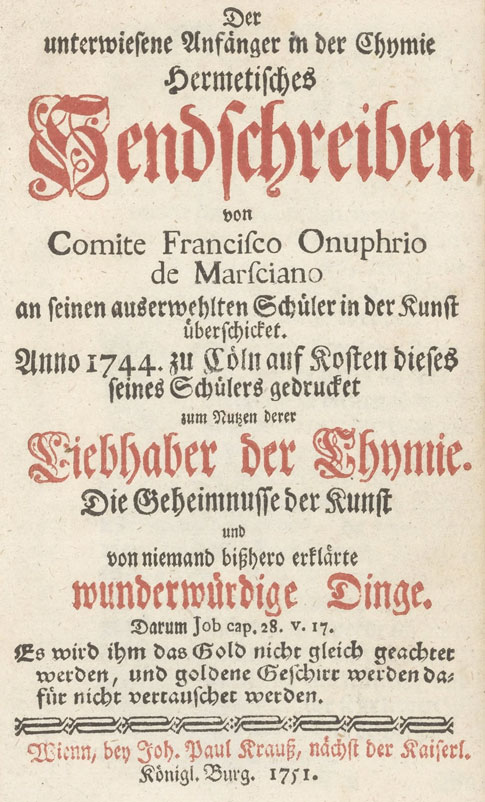
The inexperienced beginner in Hermetic chymistry, letter-writing, from Count Francisco Onuphrio de Marsciano, sent to his chosen pupil in the art.
Listen Audio Book Study the Art with Us Buy me CoffeeThe inexperienced beginner in Hermetic chymistry,
letter-writing,
from Count Francisco Onuphrio de Marsciano,
sent to his chosen pupil in the art.
In the year 1744, at Cologne, printed at the expense of this pupil of his,
for the benefit of the lovers of chymistry.
The secrets of the art,
and
wonderful things, hitherto explained by no one.
Therefore Job, chapter 28, verse 17:
Gold shall not be esteemed equal to it, and vessels of gold shall not be exchanged for it.
Vienna, by Joh. Paul Krauss, next to the Imperial Royal Castle. 1751.
Translated from the book:
Der unterwiesene Anfänger in der Chymie hermetisches Sendschreiben
Most noble Count,
Ecclesiasticus, chapter 6, verse 33:
My son, if you will listen attentively, you shall learn; and if you apply your mind to it, and are glad to hear, you shall receive instruction and become wise.
So that Your Excellency may see how eagerly I strive to serve your inclination, I will now show your error here from the ground up, so that you may not uselessly lose time and money in your martial regulus, ore-plants, and metals, since many thousands of people everywhere have already worked so long in vain in those ore-plants, regulus, antimony, and other dead metals. And I will now communicate the true rules to Your Excellency with sincere heart, and prove the truth from your very dear sages in the clearest way. Therefore give heed.
If, accordingly, we wish to look deeply into the meaning and secrets of the sages, it is necessary to take good note of everything, to connect all things with one another, to examine diligently, and to impress it firmly in the memory. As Bernard says: where the sages agree, there alone is the truth; but where they do not agree, there is without doubt untruth, and they deceive us with flattering words.
Therefore there is always one single matter, one work, one stone, one single government, and one single straight path, in which all who have attained the art agree.
And that in which, in practice, all sages agree unanimously is this: namely, to unite the dry with the moist, that is, the volatile spirit with the dry and fixed body; and indeed so that both proceed from one root and from the universal nature, as that sincere Anonymous explains well in his single discourse concerning the Turba, which is found immediately after the Turba Philosophorum, which I advise you to read diligently.
At the same time I beg Your Excellency that you attentively read through the French Anonymous author, vol. 6 of the Theatrum Chymicum, appendix, page 162. Its title is: “An Instruction sent by a father to his son, concerning the Solar Tree,” etc.; and I hope that there you will easily recognize your error.
For this reason our universal mercurial spirit, which is obtained by means of the mediation of our wine, is moist, as Lullius says; therefore it is rightly called a burning water, the spirit of wine, and the water of life, which henceforth one cannot have without the philosophical, rightly prepared wine.
And a completely dry body is the salt which, from the black wine-stone of the same wine, is drawn out whitely with the aid of fire, as Paracelsus says in suis Congeriis, chapter 11; purified in the best way, and brought to the highest perfection. Then it is the perfect body of the sages, and the true ferment of the stone, as Guido Montanor shows in the prologue of his Scala Philosophorum: which wine-stone the all-black, blackest black, from which the salt of wisdom of the sages is drawn out whitely; and after it has been perfectly purified, it is called a gold and a perfect body, as Guido confirms in the place cited. But before its perfect purification the sages have said that it is a leprous gold and an imperfect metal.
Therefore Antonius de Abbatia has written in his letters that our matter is drawn from a black body, namely from the above-mentioned black wine-stone, which after its calcination, says Lullius, is blacker than the wine-stone which was produced from the mountains of Catalonia.
Therefore, when the sages speak of a perfect body, or of gold, they have understood nothing other than this purified salt, or salt brought to perfection; but they have not spoken of common gold. Concerning common gold, you may see what Roger Bacon says in his Speculum Alchemiae, chapter 3.
And these two things, namely the body and the spirit, come, as said, from precisely this our magnesia, although they are of different sex, because nothing in the world arises except from the moist and the dry, and from the union of woman and man. Therefore, even if the stone consisted of only one being, as the sages say, it would accomplish no effect by itself; for it is plain and certain that the active and the passive are necessary, and that they must be of one kind and nature, yet of different sex.
Thus also man is different from woman; for although they agree in one kind, nevertheless they have different effects, like the matter and the form, etc.
Therefore the sages have understood, as taken from our air, as from the universal fluid which is nowhere of a special kind, nor mixed a spirit and a body, a man and a woman, as the active and the passive, both wonderfully drawn out through the mediation of our wine, and, after due purification of the same, the simple united with the simple.
Without that wine nothing is accomplished in this art, as Flammel says in his remarks, Experiments, and Codicil, and almost everywhere, testify.
For it is certain that, if our matter were not volatile and fruitful, or electric, a wine could never have been made from it. And Lullius, Parisinus, etc., speak of nothing else than of the wine, and of its quintessence, the burning water, the water of life, and the enlivening menstruum, and of its wine-stone salt. But common wine is not meant; rather, the philosophical wine is understood.
Therefore Ripley says in his Clavis Aureae Portae: It is a burning water, our water of life, the spirit of our wine, but not of common wine, which the ignorant take for common aqua vitae. And Lullius adds firmly: that our wine is the first and foremost foundation of the art, without which nothing can be accomplished in the mastery of this work.
Therefore I ask Your Excellency to trust me still further, and be firmly assured, and believe also him who has experienced it: that wherever the envious philosophers speak of metals and minerals, or of the preparations of the same, with different things and mixtures, namely common salt, common vitriol, saltpeter, sulphur, arsenic, marcasite, gur bismutho, strong waters, urine, snow, thunder-waters, orpiment, etc. which they have commonly made known they speak of these and other deceitful things in order to confuse the minds of the unwise, and to deceive the simple, mixing the true diligently with the false, and thus leaving the inexperienced behind.
As Paracelsus, in clear words, warns us, testifies, and as Bernard of Treviso and the others confirm in his Congeries Chymiae, chapters 7 and 8. And they have done this so that so high a secret should not come into the hands of the godless, but that only those enlightened by God should understand this riddle and Cabala of theirs, which are incomprehensible without a master experienced in the art. Therefore so few adepts are found in the world.
Therefore believe assuredly that there is as great a difference between the foolish chymistry of bad chymists and the true divine science of the adepts as there is between fire and water. And truly, they understand nothing and do not know what they should do; in the kind, number, and addition, in the beginning, middle, and end, they are not agreed, either in the matter or in the preparation. They wander far from the truth and from the right road, as Your Excellency will be able to learn from this letter, and as experience also teaches.
And because the philosophers have named their matter, and especially this salt, by all names in the world, many simple matters are imagined by them. Therefore Pythagoras says in the Turba Philosophorum, sermon 31:
The sages have named that salt with the names of all bodies in the world; and they have hidden it under the name of a spirit or ore, of cinnabar or gold, of iron or lead, etc., etc., until, in its preparation, it departs from that colour, etc.
Concerning these countless names, which have been given by the philosophers to both the body and the spirit, please consult the treatise which is entitled: A Methodical Explanation of the Three Medicines of Geber, in the first part, etc.; or likewise Lullius, in the first part of his very new testament.
To this Albertus Magnus also speaks, volume 4 of the Chymical Theatre, at the end, page 858:
The envious philosophers have called this our stone, or our salt, by the names of all the metals.
Therefore Rosarius Aurificus, the pupil of Bacon, says, chapter 3:
Therefore it is pure folly to work in metals and minerals, since the matter of the sages is a pure heavenly vapour, which allows itself to be coagulated, with which nature brings forth the metals in the womb of the earth. For our minerals are our two resinous sulphurs, white and red, hidden in one body, namely our vegetable and mineral salt. As Ripley says in the Accurations and Practices of Raymond, that the hermaphroditic salt, ruled by a twofold nature, is skilfully drawn out from that heavenly, compacted vapour, as Rosarius Aurificus has said above.
Therefore Paracelsus adds in his Congeries Chymica, chapter 6, from the beginning:
After our plants have been killed by the cooperation of two minerals, namely of sulphur and salt, they are transformed into the mineral nature, so that from this finally perfect minerals are brought forth, etc.
Therefore consult the author of Arca Arcani, volume 6 of the Theatrum Chymicum, under the 8th question, page 369. But you must grasp well the meaning of it. Also look at the Gynaeceum Chymicum, pages 675 and 696; at the same time, however, you must know how to connect the doctrines well, etc.
Let us leave these aside, and, after so many hidden things, countless subtleties, and confusions mixed everywhere, finally examine whether truly all the sages, both old and new, Greek, Arabic, Latin, German, French, and Welsh, agree unanimously.
This is certain: that all, without exception, as I have shown in my Lux Hermetica, firmly and with steadfast mind testify and maintain that there is only one single subject under heaven which is fit for the making of their stone. And the reason is this: because the truly universal spirit is found only there alone in its first essence according to its form, and perfectly pure; and nowhere else, in any subject whatsoever that lies under the moon, whether found beneath or above the earth, is such a spirit found one that is truly heavenly, fiery, and mercurial.
This all common chymists in the whole world can testify, who have left nothing untried in order to find this spirit, but in vain; because they have never thought of this wonderful subject, or rather, as I speak better, they have not known how to obtain it, because they do not know its origin.
Therefore, although many in the description of this art, because of the great number of names, seem to disagree, and even to contradict themselves, yet in the constitution, origin, weight, taste, colour, and smell even where such things are found they all agree, as we shall show below.
And since this matter is only one, of whose unity there is no doubt, since all the sages testify to it, one must take no notice of the names laid upon it, if only all properties, signs, and mutual marks agree.
Therefore Sendivogius, before all others, says in his treatise De Sulphure, sermon De tribus Principiis omnium Rerum:
There is no other than this single matter in the world, out of which, and through which, the stone of the sages is prepared.
In this all the sages, old as well as new, agree. Now since this matter is one, no one but a fool will be able to conclude otherwise than that so many names of metals, minerals, stones, which have been laid upon it, are invented and deceitful. Therefore Isaac Hollandus, in his mineral work, book 1, chapter 14, repeats that our stone cannot be drawn out from metals and hard bodies.
Yet the sages add unanimously that this subject is a universal mixture of a heavenly origin, and that it exists in its first nature, but that in its belly it contains a mineral salt, namely one of a metallic nature; which, however, is not found in any special way in the kingdom of plants, nor in the animal kingdom, nor in the mineral kingdom.
As is shown, among other places, from the words of Sendivogius, epistle 54, where one reads:
All the sages testify that their thing is neither vegetable, nor mineral, nor animal, nor do they draw it immediately from them.
Although it is called, improperly, animal and vegetable because only the cause is known to us, as Paracelsus testifies in his Congeries Chymica, chapter 7 and indeed this is not unreasonable, as those who know such a matter will bear witness to me.
For not without cause did Lullius, Roger Bacon, D. Thomas, Parisinus, etc., write that our matter springs from vegetable and animal things. But someone will say: how? I answer, with the philosophical Mercury from Paracelsus, in the place cited above: this is permitted to be understood only by the prophets of God and by the adepts, and by those who understand the matter. Paracelsus, chapter 7 of the cited Congeries.
Also Sendivogius adds, at the end of the 50th epistle, that our subject is something thick, opaque, white and reddish, sweet, and of a pleasant smell, and that it contains in its centre a dry earth within itself, namely our wonderful central salt.
And in the 54th epistle he explains that the name of our subject is marked by three letters and five signs; and further, at the end of the above-mentioned epistle 50, he concludes that a fresh one is to be chosen, because this subject loses the universal spirit through length of time.
And at the conclusion, after his twelve treatises, he has called such a thing a congealed air, a dew of the night, and a diluted water.
And remember that the matter is always only one.
How, then, will you be able to apply what has been said to your ores and martial regulus? Certainly, regulus and minerae are not ended with three letters; the metals are not sweet, nor do they have any smell; they are no dew, no water, nor can they give any spirit from themselves, because they have no spirit at all. They are nothing universal, nor a congealed air, because they are already particular and dead bodies, and a third matter.
Therefore Sendivogius adds in the preceding concluding speech, that if you have worked in the third matter, you will accomplish nothing. Therefore, since Sendivogius himself, in epistles 50, 54, and the last, speaks of nothing other than the universal spirit, etc., therefore:
Concerning this universal spirit Basil Valentine, like Sendivogius both of whom, before all others, are especially dear to me, for which reason I cite them here themselves says in his treatise De rebus naturalibus et supernaturalibus, and concerning the first root of the nature of metals, and concerning the universal mercurial spirit, chapter 3:
“My universal origin of the metals is precisely that single universal spirit of Mercury, which all sages have had. As those who are experienced, and who understand me, will testify, they can conclude nothing else.”
See also the Cheiragogia Heliana, volume 4 of the Theatrum Chymicum, pages 265 and 285, from Basil himself, who is cited there, concerning what he says about this universal spirit; where he openly says: that without this universal spirit nothing can be accomplished in the mastery of this art. And whoever desires to make our stone, it lies upon him to seek only that universal magnet, without which there is nothing, and no one finds anything.
As he also testifies in clear words concerning the martial antimonial regulus: that those who work in such a thing depart from the right way, as do the distillers and starch-makers, etc.; and that they do not understand the words of the sages.
From the above-mentioned, therefore, it becomes clear as sunlight that not only the regulus, but also gold, silver, and all common metals, also all minerals, both the first and the middle ones which are generally known, are altogether excluded from this art, as Paracelsus confirms in his Congeries Chymica, chapters 7 and 8. And concerning this vapour you may also consult Richard the Englishman in his Correctorium, chapter 15.
Therefore Avicenna, to his son Aboali, says in chapter 8:
Our gold is a heavenly, metallic, and original vapour, and a beginning gold; with this vapour nature produces the metals under the earth, in that she gently coagulates and decocts it, etc.
Just as we ourselves on earth, since we imitate nature, produce metals through solution, coagulation, and gentle cooking of this vapour.
Therefore Sendivogius adds, in his New Light, treatise 4, that the alchemists seek in vain to destroy the metals into their first matter; which matter is only a vapour unknown to them, already dried out in the dead metals, etc.
Indeed, at the end of the work they sometimes join the already perfected stone, and the spiritual multiplication of the sages mediated by our vinegar, with common gold for redness, and with common silver for whiteness. Although this conjunction is also called by some a fermentation, still it is not a true fermentation, but rather an assimilation, which is properly called specification. Concerning this you may consult Isaac Hollandus in his mineral work, book 1, chapter 136, which metallic union is that three-day work of the prophecy of Mary, as Isaac explains there.
For a true ferment is the sulphur, or our gold, as Paracelsus confirms in his cited Congeries Chymica, chapter 8. See also Ripley in his ninth gate, and also Denis Zachaire, part 2 of the work, etc., who teach that the above-mentioned union, or specification, is accomplished for three days in the open fire, in a melting crucible, as Avicenna, chapter 8, Roger Bacon in his Speculum Alchemiae, chapter 7, and Isaac Hollandus in the place cited above, as also chapter 85, teach, etc.
This is a work of three days, by which the simple are deceived everywhere, since they believe that in three days the whole work can be brought to an end. But I say: not even in three years, etc.
Therefore Basil Valentine, concerning the true matter of our stone, says in his treatise On the Great Stone of the Ancients, in the preface before his twelve keys:
“And you shall know that this is nothing other than a volatile substance, which has come forth from a heavenly origin, which is governed by its dry earth, namely by the central salt; and this is the key of the art,” etc.
But in his Triumphal Chariot he has deceived us, as all others have done with so many false recipes and experiments, in that they have described countless processes in order to lead astray the minds of the unwise. He has indeed, from antimony, ripened several parts of the unspiritual gold, which is commonly found within it, by means of our universal Mercury, and brought its particular work to an end; without this universally working Mercury, all particularia praised by the chymists are false.
But when one has the universal root, as Basil himself testified above that he had it, then from the same spring as many particular works as Basil himself and the others have done. Therefore no heed should be taken of the trunk of the tree, as one notices from precisely these words of Basil, where he says there: that not so much is granted to antimony, and that no one can do this, except the one who possesses the stone of the sages.
Therefore Sendivogius, in his treatise On Sulphur in the sermon On the Three Principles of All Things, has openly written:
There is one single true working, apart from which there is none that is true. Therefore all those fail and deceive who say that there is some particular thing apart from this single way, and this single natural matter, which is true. It is impossible and foolish to wish to bring forth one tree before a good tree. It is easier to make the stone itself than to make any particular thing, even the simplest one which would be useful, etc.
And further:
Indeed, many particularia can be made when one has our tree, namely the universal root, whose branches can be grafted into different trees, etc.
Thus Bernard of Treviso and others also confirm it.
This same Sendivogius says in his concluding speech after the twelve treatises, which is found in his New Light, as mentioned above:
If you will work in the third matter, you will effect nothing, as those do who, apart from our single universal salt, foolishly work, excepting our sun and moon, etc.
That is precisely that twofold, animated salt which is called our sun and moon, our gold and silver, or the solar and lunar body of the sages.
As Lullius and Geber testify very clearly in volume 1 of Johann Jacob Manget’s Bibliotheca Chemica Curiosa, in the dialogue of Bracesco Brixianus, at the end, page 915, where they prove that the sages in this art have known no other gold and silver, nor have they understood any other than this double animated salt, etc.
Therefore I ask: tell me whether the regulus, the metals, the ore-plants whether they have already been dug completely pure out of the earth and are already specified by nature are the third matter or not? They have already been excluded above by Sendivogius.
And this same Sendivogius, from Hermes in the place cited above, adds that this alkaline salt falls down from the belly of the wind upon the earth together with our magnesia, congealed together, and so he calls it an air, or a congealed spirit, which is better than the whole earth; and he concludes that it is our dew.
Therefore I ask you: look at the sixth treatise of Sendivogius, inserted in the same New Light, where you will see clearly, plainly, and as if by ocular demonstration, that all the work of those chymists who labor in ore-minerals and metallic bodies is vain and useless, and also of no value. Therefore he says: instead of the seed they take the bodies, not knowing that bodies are not again produced from bodies, but are born only from seed and indeed from living seed. All metals, all ore-minerals, the third matter, which are already specified and dead, suffer a lack of this; and they are dry matters, which altogether lack the universal living spirit that we seek. Without this living spirit all confess that in this art nothing can be accomplished.
And so, not only without this universal spirit do they take trouble upon themselves in vain, but also, from the very beginning, against the opinion of all the sages, they begin the work in a foolish way.
But what the bodies and minerals of the sages are, seek concerning this in Laurentius Ventura, chapter 25, or Paracelsus, in his Congeries Chymica, chapter 6 from the beginning, and chapter 7 at the end. These are our two sulphurs, namely the white and the red, which are contained in one salt of nature; and these are also the true ferment of the stone, and the true ore-plants of the sages. Concerning these you may see Paracelsus in the cited place, chapter 8, etc.
Elsewhere the sages say, and not without cause, that the matter of the same, as we have shown above, comes from animals and plants; but that it has in itself a mineral part, namely the fixed central animated salt of the metallic nature, which can scarcely be melted, is incombustible, bitter, and volatile. Lullius and Geber, in volume 1 of Manget’s Bibliotheca Chemica Curiosa, speak clearly of this explained mineral part.
Therefore they have said of their stone that it is vegetable, animal, and mineral: threefold in name, but simple in being, as one reads in the Rosary, etc. Concerning this matter adorned with a threefold name, and why it is so called, see Christof Parisinus in his Elucidarium, book 2, chapter 1, and afterward it is shown with clear words in one volume of the Theatrum Chymicum why it is so named, and what it truly is. It is openly set forth by a sincere sage; but where this is, I cannot note here, lest perhaps this letter should fall into foreign hands. But when I am with you, I will show it; then Your Excellency will be amazed.
And this is the reason why the sages have described three different works, although there is always only one work and one matter. Therefore Lullius, in his Elucidatio, after chapter 1, has written:
“We have described three stones, namely the animal, the vegetable, and the mineral, though there is only one stone; and we have said this because this composite consists of these three,” etc.
And concerning this matter, consult Paracelsus in his Congeries Chymica, chapter 7, where he openly says:
“The ignorant say, because they believe that the stone is threefold and separated from a threefold kind, namely from the vegetable, animal, and mineral, that for this reason they have also sought it in minerals. But this opinion is far removed from the opinion of all the sages; for the sages confirm that their stone is uniform: vegetable, animal, and mineral.”
And he further adds:
“Some others, who have tried to fix Mercury by means of the sulphur of minerals and metals, have been greatly deceived.”
And at the end of chapter 7 he concludes:
“Some zealots of this art have sought this, and their ferment, in various minerals, both of the first and of the middle kind; but they have learned that they have worked in vain, since this very substance which one seeks is present in the whole work, from which all things are made,” etc., as Geber also adds, etc.
Therefore you see clearly that all minerals or metals, both of the first and of the middle kind, are rejected in this work, as you will find the same if you diligently read through all the authors everywhere.
Therefore Ripley adds at the end of his Medulla: that the elixir is threefold, namely vegetable, animal, and mineral, because our water is from animal and vegetable things, and from our ore-plant, etc.
Concerning this water, he adds in his book Terra Terrae, there is skilful mention in many places of Holy Scripture, and it is read of the priests at the altar, etc. For this reason, at first they seem to contradict themselves for the inexperienced, because these do not understand their Cabala; although in truth they are not contradictory in this, but rather are all of one and the same opinion.
For when the sages speak of the ore-plants, or say that our quicksilver is found in the centre of the earth, they have understood this: that in the centre of our black earth, or of our above-named wine-stone, our mercurial salt, and our mineral, or our sulphur, is found.
Therefore Antonius de Abbatia says in his epistles: that our matter is brought forth from a black earth, or from the blackest black, because our tartar, after the first calcination, is almost black. Thus it is called by Lullius blacker than black; and others have compared it, because of its likeness, with scales or iron foam, which is thrown away by smiths.
And these are apparent contradictions, because, according to the colours that change in the work, the sages have called this salt now lead, antimony, copper, gold; now unslaked lime and shining marble; now blood, hair, and many other different things.
Therefore all the things mentioned above show themselves in the preparation of this salt, under the metallic regimes described, namely under the regime of Jupiter, Saturn, Sol, Luna, and Venus, etc., according to the different colours, etc.
Yet these contradictions, when they are so reasonably reconciled and explained, are no contradictions. Likewise, when at times they speak of a dissolving, stinking menstruum, and at other times of a dissolving, pleasant-smelling menstruum, this is to be understood because the dissolving salt, as stated, is bitter and stinking.
Therefore some have compared it to the stench of graves, and have called it aquam foetidam, “stinking water.” although after its dissolution it does not stink. But the dissolving menstruum has a good smell.
Likewise, when they say now that the matter is sweet, now bitter; now that three pounds are enough in the work, now that one thousand pounds would not suffice, etc. thus the sages are called contradictors by the inexperienced, because they understand nothing of this science.
For the more remote matter is certainly sweet; but the nearer matter, namely the salt, is bitter. Of the remote matter, scarcely one thousand pounds are sufficient; but of the materia proxima, that is, the salt, three pounds are perfectly enough.
Therefore Sendivogius says in epistle 50: a mercurial substance must be chosen, together with the universal spirit, in which state it can be found nowhere except in our single subject. When once it has been separated from it, it is very bitter; and this is the salt. But when it is from the more remote subject of the other matter, namely from that out of which the universal spirit and the bitter salt are drawn, then the same is sweet, etc.
Lullius also, in book 1 of his Newest Testament, where he describes nearly all the names given to our salt, says among other things: that it is a congealed air and a bitter alkaline salt. And in this way he agrees with Sendivogius in his above-mentioned epilogue.
But this same Lullius, chapter 26, in the second book, at the end of the chapter, says that the stone is sweet, meaning the first mixture. And thus the disputes are reconciled. Concerning these apparent contradictions, and how they are to be reconciled, see epistles 50 and 54, and the last epistle of Sendivogius. And there note diligently what Sendivogius reports concerning our universal heavenly spirit. See also his New Light, treatise 3, from the beginning, etc.
Elsewhere the sages add that from that single sweet subject being the other or more remote matter, or chaos, with which, and through which, everything in this art is done and named out of it, with it, in it, and through it, everything necessary for our work is found, as Geber, Senior, etc., say.
Therefore from the same we first draw out the mercurial, fiery, and volatile spirit, in a sufficient quantity and alive. This spirit is one from our Mercury, and is our natural fire, which by Basil has been called all in all.
Secondly, after the putrefaction of our wine, which by our art has been made into vinegar, we bring forth the spirit of our very sharp vinegar. This is our other Mercury, a dissolving menstruum, and is therefore called a fire against nature, because it dissolves the body and turns it into oil.
Thirdly, the fixed, bitter, alkaline salt, which is white on the outside but red within; although we draw it in small quantity from the tartar of our wine, nevertheless it is of great power, as Lullius shows in Potestas Divitiarum, chapter 8, concerning its small quantity and the virtue named above.
Thus we have a spirit and a body, and consequently the soul, since this salt itself contains the soul hidden in its centre. And these two pieces are the nearest matter of the stone, namely the image of the man and the woman, the active and the passive, the sun and the moon, heaven and earth, sulphur and Mercury, the volatile and the fixed, water and earth, Gabricius and Beya, matter and form, etc.
With these, when they have previously been purified of their superfluities and prepared philosophically, and when they have been reconciled, our stone is made without the addition of any other means, with no addition at all, nor with any diminution of the pure middle substance.
Except that, after the last decoction or fixing, we finally unite it, or specify it, with common gold, as was mentioned above. And at the beginning we dissolve with our vinegar upon the salt; but this vinegar comes forth from the same chaos or second matter. And gold too is of its nature, because by nature gold has been generated with this salt and spirit.
Because the salt, or the fixed body, and the volatile spirit are called by the philosophers Rebis. Therefore Richard the Englishman says in his Correctorium, Chapter 11:
These two things are called Rebis, that is, res bina, “a twofold thing”: namely the fixed body and the volatile spirit, both brought together into one thing.
For this reason Basil Valentine, in his Rhythmus concerning the True Matter of the Stone, in the twelfth key, adds:
The body, the soul, and the spirit consist in two, from which the whole thing comes forth. But it arises from one, and is one thing, in that the volatile and the fixed are at the same time reconciled.
And thus they are also called three, because the salt, as stated above, is animated, twofold, and hermaphroditic.
Therefore Isaac Hollandus says in his mineral work, book 1, chapter 64:
This very precious salt has within itself a hidden soul; therefore the ancients have called such a thing an animated salt.
And Laurentius Ventura, the Venetian, chapter 11, adds:
This salt is silver on the outside, but in hidden manner it is gold within. And it is resinous; therefore it is also called our resin.
As is read in the Turba, sermon 18, so it is also named by Mary the Prophetess.
And because it is twofold, Mary has written that there are two resins, and that these two sulphurs of nature are reconciled together. And they are called our sun and moon. Therefore one says, as we have shown above, that the stone consists of three things: namely, of soul, body, and spirit, like man; or of sun, moon, and quicksilver, because the spirit is called Mercury or quicksilver.
The soul, however, or the very fixed golden tincture, is called by the philosophers the metallic soul, as Senior clearly explains; and these are the three principles of nature and of the art, and they are found in every kingdom, both animal, vegetable, and mineral: namely salt, sulphur, and Mercury.
Therefore the sages have said that the matter of the stone is in every created and earthly thing: in you, in me, and in all things, etc. But it cannot be drawn out from every thing in its first nature, except in our single subject, just as it flows down from the universal heaven and has not yet been specified, as we have shown above from Sendivogius. Therefore he brings it forth from every generative nature, with a mixture known to God alone. There it is something undivided, and according to its kind, by the command of God, Genesis chapter 1, and the course of nature, it wonderfully assumes a different nature and form, and brings forth all kinds of rarities, etc.
Therefore Lullius and Sendivogius have spoken rightly: namely, that the first matter of the stone is the universal spirit, which is in all earthly things; indeed, as Morienus said to King Khalid, it is found in me, in you, and in all living things. For this reason it is certain that, if this universal spirit were not in all animals and plants, they would not exist for one moment, as Ripley also adds.
Yes, it is present everywhere in all metals and minerals in the same way, since they arise from this first heavenly vapour, which has been united with their salt; although in the metals it has been dried out and extinguished, and since it no longer has the power to generate, it would be useless, even though it could be drawn out which nevertheless is impossible, since in nature there is no going backward.
It is also already fixed in the minerals, and clothed with another nature, and therefore unfit for this, as Richard the Englishman explains in his Correctorium, chapter 10.
Also in the air which we breathe, this hidden food of life is present, as Sendivogius says, and likewise in us and in plants, etc. But in the air, and in all other subjects, except in the single subject truly filled with the wondrous spirit of life, it is in such small quantity because it is scattered everywhere in the air and in other subjects, and is also found mixed with the vapours of earthly juices and with water, indeed specified that it is impossible to draw it out.
For example: if a single little glass of brandy were mixed in a large cask with water, and afterward one wished by endless distillations to draw out that small spirit, then assuredly, as the above-mentioned sages have excellently shown, it would sooner lose its life altogether.
Therefore the sages have discovered a single subject under the sun, as Senior says, from which they can, with little effort, draw out that spirit in its first universal state, and the salt of nature, since it has nowhere yet been specified.
Therefore Arnold, Avicenna, and all the others conclude nothing else than that the first matter of the stone is a heavenly, powerful, fertilizing vapour, which also allows itself to be coagulated, and is a gold in becoming. For this reason it is rightly called a seed of nature; a name which truly belongs neither to regulus nor to any other metals.
Therefore it is also called by some our egg; because, just as the egg of a bird is already a young bird in becoming, so our egg is a gold in becoming.
So also, when the sages report that the stone can be drawn out from every matter, as again Lullius and Ros Aurificus explain it, by this both the simple are deceived and the ignorant object: The worldly-wise contradict themselves everywhere. For, as Hilarius says in book 8, the human mind is only blind in matters which it does not understand.
Therefore this is to be understood as the authorities cited before testify: namely, our salt is called a stone for the sake of similarity, because it is drawn out of our dew in the form of strange stones, as little stones, and truly shines like strange stones; and also because the mineral salt drawn out from the mountains is truly a stone.
Likewise soda, from which glass is made, is also a stone.
Therefore Lullius and a very ancient author of the Ros Aurificus say: all salts are called minerals and stones, but not every stone is our stone, nor every salt the salt of the metals and of the sages, although from every created thing, after burning, a salt or stone can be drawn out of the ashes.
This is a plain sign that in every created thing there is a salt, or a salty stone, and that it is therefore the first constitutive principle of all things, since it appears last in the division of those things, and consequently can be from every created thing a salt or stone be drawn out. But there is a difference, says Lullius, between salt and salt.
Therefore Isaac Hollandus says in his mineral work, book 1, chapter 123:
Although from all created things in the world a stone, namely the salt, can be drawn out, nevertheless it is not the salt or stone of the sages.
And chapter 108 he concludes:
But there is a salt which God has poured into our single subject, and it is called the salt of the wisdom of the sages.
Therefore our stone, namely from this divine salt, which appears in the form of a stone, has received its name; a thing which until now none of those alchemists has known. And to distinguish it from other stones, namely from salts, it is called a salt or stone of the sages.
And because it is drawn out from our wonderful dew, which comes from heaven, in a wonderful manner, Job chapter 38 says: Who has brought forth the drops of dew, and indeed in the likeness of a stone, etc.
Therefore Sendivogius, in the cited epilogue after the twelve treatises, speaks so highly of our wonderful dew, or universal spirit, and of the salt of nature in our frozen dew, since he has said there that the same is better than the whole earth.
Concerning this Lullius, in his Testament, chapter 3, says:
It is truly our dew-water, gathered together from the aforesaid heavenly vapours by the condensation of its nature, which comes in the aforesaid vapours of the four elements. And this is a thing which is nearer to quicksilver, and which indeed is found above the earth, but not under the earth; running, flowing, and heavy.
And chapter 78 he says:
It is a very fatty substance, slimy, strongly oily, and airy, in whose belly is the fire which we seek.
Therefore consider well whether our matter can be a metal, or any otherwise known mineral, since it is a dew-water, fatty, airy, and heavy, and is to be found flowing above the earth, as Lullius says.
Therefore the sages have not unjustly described this wonderful salt of nature in our buried universal dew as the first beginning of all things, a universal seed of nature and the seed of the world, furnished with a salty, heavy, fiery, mercurial spirit, impressed into our dewy, electric chaos, or into the other, more remote matter, from the beginning of all things, and appointed by the highest divine Master-workman for the completion and composition of all things.
For there is nothing in nature, in the threefold kingdom of nature neither in the animal, nor vegetable, nor mineral kingdom which does not consist of this threefold power, namely the sulphurous, salty, mercurial power, which are contained in that single natural salt.
Therefore the sages have reflected deeply on what that chaotic universal matter might be, in which alone that entire power of all created things is contained. Finally they have found that a dewy, heavenly, mercurial, salty, sulphurous, spiritual vapour is the true, universal, pure seed of all things, arisen from the elements; which was created by the highest God in the beginning together with creation. Sendivogius speaks of this so profoundly in his cited epilogue, and he also confirms it in the first part, treatise 3, of his New Light. And that vapour of heavenly wisdom is truly divine, of which Solomon speaks in the Book of Wisdom, chapter 7; yet few understand it, etc.
Since, therefore, the wonderfully animated salt of nature, and one endowed with a twofold nature, is named outwardly white, inwardly red and at the same time also our two colouring sulphurs and two resins; since these are our gold and silver, and our ore-plants, then it is no wonder that the sages have always spoken so wonderfully of this sun and of our moon. For Lullius and Geber, in volume 1 of Johann Jacob Manget’s Bibliotheca Chemica Curiosa, in the dialogue of Bracesco, page 915, at the end, have written in clear words:
Just as the first mineral matter of the metals is one single salt, so also we, who wish to imitate nature, burn our subject by calcination into a white, shining salt, like silver, which is called by the philosophers the moon; and in its depth it contains the hidden vapour, which is reddish, sulphurous, and very fixed, namely the soul, which is called gold.
And by this gold and silver the sages have always understood and spoken. Therefore, in this science one must not rely upon common gold and silver, because all the sages have commanded that this medicine be made from a very lowly thing, etc.; and so much for the above-named sages.
Therefore, since the sages have understood no other gold or silver, nor any other mineral, than this wonderful salt of a true metallic nature, and the father of all metals, our living solar and lunar body, and our foliated virginal earth, why should one seek in so many metals and dead minerals, against the admonitions of all the sages and against the possibility of nature, since this alone is the living, universal seed of the metals?
Which are the two sulphurs of nature, which are at the same time contained in this resinous salt, alone the true seed of gold and silver, and the true ferment of our stone. After the last purification, by means of our Mercury, or the aforesaid spirit, it is again united together, and thus at the same time fermented; for the water, or the spirit, is the ferment of the body, and conversely the body is the ferment of the spirit, as one reads in the Scala Philosophorum from Guido de Montanor, at the end of the ninth degree.
Therefore, concerning the above-mentioned two sulphurous resins, namely the white and the red: after a very long preparation through repeated dissolving and conjoining, imbibing and evaporation, rubbing and calcining, they are finally divided, so that the soul remains behind in the red oil at the bottom of the vessel, and the ensouled body, or the whitened Laton, floats above this oil. Then we must dropwise pour its soul, or the golden dissolved tincture, over the body, or foliated white earth, to pour the earth, which is called casting the gold upon a white foliated earth, as the sages have commanded. And at times those two resins, the white and the red, are again reconciled by means of the spirit. Therefore Mary the Prophetess said: join resin with resin through a right union, etc.; and from two waters make one, which is composed of the dissolving spirit and the dissolved body together.
Through the mediation of our priest, namely of the spirit or of our Mercury, which in truth is the means of uniting the dissolved tinctures again without which means, therefore, by some it is called the priest, a true marriage will never be made, because in the most fluid things they will never at the same time be reconciled. No true fermentation, nor impregnation, would occur, and consequently no birth would follow.
Therefore our Mercury is necessary to us, namely the fiery universal spirit in large quantity in our work, because of the many prescribed imbibitions and the following evaporations, which weekly require a long time. Therefore in the first dissolution of the body and in the eight-day very slight evaporation, which must often be repeated with our vinegar, only the subtler part of the vinegar-spirit is fixed in the body, and the rest disappears gently through evaporation and distillation, like a tasteless well-water, as the sages have truly written.
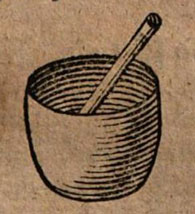
After this eight-day impregnation, when it is gently decocted, namely evaporated, one must always, after the evaporation, rub or calcine it for a long time, because the rubbing is our calcination; afterward make it moist again, etc., and repeat often in one single same vessel, until the salt no longer freezes together, but dissolves into a black-red oil and remains thick at the bottom remains behind, and afterward new imbibitions again, with the other volatile spirit, and also evaporations, not eight-day ones, but repeated three-day ones, until the Laton is made white, as we said above, and this Laton, or body, or foliated earth, is separated from the soul, and floats upon the dissolved soul, as E. C., etc., compare such testimonies everywhere, although they are not explained so well. Especially see Avicenna, chapter 5, where he says: pour the water, therefore, in measure upon the earth, etc.; or in the Thesaurus Thesaurorum of Arnold of Villanova, chapter 15, in the treatise Gloria Mundi; or in the book Methodical Explanation of the Three Medicines of Geber; in the treatise of Aristotle, etc.
For this reason the sages say that the beginning of this work is the dissolving of the stone, namely of the salt, into the first matter, as Avicenna, Lullius, etc., teach. And see Richard the Englishman in his Correctorium, chapter 18, etc.
And this perfect dissolution cannot take place without our vinegar. Therefore it is called the first water, because it must therefore be united with the volatile spirit or with another water; otherwise it would be impossible.
Therefore one reads in the Turba Philosophorum, from Socrates, sermon 16: first rub it with the sharpest vinegar and cook it until it becomes thick; but beware that the vinegar is not turned into smoke. For this reason the sages command that it be cooked gently, as we said above, because after the imbibitions, in a glass vessel or preparation-dish covered with blotting paper, or with a distilling-cap set over it, by slow distillation in the ash-fire only the superfluous moisture is to be evaporated, so that the subtler part of the vinegar-spirit does not vanish into smoke together with the phlegm, but only the watery part rises in smoke, and the more spirit-rich part is fixed in the body, etc.
This is confirmed by Socrates’ teaching in the place cited below, where he repeats: rub it with the sharpest vinegar, and cook it for seven days, and take care that the secret does not escape, etc. This is the artificial operation, where one works with the spirit of the philosophical vinegar, dissolves, congeals together, rubs, evaporates, and again imbibes; yet not too little nor too much, but only so much until the dough becomes soft except the first time, because, in order that the salt may be well dissolved, it is necessary that the spirit of the vinegar go over it four fingers’ breadth. And afterward, after the first evaporation, for one pound of the body, half as much of the vinegar-spirit is always enough. This imbibition and evaporation is to be repeated eighty times, or more, before we can renew the imbibitions with the other volatile spirit, until the salt is sufficiently saturated, opened, and first dissolved by the vinegar; otherwise it would never be united with the other volatile spirit.
You will recognize this when the water disappearing from the vinegar no longer has a tasteless flavour, but is sourish, as was said before.
Therefore from your martial regulus, from the metals and ore-plants, you will draw out this quantity of spirit in vain, against the natural principles of nature; for the sages enjoin nothing more than that in this art we should follow nature. How, then, will they be able to draw out this quantity of spirit from those things, since those things have no spirit? And the sages say that everything necessary for our work comes from our only living, fertilized, and electric ore-plant; and further, that nothing foreign may be added to it, otherwise the whole work would at once be spoiled.
And Your Excellency has already heard that from our universal chaos we have the spirit of wine, the spirit of vinegar, the animated salt, and everything necessary, and need add nothing foreign at all. Also, after the first division after the wine and the vinegar have been completed, and the tartar calcined, and the salt taken out only in one and the same glass vessel, all is to be completed in the preparation of the salt, as the sages command, and no other vessel is to be used, except a glass flask at the end, because of the final fixing of the prepared matter.
Why then must we seek after so many vessels, so many strange furnaces, and so many artificial devices, unknown to the true sages, contrary to the admonitions of the sages? This one single vessel of ours, hitherto unknown to the chymists, is described by Artephius the Arab in his Secret Book from the very beginning as follows:
“Place,” he says, “your calcined gold,” that is, the rubbed salt, “four fingers high in a glass vessel, or somewhat more, and pour over it the distilled vinegar.”
And Sendivogius, in his 31st epistle, has called this same thing a bowl, useful for making clean. And Alanus, in volume 3 of the Theatrum Chymicum, has called it a bowl for preparation. And Rupescissa, in the Book of Light, chapter 5, gives it the name of a glass cup.
Therefore Arnold, in the Thesaurus Thesaurorum, chapter 17, says:
“The sages have spoken the truth, although to the foolish it seems impossible that there should always be only one vessel, only one single very small fire, and one single matter,” etc.
This Geber and others confirm in many places, saying that after the first division of the things, we need only one single vessel, etc.
But perhaps Your Excellency will say: how is it possible, in one single same vessel, to distil, calcine, exalt, imbibe, evaporate, dissolve, congeal together, make red and white, etc.?
To this I answer with the sages:
First, you must know that, since the salt has previously often been purified with the universal, well-distilled water so that the salt of the water may not be mixed with our precious salt from its white, subtle, earthly dregs it is perfectly cleansed by dissolving, passing through, drying, etc. Afterward it is placed into the above-mentioned single glass vessel, and from there on we imbibe this salt with the spirit of our vinegar, which is of the same nature as this salt. And with a gentle heat we evaporate the superfluous watery moisture, or phlegm, for 8 days, and afterward we calcine it by rubbing. For the rubbing is our philosophical calcination. And behold, at the same time we dissolve it, thicken it, imbibe it, calcine and distil it; for the evaporation is precisely what the distillation is.
Also, when the soul of the salt has been dissolved and separated from its white foliated earth, or from the unensouled body, then, while rubbing in the very same vessel, we pour over that ensouled body, or whitened Laton, the dissolved soul of the salt, or the reddish oil, drop by drop; and in this way we give the soul back to its body, and this is: to cast the gold upon the white foliated earth, as we said above, and as Senior explains sufficiently.
And then we pour three parts of the volatile spirit over the re-ensouled body, so that the greater part of the volatile may cover the small fixed body, and ripen and draw it with itself; and the body, with the soul and spirit mixed, is raised up into the air. And this is our sublimation; and this is also when the sages say that our child must necessarily be born in the air.
And this is what they mean when they say: take three parts from the woman and one from the man; or unite three parts of Mercury with one of gold, etc.
And since at first the salt, dissolved by the vinegar, remains black-reddish for a long time, therefore, after several following imbibitions, evaporations, calcinations, or rubbings, by repeatedly dissolving and congealing together which, as said above, was long done with the spirit of vinegar and must be repeated with another volatile spirit of our wine the black-red Laton is made white in one part. That is, the lighter and white part of the killed salt floats above, and the oil, or the dissolved soul, remains at the bottom. Thus we sublime, make red and white, and unite in this single vessel, etc.
Everything mentioned above is enclosed in one vessel, with one repeated regimen, and in one circle. Yes, it would be impossible to use several vessels in this preparation of the salt, as is well explained in the book Enarratio.
Methodical Explanation of the Three Medicines of Geber, etc.
Therefore, when everything mentioned above has been carried out correctly, we evaporate the superfluous spirit from time to time, or distil it gently, until the matter remains at the bottom in the thickness of honey. Afterward we pour upon it only the third part of the spiritus volatilis, so that they may again be mixed together at once. And thus, in every flask, we place one ounce. And after we have sealed the flasks in the chymical manner, we set them in our athanor for the last cooking or fixing, and cook it for a long time with the fire of a lamp, until, etc. Concerning this last cooking see Isaac Hollandus, in his mineral work, book 1, chapter 131.
Afterward, when it has then been changed into a red-black mass of many colours, we again multiply that breakable mass by means of our vinegar, by dissolving and congealing together, as we did in the preparation, by often repeating it. And this is our multiplication, until it is made subtle and flows like wax.
Therefore Isaac Hollandus says in the cited place, book 1, chapter 124:
In our stone there is no other multiplication than this: to make the same very subtle by often dissolving and congealing together, and flowing like wax. No other multiplication is found in the art than to make the same subtle in this way, beyond measure, and penetrating; and whoever seeks other means for multiplying, or has another opinion, does not understand our art, etc.
And Lullius, in his Practica, chapter 31, and in the last chapter of the second part of the Testament, adds:
Our multiplication is nothing other than dissolving again and congealing together, as you did at first in the preparation.
Indeed, after this spiritual multiplication, when Your Excellency wishes, you may multiply it bodily again with common Mercury, as Rupescissa teaches, book 1, last chapter, and Lullius in his Compendium of the Transmutation of the Soul, part 3.
Thus, since all the sages agree unanimously in so many repeated places that everything is from our water, with our water, and through our water that is, is brought to pass by the spirit, and must be brought to weighing with the universal spirit; and others say that the stone is made with Mercury, from Mercury, and through Mercury. All this is one thing: namely, by the spirit of our wine and the spirit of the philosophical vinegar, as we have shown above, everything in this work is accomplished.
These are our two mercurial waters, and the two Mercuries, or our fires: one natural, the other contrary to nature. In these waters, or fiery heavenly spirits, in a simple, unspoiled, universal state, only our materia secunda spermatica has a superfluity.
How can you therefore draw this twofold heavenly water in such great quantity from those metals and ore-plants, since Geber openly confesses: all metals, although they have arisen from one universal descent, are nevertheless wholly dried out and dead, and do not have that life-spirit which we seek, and only in our living matter and seed has the metal’s end.
And Sendivogius, beloved of the same, in his New Light, repeats the same thing in many places, when he says: do not take common gold, silver, or metals, for these are dead; take ours, which are living.
And in treatise 3 and elsewhere he adds: this metallic seed, since all common metals are dead, is already specified there and dried out; and to draw it out from them is impossible. And in another place: do not seek this in the common metals, in which it certainly is not, etc.
What then can be said more clearly? And this is because it has passed into another substance, just as grain into bread; from this bread the grain cannot be drawn out again, as Clangor Buccinae and the Rosary add.
And further, all the sages declare that all commonly known salts, of whatever kind they may be, are useless in this art, except this single salt of our Lunaria, as Avicenna, Lullius, etc., have written. Therefore see the notes of Nicolas Flamel, volume 1 of the Theatrum Chymicum, from Count Trevisan, page 767; and from Avicenna himself there in the same place; or Philalethes, in his Introitus apertus, chapter 11, etc.
The salt, the spiritus volatilis, the spirit of vinegar, the sulphur, the ferment, and all things necessary for the work are drawn out from our single subject. How, then, can these pieces come from the ore-plants and metals?
Therefore we must diligently examine everything according to the teaching of the sages, because sufficiently all the sages have unanimously written that this single matter is the key for entering the castle of Hermes. It is neither animal, nor vegetable, nor mineral and earthly; rather, it arises from a heavenly ore-plant, and is our ore-plant that generally sows seed: namely, it is nowhere specified, tough, very heavy, and springs only mediately from animals and plants. But it does not come immediately from them, nor does it in any way consist of them; rather, it is like the light from the candle, which one has by means of the candle, yet it is a heavenly substance, and does not immediately come from the candle, nor consist of it.
Thus also our matter is to be considered, which is immediately like the daughter of the sun and moon, as Father Hermes says; and according to the opinion of Mahemeth the sage, who says, as in volume 2 of Manget’s Bibliotheca Chemica, page 897:
Our stone in the world draws its origin from animals,
For beautiful Apollo takes your rays.
And Maculinus, in the same volume 2 of Manget’s Bibliotheca, page 196, speaks thus ambiguously:
This stone is not a stone; it is an animal, which it is lawful to indicate.
And this stone is a bird, and not a stone; or this is a bird.
I must still add that Your Excellency should earnestly consider what a wonderful, truly divine thing this spiritus universalis is, which is unknown to the common people. Since last year, in my old age, gout afflicted me, and because of this I was deeply distressed, I at once remembered Paracelsus, who says that with this well-sharpened spirit he cured gout everywhere from the root. Therefore I prepared this spirit as he teaches, and in the presence of my still-living friend I made his very swollen foot, tormented with violent pains, wet with this spirit; and, O wonder! Immediately the pain wholly and entirely ceased. Therefore, full of joy, I at once began to dance, not without the greatest astonishment of my above-mentioned friend.
After that, the gout no longer troubled me either, and afterward I had not the least difficulty from it, but have remained wholly free and healthy as before. But from that time, for fifteen days, early in the morning, I took twenty-one drops of this spiritus simplex into my fasting body, for the perfect purification of the blood, since there is no such blood-cleansing thing in the world.
So also, in the presence of my above-mentioned still-living friend, I made the true aurum potabile into a golden and perfect flowing oil, with this spirit sharpened by its salt, just as the knight and baron himself has seen, which aurum potabile I have also elsewhere made for others, and I have happily healed desperate, incurable diseases with only six drops poured on sugar and taken by the patients.
And do not think that perhaps it is a fable, because the person healed is still alive, and my above-mentioned friend is certainly still living. I testify thus before God and my Jesus Christ, with the Apostle Paul, 1 Timothy, chapter 5, verse 21: He who has deemed me, an unworthy sinner, worthy to reveal to me so astonishing a secret. And many others also know what I have said above, have seen it, and are still alive.
Therefore I beg Your Excellency to abandon your processes, and to seek this universal spirit alone with all your powers, if you desire to see wonderful things; and that you may say with me, Psalm 50: “The most merciful God has revealed to me the secrets of his wisdom.”
And so that you may no longer be deceived by the wind-makers with their deceitful metals and minerals, because our subject, by whatever name it is called by the envious worldly-wise, is always one and the same thing, although the sages have hidden it under all the names of metals and of all things of this world, as we have shown above from Pythagoras, Albertus Magnus, and the others.
Therefore this same Pythagoras adds in the Turba, sermon 13:
And know that the thing which the sages have recounted in many ways is nevertheless always one and the same thing; it is a stone and no stone, common and precious, known to all, of only one name although it is called by many names. It is a spittle of the moon; its true name is one, yet we have called it by many names because of the excellence of its nature, etc.
See further Petrus Bonus of Ferrara, in his New Pearl, chapter 9, etc.
Let us therefore leave off and seek what that heavenly panspermia mentioned above is, which is called the spittle of the moon; a name which certainly does not belong to the metals, nor to a universal seed of all things which has been brought forth from the elements, as Lullius so often explains in his Testament; or to a salty, sulphurous, mercurial spirit, which comes forth from that substance governed with threefold power.
For the sages say that this art does not consist in the purification of metals, but in the knowledge of the elements, as Eugenius Philalethes confirms in his Euphrates, and Pythagoras in the Turba, sermon 8.
This heavenly substance is not without reason so often called by this same Pythagoras “the spittle of the moon”; for in sermon 48 he has adorned it with this name. And if men who investigate this thing would pay attention, in a public and well-known book, to the words marked out by himself, they would see to what subject they belong: namely, to the spittle of the moon. After that, they would see its true heavenly origin explained there, as I will show Your Excellency before your eyes, when fate allows me to be with you.
Therefore our matter must be such a one as can without contradiction be called: that it is, and is not, animal, vegetable, and mineral; from which alone the universal burning and volatile spirit, and the animated fixed salt bitter in taste and stinking in smell can be drawn out; and that this salt is found neither under the earth nor above the earth, as Philalethes in Introitus, chapter 1, and Rosarius Aurificus, chapter 3, say; but that it is our son, not through creation, but through an artful drawing-out from our above-mentioned chaos.
And that it contains in its centre the hidden red sulphur of nature, or the constant golden tincture; that we therefore can have the three principal principles of nature and of the art not yet specified, namely the salt, sulphur, and Mercury of nature and of the sages, or the spirit, soul, and body; and that this body is alkaline and incombustible. And these are the signs of the true matter which have everywhere been indicated by the agreeing worldly-wise.
And what this first seed-like matter of the sages may be, see in Sendivogius, in his New Light, treatise 3, from the beginning: the matter with which nature brings forth the metals, and which the sages have called their Mercury.
Concerning this single matter of the sages, the philosophers have already written that it is lowly, and that it is found everywhere at a low price namely the remote matter, as this same Pythagoras says, sermon 64. Laurentius Ventura, Arnold, and the others testify to this; and also that the poor have more of it than the rich, and that it needs uncleanness, as Rupescissa says in the Book of Light, chapter 2, where he says that it is found everywhere in salty water.
But the regulus, the ore-plants, and the metals are neither a salty water, nor are they found in such a thing. Paracelsus says that it is an unripe, soft, tough electrum, and a slime of the eagle. And Morienus adds that we should seek it in the dung-hill, namely covered with red, and that it is a sweet matter, airy and very heavy. And Divus Thomas adds that it is a coarse, heavenly, condensed water, and comes forth from an animated thing, etc.
And since this subject cannot be the universal dew, because it does not have the spirit, nor can the many circumstances named above be attributed to it, therefore there must be another dewy universal subject, which comes immediately from a heavenly ore-growth, and mediately from animals and plants, just as silk comes forth, and just as no silk is vegetable, nor is it an earthly ore-growth. Thus, without contradiction, it can be said that it is and is not vegetable, animal, and mineral, as was said above.
And that it is heavenly and earthly, fluid and fixed, white and reddish, light and heavy, sweet and bitter, and all the other things named above and indicated by the sages. And see Calid, the son of Joachim, at the end of chapter 10, and compare him with the things mentioned above.
Also, that it is not specified in its ore-growth, in its animal, nor in plant, nor comes immediately from them in any way, nor consists of them; but that in its first heavenly, truly universal nature it is to be found everywhere throughout the whole world: in mountains and valleys, as well as in plains and forests, in villages as well as cities; known also to boys and the blind; and that everyone can have it in his house without cost, etc., as the sages have written.
Otherwise, if even one of the above-mentioned circumstances were lacking to it, it could never be the true subject of the sages. Therefore, because you can in no way assign all the above-mentioned circumstances, described by the true adepts, to your regulus, ore-plants, and metals, you should conclude that, without doubt, all metals and minerals, and everything else besides, are false; for Lullius says in his Testament, chapter 23:
Our elements have gone forth from one nature, into which the mineral power is infused only in strength and potency.
Therefore, if Your Excellency will diligently reflect upon the things mentioned above, then you will now very easily understand this single heavenly subject, or our ore-plant. For with diligence I have for so long prepared these epistles clearly before you, against the rules of the sages, who have written so confusedly, so that Your Excellency may see through the natural secrets by means of them, enter upon the right way, and be able to reach the desired goal; since many years ago, for reasons known to me, I resolved to make out of you, before all others, a worthy adept in the art.
Therefore, when you find that subject and can anatomize it philosophically, and rightly prepare the volatile spirit and the acid spirit, and from the same skilfully draw out the fixed salt by means of fire, and purify this salt with the greatest diligence from its white, subtle, combustible, and earthly substance, and dissolve it from the ground up first, as one reads at the beginning of the first treatise of the Rosary, which says: the first preparation and foundation of the art is the dissolution of the body, which is our gold hidden in the belly of the magnesia, etc. and then again reconcile it inseparably with its volatile spirit, then you will be a sage, if fate has called you to it.
This remote subject, says Lullius, Testament, chapter 3, is found everywhere above the earth, but not under the earth, although it is covered with dung. From it our above-mentioned universal spirit, or our Mercury, and our sour water, and the rest prescribed above, are drawn out.
Therefore Richard the Englishman, in his Correctorium, chapter 11, testifies:
We have the nature of sulphur and Mercury above the earth, from which, under the earth, nature generates the metals.
Yes, some have written as is also true, if Your Excellency will understand me well that it is found between air and earth.
And it is a soft, tough, very fatty, greasy, airy, and very heavy thing, as Lullius in the Testament, chapter 78, clearly describes; and Sendivogius, in his New Light, treatise 4, testifies that this thing is sought in vain in metals, ore-plants, and hard things, since it is soft everywhere before their very eyes.
And Morienus describes it more clearly, speaking in his dialogue with King Calid:
When one touches it, it is soft, and there is a greater softness in it than in its body; but its weight is very heavy, its taste sweet, and it is an airy substance.
And this same Lullius, in the Theoria of his Testament, at the end of chapter 73, adds: that neither a sugar nor a spiced balsam would so delight us in taste; and that, once we had tasted its lovely flavour, we would have a greater desire to eat of it.
As it is in truth, because I have been moved by curiosity and have tasted it; and it has a taste like manna or honey. Therefore I believe that it is that heavenly substance which God sent from heaven to the Israelites in the wilderness, since Exodus chapter 16 indicates such a circumstance. Therefore it is no wonder if it is endowed with such a power, as the adepts understand me well.
But if this is not enough for Your Excellency to recognize your error and to abandon your regulus, ore-plants, and metals, I can say no more, except that it would be reasonable to change your conclusion, if you desire to become a sage.
But this also you must know: that our waters are two, as has been shown above. These are our two Mercuries, and also our two fires, namely the natural and the one against nature.
The volatile spirit of wine, or the burning water, is the natural fire; and the spirit of vinegar is the fire against nature. But their power and effect are different, although, as sisters and twins, they have their origin from one and the same source.
The one is a volatile water of pleasant taste; the other is very sour. The above-mentioned volatile upon the body, which has first been prepared with our vinegar, makes it white and volatile. The other, sour water dissolves the body, makes it red, and at the same time is made fixed with the body, as Lullius, among others, confirms in the clearest words in his Compendium of the Art of Alchemy, chapter 2.
Although we also have another fire against nature in the art, which has been described by Artephius, which is taken elsewhere, as from the matter; and we can have such a thing without cost in our own house. It is called the subterranean and mineral fire, namely the moist, warm, and airy cellar, into which some at the beginning have set the salt, directed upon a glass plate, for dissolution; but it is not necessary, etc.
Therefore, since this salt, which is called a gold, is alkaline, it would be impossible to dissolve it from the ground up without a sour spirit, and to bring it back into the first natural seed, so that afterward it could be reconciled with its spiritus volatilis.
Whoever cannot do this except only dissolve the same, so that the purer drops flow into a receiving vessel, and the dregs remain behind on the same plate but when it is evaporated from that, the salt remains behind as before: in the cellar it is not completely brought into an oil, so it could not be brought back into its former dissolved being. For this can happen only by means of our vinegar; and if it is not fully dissolved, it will never be reconciled with its spiritus volatilis.
Therefore Guido de Montanor says in the preface of the Scala Philosophorum: so often must the heaven be repeated over the earth that is, the spirit over the body until the earth becomes spiritual and heavenly, and the heaven becomes earthly, and is reconciled or made fixed with the earth. Then the first work is completed, namely with the spirit of vinegar. Afterward it is to be repeated with the spiritus volatilis, as was mentioned above.
Therefore Guido says: And this is to be known, that as long as the body is coarse and the spirit subtle, they cannot be perfectly mixed, unless first the body is made so far subtle by the spirit, that is, by the vinegar, that the body itself becomes equal to this spirit in subtlety. Then such a mixing takes place which the fire cannot overcome or separate, etc.
Therefore consider this: if our body were a metal, it would be impossible to change it into a spirit so that it would be equal to that spirit in subtlety. They could not be united at the same time even through the smallest parts, nor can a perfect dissolution be made from the metals, as Cato Chymicus, chapter 6, and Roger Bacon in his Speculum, chapter 3, testify.
And this salt, or our gold, is of the true metallic kind, because in truth it is of a metallic nature, which must be dissolved into the first seed-matter, as Aristotle says: the artists should know that the kinds of metals cannot be changed, except when they are perhaps brought back into the first matter, etc., as Arnold explains the above-mentioned; otherwise it would have no entrance into other metals.
And this is what the sages mean when they say: dissolve the gold with the water of its own kind. Therefore this salt is our gold, and a water of its own kind is the spirit of our vinegar, because it springs from that very same source. For otherwise it would be foolishness to believe that a water of common gold is found in the world.
Likewise, when the sages say: gold does not colour unless it has first been coloured this is likewise understood of our salt or gold. Therefore, if its soul has not first, as Menabdes says very clearly in the Turba Philosophorum, sermon 25, been drawn out and exalted through a perfect dissolution by means of our vinegar which exaltation is our sublimation then certainly it does not colour in its first simple dry nature, because it does not penetrate the dry, as Artephius adds, but only by means of our very sharp vinegar, which Senior, etc., calls our eagle, is its soul exalted, dissolved, and separated from the body. And so, at times, the body, as mentioned above, when it is imbibed with that dissolved soul, is coloured with its tincture.
Therefore, when we must pour nine or even ten parts of vinegar upon one part of the body, from time to time, over the salt by imbibing, and afterward it is necessary to evaporate the superfluous watery moisture with a very slight warmth, little by little, by decoction, before the soul of the salt is dissolved from the ground up into an incombustible and irreducible oil then, by those ten eagles, which are stretched out in the bows and drawn in his table, those ten parts of vinegar have been indicated by Senior.
As you may see in volume 5 of the Theatrum Chymicum. Concerning this ninth or tenth necessary part of vinegar, see Moyses in the Turba, sermon 61. Therefore the vinegar is called the first and red water, although it is white, namely on account of this its operation, because we use it chiefly for the dissolution of the stone, and because it draws the blood out of the body of our lion and is truly coloured like blood.
Concerning this clarified red water, see Senior, volume 5 of the Theatrum Chymicum, pages 214 and 236; or the Allegory on the Turba, saying 3. And still more clearly this is explained in volume 3 of Johann Jacob Manget’s Bibliotheca Chemica Curiosa, from Lullius, page 159, column 2, etc.
Therefore this first water is also called the oil of the sun, the solar water, the blood of the dragon, the sap of the nettle, human blood, the water of the pomegranate-apple, the spirit of vitriol, etc.; the red volatile, or sour one, etc.
And the volatile spirit of wine is called the moon, oil, moon-water, the Virgin’s milk, the other water, the horse, mist, Mary’s bath, and the king’s bath, the white of the egg, the mother’s womb, etc., as Senior, Flamel, Ripley, etc., have indicated.
Likewise, from the above-mentioned nine eagles, that is, from the nine parts of vinegar which are necessary for the radical dissolution of the body, namely for drawing out its soul to draw it out, which are indicated by Senior in his table, one reads in the treatise Consilium Conjugii, or On the Mass of the Sun and Moon, in the middle of the first part: but the nine eagles are nine parts of vinegar, or of our sea, because no other thing can dissolve our sun except our eagle; nor is any other water made golden, that is, red.
And a little afterward the author adds there:
And Moses in the Turba says: first add nine parts of the vinegar; then these eagles, or stretched-out birds, have to kill the body, in that they draw out its soul, which is the dissolved tincture, etc.
Concerning these explained eagles, see volume 2 of Manget’s Bibliotheca Chemica Curiosa, page 240, or the Cymbalum Aureum, volume 3 of the Theatrum Chymicum, page 781, at the beginning.
So tell me, Your Excellency, whether you have ever heard such tried testimonies from your false chymical lying teachers? And there you see what a difference there is between the true chymistry of the adepts and the false metallurgy of the deceivers, who understand nothing, nor know how to dissolve even a single riddle of the sages.
Therefore Ecclesiasticus, chapter 37, verse 23, says very excellently: “He who speaks deceitfully shall be hated.”
Since, therefore, for the simple dissolution of the salt, or at least nine parts of the philosophical spirit, are needed at the beginning in this work, you must seriously consider although Your Excellency wanted to begin the work with only two pounds of salt that you must already have twenty pounds of vinegar-spirit at the beginning. And from two pounds of salt, after its complete purification, scarcely one pound will remain.
Therefore Isaac Hollandus says in his mineral work, book 1, chapter 13:
If you are poor, you will not be able to carry out the work fully; the costs are great, and the work cannot be done with little matter; it requires a very long time. Therefore, so that you may bring it to completion, you must at least have three pounds of the nearest, already prepared matter, drawn from the beginning, namely of the prepared salt.
And in chapter 28 he adds:
Then you will not throw away much of your three or four pounds of our sufficiently purified earth which you have set in.
Therefore one reads in the Clangor Buccinae that from one pound of tartar scarcely two drachms of the purest middle substance of the salt can be drawn out. The same is also read in the treatise Sanguis Naturae.
And therefore it would be necessary for you to have another quantity of the spiritus volatilis, so that our body, or our Laton, which has been made red by the vinegar, could be made white and exalted by the following new imbibitions and evaporations, which must be repeated many times by dissolving and congealing together, as above, namely so that it may be made volatile by means of the spiritus volatilis, and may be united with its spirit. And as the philosopher says: those two things which are common to one another also become one with the body.
Therefore Job says in the Bible, chapter 41, verse 8:
One will cling to the other, and where they hold fast to one another, they shall by no means be separated.
And afterward, at the end of the last cooking or fixing, for that dry, breakable mass, which, as said, must be made melting like wax, another vinegar is also necessary; for we again must repeatedly imbibe and evaporate the mass, as we did in the preparation, dissolve and congeal it together, until it flows upon a glowing plate and tinges. And this is our multiplication, as we have shown above.
And further, you must know that the spirit of our vinegar is not made wholly fixed in the body, but only the thirtieth, subtlest, and airy part is made fixed in its body and remains; and twenty-nine parts disappear like spring water in the evaporations or distillations, as Lullius testifies, among others, in Potestas Divitiarum, chapter 9, saying: that from scarcely thirty measures of simple lunar water, namely of the spirit, one can obtain one measure of the above-mentioned rectified Lunaria, which has so often been distilled or evaporated through its earth, namely the salt, etc.
You will therefore need such a large quantity of the vinegar-spirit and spiritus volatilis would you be able to obtain from your regulus, ores, hard and dry metals? And do not think that it is common vinegar; rather, it is a philosophical vinegar, which is made from our chaos, as Isaac Hollandus explains, book 2, chapter 101.
And this same Isaac adds, book 1, chapter 30:
For this work must be made at the same time with the spirit; and when this earth, namely the salt, is well purified, then it must at once be drawn up together with the spirit, and everything is accomplished with the spirit.
Therefore one reads in the German Rhythms from the Brothers of the Golden Cross, volume 6 of the Theatrum Chymicum, page 511:
The water and our earth, when they have been reconciled together, are the essential seed of the metals. The water is volatile, but the earth is fixed; neither of them works anything without the help of the other. But these are not dug out from the mines, because there, where our matter is found, metals do not grow, etc.
Therefore see Isaac himself in the place cited, chapter 50, where you may observe the powers of our vinegar and also understand that, at the end of the work, we need its spirit in quantity. But this spirit is not found in ores and metals.
Therefore Senior says at the end of the preceding speech:
Many who do not understand the words of the sages have remained hanging upon their hard ore-plants and metals, which are dry and have no spirit and no living tincture, and thus they have been deceived.
But our matter, says Lullius in the Testament, chapter 35, is universal; its inward nature, namely the salt, we transform by our art from power into action.
Yet note that here in Manget’s Bibliotheca Chemica, in the chapter of Lullius, errors are to be found in the numbers, since chapter 3 has been marked twice. Therefore always look for his cited testimony in the following chapter:
That the above-mentioned single matter under the sun has an abundance of the universal spirit and contains the metallic salt inwardly, etc.
Therefore it is no wonder when Avicenna said to his son Aboali, after chapter 8, that we need at least sixty pounds of Mercury in the art.
And Isaac Hollandus, in the cited place, book 1, chapter 30, adds: that we need a great quantity of the spirit in the work, because of the many prescribed imbibitions which must often be repeated, both at the beginning and at the end, and which must always be performed with its own spirit, which is of its own nature and of the same kind.
Therefore one reads in the Turba, from Pythagoras, sermon 48:
Therefore it is to be known that the knowledge of this art is nothing other than the sublimation of the vapour and of the water.
And likewise the blessed Zimon, in the same Turba, sermon 35, at the end, says:
Our work, which the envious have hidden, is nothing other than vapour and water.
Therefore Sendivogius adds in his New Light, treatise 4, that the alchemists seek this vapour in vain in those metals, although they have arisen from this vapour, etc., because in the metals it is dead and dried out.
The sages have also said that we sow the gold into a white foliated earth. But this is not understood of common gold, but of our spermatic, vaporous one, which is the red sulphur of nature, or the soul of a natural body, or the inward golden dissolved tincture of the salt.
Therefore, as mentioned above, and I repeat it so that Your Excellency may well grasp the secret of the sages: after many imbibitions and evaporations, dissolutions and conjoinings first carried out with our vinegar, and after the body has been transformed into its first red-blackish seed, which is called Laton, the middle part of it, namely the soul, remains at the bottom of the vessel as a red, thick oil after many other new imbibitions and rubbings made with the other spiritus volatilis; and another part of the ensouled body is white and has many pores. This is the first whitening of the Laton because the true whitening of the Laton in the last decoction, after the raven’s head, etc., arises in the flask floats upward into a white, light, porous, and foliated earth above the above-mentioned oil, or the dissolved soul. Thus the sages have said: “Make the Laton white, and burn the books.”
Afterward this part of the ensouled body, or of the whitened Laton, must be separated from the oil, or from the soul, or from the dissolved tincture; and upon that same white foliated earth we must, as is proper, rub in its soul drop by drop. Thus we give back to the ensouled body its soul; and this soul is our gold. And that white part of the salt is the foliated earth.
Therefore Senior, in the preceding discourse, says:
Hermes has called this the soul of the gold; and when he said, “sow your gold into a white foliated Laton,” he meant to indicate this tincture, etc.
And Guido de Montanor, in his Scala Philosophorum, degree 7, adds:
Therefore the sages say that their earth is white, into which their gold is sown; and the soul of the same is their gold. And that from which the soul is drawn out is the place of the science, which gathers it together, and is the origin of the tinctures, etc.
See also Petrus Bonus of Lombardy, Margarita Novella, chapter 11, etc.
Therefore it is no wonder if some, according to that customary secret language, speak as follows: “From the metals, with the metals, and through the metals, the metals are made.”
By this they have meant nothing other than that the metals are born or multiplied not from those dead metals, nor from the same dried-out bodies which have no soul and no spirit for not even nature herself can do this but they have understood that the metals are born from the seed, and through the living metallic seed, with which nature herself brings them forth in the womb of the earth.
As Elias Artista says in Manget’s Bibliotheca Chemica Curiosa, page 209, where Sendivogius, in the New Light, in the place cited above, says:
Do not take common gold and silver, nor other common metals, for these are dead; take our own, which are living.
Therefore one reads in the Scala Philosophorum of Guido, in his preface, from Avicenna cited there:
The sulphur, or the gold of the sages, is drawn out from their body; and the pure Mercury one has above the earth, from that matter from which gold and silver are made beneath the earth. And these two are cooked together in reconciliation until they become something permanent, penetrating, colouring, and lasting, etc.
Therefore, when the sages have called this salt a gold, it is no wonder that the same is also called by them a metal and an ore-plant, as Lullius and the others have very often written, that it is their ore-plant. And Elias Artista, in his Dialogue, volume 1 of Manget’s Bibliotheca, page 209, has said that they are the spiritual metals of nature.
Therefore it is certain, as Sendivogius says in his New Light, treatise 6, that from bodies no bodies are again born, but from seed. As we are accustomed to say, that from man comes a man, and from oxen comes an ox. Yet we do not mean from their bodies, but from the seed, and indeed the living seed, which the metals do not have.
Therefore Sendivogius adds in the same place:
If you wish to beget a man, you do not take the body, but the seed. The common metals are bodies, and indeed dead bodies; therefore it is impossible to draw from them a living seed, just as from a dead man, etc.
For this reason also see Arnold in his Flos Florum, immediately after the beginning, where he rejects all metallic bodies. But concerning the search for their seed, see Isaac Hollandus, mineral work, chapter 14.
This one living metallic seed, therefore, which has not yet been specified, with which nature brings forth the metals beneath the earth, must be investigated if we wish to follow nature as is proper, and as the sages and Father Hermes command: namely, that we work through seed, with seed, and from seed of the metals, since we imitate nature; or to make gold above the earth, just as she produces it beneath the earth. And the words of the sages are made true: namely, that we make metals from metal, and through living metal, just as men are multiplied from a living man.
And thus the secrets and metaphors of the sages are to be understood philosophically, and not chymically that is, not merely according to the words as they are read in their obscure speeches by the false chymists. For the words must be interpreted according to the mind of the author, and not according to the head of the reader, nor according to the syllables of the writer.
For in these sciences many things are very hard to understand, just as in Holy Scripture, indeed still harder. Therefore, as it says in the Second Epistle of Peter, chapter 3: the unlearned wrest the words to their own destruction.
Therefore I wish to say with Paul in the Second Epistle to the Corinthians, chapter 3: we are not sufficient of ourselves to understand this from ourselves; rather, our ability is from God, who gives it. For this reason many, who interpret this according to the letter, are led into error.
Thus one must not interpret according to the letter, but according to the understanding; for the letter harms, but the understanding benefits those who grasp it. Yet even the understanding is grasped by very few, because this science is full of secrecy and is wrapped in very many riddles, etc.
Although we do not seek to make gold for this belongs to nature alone but rather to make imperfect metals perfect, and by the power of our tincture to transform them into gold. For nature, through a departure of the mother not from any lack on her part has left them either completed or imperfect according to the condition of a pure or impure place. Otherwise the activity of nature always tends toward perfection.
Therefore Lullius, chapter 64 of his Testament, says:
We diligently impress upon the memory that all this which we have set down in our books is, in general, nothing other than a multiplication of the tincture and of fixity; and nothing is suitable for this except our sulphur, etc.
Therefore in this divine sulphur there are three wonderful properties: namely, the golden tincture, eternal fixity, and a very heavy weight.
And Gerardus Dorneus, from Geber, in volume 1 of Manget’s Bibliotheca Chemica Curiosa, page 602, adds at the end, on the second page:
See the sign of cleansing, that Geber understands another quicksilver, which properly is the matter of the bodies of the metals; and therefore from this there comes no metal, but a tincture, etc.
But it is an error among the common alchemists that they believe they can generate gold; and also because they take the writings of the sages only according to the letter, and do not consider that this art is full of cabalistic secrets, as Artephius says:
But Geber speaks in the last chapter about perfection: “Therefore this art, which only we have investigated, has been taught to us alone and to no one else.”
And elsewhere:
“We cannot teach everything in one book.”
Therefore a wise beginner should diligently read our books, gathering together our meaning scattered here and there. For this reason one must read now this book, now that book, and, like the bees, pluck different flowers here and there.
For one book opens another, and one discourse explains another. I myself read through all the authors for many years before I understood even the first principles; and if, through the divine, unfathomable mercy, I had not sometimes found a true adept, I would have accomplished nothing good in my whole life.
Therefore, if Your Excellency believes that you will obtain this deep science only in Basil’s Triumphal Chariot, it is vanity. And I, just as I have learned through the help of the Most High, swear to you that you will certainly find nothing there but confusions and deceitful sayings, and, what is still worse, much falsehood mixed with truth.
Because the sages have not everywhere written the truth plainly, we must therefore not remain standing at the first appearance, but observe well where the sages agree, as we have said above. Although even this is not enough, for without a master experienced in this art no one should presume to understand the secrets of the sages.
Therefore Hortulanus says: no one can understand their hidden meanings, nor penetrate into their secrets, unless he knows how to make the stone of the sages.
Therefore the inexperienced, since they can understand nothing at all in their books, are constantly confused and bewildered by those unceasing, riddling words. And when they become weary, they abandon the study and trust only those bad chymists and their false recipes. Thus they have been deceived everywhere.
And when they read something in the books of the sages, they take the words of the sages only according to the letter, and understand nothing else, nor do they wish to hear anything else, except common ore-plants and metal, against the possibility of nature, although the sages everywhere write that our art follows nature, and that those who depart from those natural beginnings are either deceived or deceivers.
But the beginnings of nature in the bringing forth of metals are certainly no metal. Therefore do not overstep this warning of theirs, and do not believe the ignorant bad chymists, who can bring forward no other proof than this: “From gold comes gold; from metal comes metal,” without any natural distinction, as we have shown above from Sendivogius, etc. Thus one blind man leads another blind man into the pit.
But if we are to follow nature, as the sages and natural reason teach, then nature certainly does not take metal and minerals for the production and multiplication of metals. Rather, with seed-like principles, which are not yet specified, she brings them forth by coagulation.
Why, then, should one do this against the possibility of nature? Against natural reason? Why dispute this, and put this forward against the teachings of all philosophers, and this in their obscure metals, which have no tincture and no living spirit, as Senior says. But the sages, who are cleverer than I, when they have at times written of metals, have sought nothing else in their writing than to hide this secret from the ignorant, and to stir up only the most diligent to investigate it since it is scattered here and there through the books after they have indicated the truth to the wise and to those gifted with subtle understanding.
Therefore:
It is asked: why is understanding called sharpness?
Because whatever has a point penetrates inwardly.
But since I am already fairly old, and since the whole study of chymistry is a true chaos and a work of the greatest labour, and since I am mindful of my long-performed diligence, I have been driven by a secret benevolence toward Your Excellency not to let so great a treasure die with me. Therefore, with clear words, I have explained what is necessary to know; and I beg you to burn this letter, so that this secret, reserved by me only for Your Excellency, may not be made publicly known to the unworthy.
Therefore note well: we conclude, then, that when the sages everywhere say that a viscous, mercurial, sulphurous water, coming from heaven, is the first matter of the metals, and that this mercurial, evaporating nature in its first universal state has nowhere been specified by nature, but, as it flows from heaven, is preserved only in that virginal, electric, seed-like mass drawn from the elements as Roger Bacon, Rupescissa, Dr. Thomas, etc., have written in express words: that the first matter of metals and of the sages is found everywhere in a viscous water why then should one, against the admonitions of all the sages, seek this water in metals and in specified, dry, and dead ore-plants, since we have sufficiently proved above that it is folly to work in those ore-plants and metals which do not have this spirit of life and the generative power.
But at the end I ask that Your Excellency consider the following rightly, and carefully weigh my words, considering well why Lullius, Ripley, Parisinus, Isaac, etc., everywhere so often, almost in all their books, speak of the white and red wine, as likewise Paracelsus, Flamel, etc.
Therefore give heed.
For Lullius says afterward in part 1 of his Testament:
Calcine the lees of the wine, or its wine-stone, and imbibe the ashes, namely the salt, with rectified aqua vitae; and in this way you will multiply and complete the most precious vegetable salt of our wine.
And we have understood this salt in our Clavicula nostra magiae naturalis, where we have described the same in a hidden manner.
And this same Lullius, in the book De Medicina Secreta, page 336, adds:
Until now we have not named to you the most secret thing, which is our quintessence, which cannot be destroyed: the aforesaid body dissolved, namely the salt, and drawn from the white or red wine. This quintessence is the noblest foundation in this art, and the most hidden secret of this art, and the chief matter of our stone, without which nothing can be accomplished in the mastery of this art.
As he repeats the same elsewhere.
What, then, is clearer? And Lullius speaks of nothing other than the wine and its quintessence, of the burning water, aqua vitae, the wine-stone, the wine-stone salt, the sap of Lunaria, the vegetable, and such menstruum. But it is always understood of the philosophical wine, which is called “vegetable” in a hidden manner, although it is not such, as we have shown above.
But this wine we prepare from the matter itself, so that afterward from that same wine we may more easily bring forth the universal spirit, and from its calcined wine-stone draw out the salt, etc.
Therefore Nicolas Flamel adds in his annotations, volume 1 of the Theatrum Chymicum which annotations I advise you to read diligently that what is sometimes indicated there concerning the perfect body must be understood of our salt, brought to perfection by its purification, as we proved above from Guido.
Therefore Flamel says in the cited place:
The juice of Lunaria is made from our wine, little known in the world; and with that juice, namely with the spirit, the dissolution of our fixed body, that is, of the salt, is accomplished, and our potable gold is made by its mediation, without it by no means.
Ripley adds, chapter 2, On the Vegetable Stone:
Common wine is warm; but we have yet another wine, which is still far better, but unknown to your common chymists. Its whole substance, because of the abundance of its airiness and fieriness, is very easily kindled in the fire. From it our burning water is brought forth; therefore it is called the burning wine and the burning water. In its black tartar there lies hidden a metallic and incombustible oiliness, etc., namely the above-mentioned salt.
And this same Ripley, in his third gate, adds: with this burning water you must make our stone, namely the salt, living again.
And Isaac Hollandus, in his mineral work, speaks of nothing other than the spirit of wine and the spirit of vinegar but one must always understand the philosophical spirit, as Isaac testifies, book 2, chapter 101.
Therefore this Isaac, book 2, chapter 126, adds:
I know well that few have come to the knowledge of our wine; but I have found in this work no greater secret than the spiritus vini, etc.
But do not think that this water does not wet the hand, which has been so praised by the sages. For they understood it of the salt, since in truth all salts are a congealed water, which do not make the hands wet, as Ripley explains in the second gate, etc.
explains it: this salt is truly a dry water and a congealed air, which has been described by Sendivogius, etc.
Christopher Parisinus also says in his Lucidarium, book 1, chapter 7:
Among all vegetable things there is one it is called “vegetable” metaphorically because of the cause known to us which is prepared from your vegetable things, and from it the best wine is made. And from this one thing the sages make their quintessence, which is the most secret matter of our stone, etc.
And further he adds:
Our stone is a burning, perfectly rectified water, yet reconciled with its body; and it springs from our wine, through which this very body, namely the salt, is dissolved and purified. And those who seek another water will obtain a bad ending.
Therefore Morienus says:
Let the fools in this mastery seek another water, and in seeking they fail, unless they come to its effect without it.
Therefore Rosarius Aurificus, chapter 6, concludes, saying:
Many suppose that our secret water of life, or the burning water made from our wine, is a common one; but they are greatly deceived, etc.
So when Ripley, in his Clavis Aureae Portae, says:
Wash the earth often with the aqua vitae, dry it, or smoke it away little by little and alternately; thus make a union between the body and the spirit, etc.
He understood this of our spiritus vini, with which the salt is often imbibed and dried out, as stated above in the preparation of the body, not of the common one.
And here you see wherein all the sages agree everywhere. And where they have taught the truth, but in other recipes have deceived us as, among others, Isaac Hollandus in his mineral work, where he has indeed described the whole art sincerely, but in many chapters, as others have done, has set nothing but deceitful false teachings in order to mislead the minds of the unwise.
Therefore a sensible pupil must separate the roses from the thorns.
From the above-mentioned things it is therefore clearly apparent that our matter is soft; and, as has been sufficiently shown above from these sages, that from it a wine can be made, which can also become red, if one adds to it the substance retained and condensed by fire, as Parisinus teaches, which is somewhat better, stronger, more powerful, and heavier, as Lullius says. Thus we can more easily draw out from it that universal spirit enclosed within it.
And through the putrefaction of that wine we can also have the vinegar, because it is impossible to make a wine from the dry ore-plants, withered and dead metals, and hard bodies; nor can one have the burning spirit without a well-prepared wine. Nor does one obtain vinegar except through the hidden wine. Therefore it is necessary first to make the wine from that same white dissolved matter, and to draw the salt from its black calcined tartar. This salt is the seed of the metals, and a dry water which does not wet the hands.
And thus the words of the sages are made true, when they say: that from the same, with the same, and through the same, we obtain everything necessary for our work in this art, and that we add nothing external to it.
As Geber, Senior, and Lullius have written. This is not the case with ore-plants and metals, because they first do not have in themselves everything necessary mentioned above; otherwise the false chymists would have to add external things to them, and thus they would again treat the rules of the sages in the principal matter falsely and accomplish nothing.
Therefore Arnold says in his Flos Florum, near the beginning:
It is their error, because they have not taken at the beginning the seed of the metals, but the body as it is in its nature; and thus they have remained deceived.
What could one therefore say more clearly against those who work in the metals?
I could still mention much more, but I hope that what has been said is enough for Your Excellency to recognize your error; and at the end I will conclude with Cato Chymicus, chapter 5, as follows.
For Cato Chymicus says in the cited place:
Foolish chymistry has a matter which is only mineral; but true chymistry has a matter whose nature is vegetable, mineral, and animal, as Paracelsus confirms in his Congeries Chymica, chapter 7.
Therefore this same Cato Chymicus, chapter 6, testifies:
The matter of foolish chymistry, which it has chosen for the body with doubtful mind, is metallic or mineral; but it is as far removed from perfect dissolution as heaven is from earth.
But true adept chymistry takes, with constant and secure mind, a philosophical, pliant universal matter: namely, the philosophical fatty water of a true heavenly origin, in which the philosophical heavenly gold, namely the salt, is enclosed. And it dissolves this very easily from the ground up into the first seeds of the metals, through the water of its own kind.
Therefore Lullius says in his Testament, chapter 30:
Our tincture has been drawn out from our gold, but not from common gold.
Therefore, as Arnold says in Thesaurus Thesaurorum, chapter 8, and Roger Bacon in the Speculum, chapter 3:
Gold has no tincture except for itself; therefore it can give none to others.
Since, therefore, this heavenly salt of ours is the first seed of gold, and is our living gold; and since, as Arnold says, it is our vivifying metal, we also make gold from gold, and from living metal with vivifying metal, and through the living metallic seed we make the metals.
And this is the true meaning of the sages; but not as the impostors dispute in their unfortunate work in ore-plants and metals, foolishly. But if perhaps Your Excellency should say that you know well that this universal spirit is needed in the philosophical work, and therefore the salt or the sulphur must surely be drawn out of common gold or its ore, then I answer:
But when the sages say that our mediately from our single subject, and in it, through it, and with it, everything is made; because from the same and in the same, everything necessary for our work is contained, and it is not permitted to add anything foreign to it. How, then, can you contradict them further?
And above you have heard from Cato that our gold is heavenly; and Sendivogius, treatises 3 and 4, says that this salt is sought in vain in the metals, and that apart from this one salt, which comes from the belly of the wind, all the works of the alchemists are vain. Therefore:
Concerning this salt, or twofold philosophical solar and lunar body, one reads in the Clangor Buccinae, shortly after the words sequitur operis inceptio, where the author says from Lullius:
This body is the first metallic being, in which the mineral spirit rests according to its power, and the metals are from the same. But the mineral power is called the spirit, in which the nature of the metals rests. The stone therefore consists, and is put together, from the spirit of the metals, which spirit is called Mercury and the first matter of the metals; and it must be led over its earth, which afterward is changed into the white foliated earth, which is called the quintessence of the earth of the metals, or argentum vivum, or the sulphur of nature.
This sulphur and the above-named mercurial spirit, when they are both united, are the first and nearest matter of the metals and of the sages.
Therefore Artephius adds in his Clavis Sapientiae, chapter 2:
Let us prepare the root until we come to the ashes, etc.
For this reason the author of the Clangor Buccinae further testifies:
And then one has the proper seed of the metals, from which the metals can be made artificially by the master above the earth, just as they have been produced beneath the earth from their own seed of the metals; and in this way they can be made by the artist, but in no other way, etc.
Although the sages have always spoken of the metals and the calxes of the metals in a hidden manner, as he himself and others have done.
Therefore he adds at the end of the Clangor Buccinae:
Concerning such a fixed philosophical salt, Senior says: first it becomes an ash, afterward a salt, and from that same salt, through various operations, a stone of the sages is made, after its spirit has been joined together with it.
And still more clearly concerning this wonderful salt of ours, brought forth from the ashes of our tartar, see Basil Valentine in his fourth key, On the Great Stone of the Ancients, etc.; or the treatise Gloria Mundi, volume 6 of the Theatrum Chymicum, page 516, etc. Therefore, if our matter, or the tartar of our wine, can be changed into ashes, then it is not a metal, as the foolish suppose.
Therefore Count Bernard says in the edition to Thomas of Bologna:
The species of metals can indeed be transformed into the form of an oil, but not into a metallic form. That oil, however, can be useful as a medicine for the human body, because the species of gold are present in it; yet it is without foundation, and useless for our philosophical work.
In conclusion, I most humbly commend myself. Farewell, and do not despise my sincerity.
Your Excellency,
Cassovia, 12 February 1744.
Your most humble, obedient servant,
F. O. D. M.
Hermetic Investigation.
Whoever seeks me will become rich;
but those who do not wish to seek me are without understanding.
In praise
of the
most noble lord
Franciscus Onuphrius,
Count of Marsciano,
author of this writing,
most sincere interpreter of the hidden Hermetic science, and master of the art.
Ecclesiasticus, chapter 37, verse 29:
A wise man shall increase honour, and his name shall live forever.
Likewise, chapter 38:
The science of true medicine shall exalt the head of him who possesses it, and he shall be admired by princes.
You moved every stone through love of virtue,
so that the stone of Hermes might live by your art.
It has revived; all honour blossoms from your art.
The art was yours, but even this art owes the work to itself.
Hermes, therefore, is yours; you are his; let each help the other!
He for whom this stone is of use, let him also be of use to it.
To him, praise seems deservedly to have been born as praise;
you will be the praise of your own praise, and of the honour you have won.
Let honour be carved upon the stone, so that it may live forever,
for you were the restorer of the art of the stone.
Let beauty live in honour, and live hereafter also for beauty;
never shall you, who will die, belong to virtue’s death.
Men live by genius; the rest is owed to death.
Live by your genius, O man, without your end.
There is nothing in the world which you have not already renewed; therefore
let there be nothing which does not know you to be a great man.
The stone does not die; thus neither will you die in honour.
So your life will be happy, as the work and its author will be.
You have lived already; wisdom always lives.
For a long time hereafter there will be no equal.
Live long, Francis; you will find no equal,
except the one from whom, by right, you will be supreme among doctors.
If the stone, the virtue of Hermes, surpasses all,
you, greater than all, will be less than all to yourself.
You have learned to distinguish the true from the false; there is nothing
therefore, that could be hidden in the true.
From my heart, therefore, I pray: live through the ages.
This great virtue has deserved a great work.
Let this praise be yours through me; let this glory be so great
as I rightly owe to so deserving a man.
Among other marvels you have brought into the world,
know that you have also healed ethics and gout.
The undersigned poet gives thanks with a devoted heart:
Andreas Hinhamus of Görz gives them.
While I say these things, as a doctor of medicine, to a friend,
I shall always remain your friend with sincere devotion.
Hermetic Investigation,
namely,
What the Stone of the Sages is; from what it is made, and how it is brought to completion.
By the author,
Count Franciscus Onuphrius
de Marsciano.
Job, chapter 28:
I have searched out the depth, and brought what was hidden to the light.
Preface
to the gracious reader!
In the year of the Lord 1714, at Augsburg.
Isaiah, chapter 45, verse 3:
Behold, I will give you the hidden treasures, and the secret things of mysteries.
But the beginning of wisdom is the fear of God.
You, O God, have taught me from my youth, and until now I will proclaim your wonders. Psalm 70, verse 17.
So that all investigators of this holy science may more easily fathom, out of so many insoluble dark riddles, the deepest secrets of the sages, we have, before we die, thought it useful to prepare this second little book as a complete instruction for beginners.
Therefore, since I have truly seen this wonderful thing with these my own eyes, and have performed it with my own hands, I have resolved, for the benefit of my neighbour, to open this most true secret more clearly to the diligent, so that the great power of God may be made manifest.
For as Ecclesiasticus, chapter 20, verse 32, says:
Hidden wisdom and an unseen treasure what use is there in either?
But although, even now, I have no reputation among the adepts, since I am unknown, nor do I seek any gain for myself, nor claim vain praise, nevertheless I shall present everything from the sages as masters of this art. And so that you need not trouble yourself to search through the many books which I cite here, I shall explain here only from two parts of Johann Jacob Manget’s Bibliotheca Chemica Curiosa everything taken from there, so that you may easily find there the passages of the sages faithfully cited by me.
And I will say with Solomon, Wisdom, chapter 7, verse 13:
As I learned this science without deceit, so I share it without envy, and I will not hide its truth and riches.
I will also reveal everything to you with an upright heart, but not as the envious sages have done with their very dark riddles, parables, and incomprehensible metaphors, by which they have much more confused and bewildered the minds of readers, but have not enlightened them.
And as Count Bernard sincerely admonishes us, saying that in this investigation we should diligently pay attention to where the like-minded sages have agreed; for only there is the truth. And where they do not agree, there without doubt they deceive us with flattering words.
Therefore, wherever all true adepts agree unanimously in this work, I shall set it here as clear as sunlight, so that every lover of this science, after the hidden secrets of the same have been discovered, may find the pure truth that has been concealed for so many centuries.
For truly they have deceived all the inexperienced with so many false recipes, deceitful experiments, and metallic preparations, which they have diligently attached and mixed in everywhere, as Paracelsus in his Congeries Chymiae, chapters 7 and 8, and the above-mentioned Count Bernard, and the others, have sincerely and honestly warned.
And further, with countless ambiguous sayings, figures, and many names, which they have assigned both to the more remote and to the nearest matter, both to the body and to the spirit, they have hidden their natural and proper body under all the names in the world: both of metallic bodies, stones, and all salts and ore-plants. And afterward they have darkened the spirit under the name of all volatile things, by describing it under the names of vinegar, milk, urine, moon-oil or sun-oil, rain-water or thunder-water, May-dew, aqua fortis, snow-water, sap of Lunaria or Chelidonia, and other volatile things.
And they have wrapped the true teachings together with false teachings in riddling, ambiguous speech and in many tropes, scattered through whole books; they have also mixed the last with the first, and the first with the middle.
But over this even more, fops and vain boasters, who know nothing of the matter unknown to them write boldly, are found mixed among the truthful writings; and, what is still worse, many, in order to win belief for their deceit, have falsified the true writings of the adepts which were found after the death of their authors. This is clearly apparent in Philalethes, in the poems of Fridericus Gualdus, in Albertus Magnus, etc.; falsifications of which neither Gualdus, nor Philalethes, nor Albertus ever dreamed.
That shameless boaster Johannes Pontanus was also never known to Philalethes. In his Fons Chemicus, Pontanus, I know not in what manner, has been mixed in and cited. This shameless and ignorant Pontanus wrote such inconsistent things in his epistle excepting the Verum Ignem Artephianum, which he copied and extracted from the little secret book of Artephius the Arab that no one but he alone dared to write such things.
Therefore he has caused the inexperienced, and those who took him for an adept, the greatest confusion, although he spoke only foolishly and ignorantly: that the whole substance of the matter, everything wild and unripe, and finally the whole body, passes through our fire but not through the common one into the spiritual body.
What folly! Lies! And ignorance! For all together, without exception, among all true adepts, command nothing other than the highest purification of the body. Likewise natural reason teaches that it is impossible to bring the dregs and earthly things, in which the body has an excess, into the purest seed-like vapour, as is fitting in this work. Otherwise, if this body had not been brought into the purest vapour, it could not have entered into the metals.
Therefore some falsely conjecture that Philalethes was not an adept, because there, in his treatise after the death of Philalethes, not only Pontanus inserted his friends, but also mixed in much about antimony and other unworkable things, even in his Introitus Apertus, about which Philalethes certainly did not write. Therefore the other things there which are from him are true, etc.
From the above-mentioned things, and from the falsehoods added to them, insoluble errors, confusions of the matter, and loss of time have arisen; and this is most greatly to be regretted in the deed. Therefore all the things mentioned above create no small hindrance for those who seek the truth, so that they need the thread of Theseus, that, having been led into this wide labyrinth, they may be brought out again from these inextricable thorns.
Therefore it is impossible for the diligent, in so great a confusion of things, to grasp even one word of the truth. For there are so many erroneous books, so many follies, in which not even a syllable of the thing itself shines forth; and so much deceit about the martial regulus, marcasite, and other processes, written by ignorant liars and deceivers. And the truth has been so confused by those envious sages, so secretly, allegorically, and darkly, so veiled and masked, and shown only as in a mirror, that without the clear and sincere explanation of an experienced master no one, even if endowed with the subtlest understanding, can understand a single word.
Among other things, concerning these difficulties, see Dionysius Zacharius in the second part of his work, volume 1 of Manget’s Bibliotheca Chemica Curiosa, page 346; or Theobald, part 2, volume 1 of the Theatrum Chymicum, page 139; or also Petrus Bonus of Lombardy in many chapters, etc.; and Ripley, Bernard, etc.
Now, so that the world may know that I am not envious, but sincere, I shall now, moved by love for my neighbour, since the most gracious God has granted to me, his unworthy servant and great sinner has graciously deemed me worthy to open the secret clearly here, from all true and agreeing adepts, and according to the roses separated from the thorns, to those who investigate this art, with all circumstances and everything necessary to know, with sincere heart, without any envy, to explain and reveal it. Therefore in this work everything must be well known; otherwise, if one thing is lacking, the work cannot be brought to completion.
Therefore I beg you, meanwhile, that through this whole, clear, and thorough instruction of mine, you, gracious reader, if you grasp this divine wisdom may God grant you that happiness remember me in your prayer.
And finally I will say with Thomas à Kempis, book 1, chapter 5:
Do not let the reputation of the writer offend you, whether he is of great or little learning; rather, let love of pure truth urge you to read.
For this is the single truth in this art, and so I swear: therefore you should no longer believe the impostors, for as Ecclesiasticus says in chapter 37, verse 23:
He who speaks deceitfully shall be hated.
Farewell.
13 March 1744, Augsburg.
Keep this study, and preserve it with steadfast love;
cease to seek after noble lucre.
Meanwhile receive these things, concealed in joyful mystery,
by which I reveal everything to you more clearly.
For if you dislike enduring too much labour,
though reading many things, read these pages;
you will be learned.
Your friend and servant,
Franciscus Onuphrius
de Marsciano.
First Part.
The riddles which tormented you, reader,
this rare page now explains to you in such a way.
For here the whole work, from beginning to end, is described with all the smallest circumstances, and is explained theoretically and practically with the clearest words, after it has been diligently drawn from Johann Jacob Manget’s Bibliotheca Chemica Curiosa, here and there from the classical authors and true adepts, who are known to me by God’s grace, and has been clarified with words of the same meaning, in order to make the text clearer for the instruction of beginners.
Therefore, whenever you see the mark hereafter indicated, Tom. 1. vel 2., you should always understand it as referring to the two books of the above-mentioned Bibliotheca Chemica of Manget.
For I have done this so that you may easily find, in this Bibliotheca Chymica, everything and each thing which I have faithfully cited here, without further vexation in leafing through other books to search out the following doctrines, etc.
In the second part I shall place the agreements of the adepts, so that you may be sufficiently convinced of my sincerity and of the thoroughness of this work. And do not wonder that I uncover this hidden secret with open words; for I know certainly that, even if it is described very clearly, the unworthy will still understand nothing. And even if they should understand it, they would still not come to the good goal. Therefore God has ordained it so from the beginning, and He gives it also to whom He wills. Therefore some, although they have lived very badly, have died before completing the work, even though they understood it rightly. Therefore, when you understand this, take care that you do not offend God.
What you do, therefore, do as it stands in Deuteronomy, chapter 32, last verse: you will see the promised land, but you shall not enter into it, etc.
Therefore, first, it is to be known that there is only one single subject under the sun which is fit for this divine work, as all adepts commonly confess. Therefore there is no dispute about the unity of this matter, since all the sages conclude nothing else, as I have shown expressly in my Lux Hermetica from all the sages as necessary.
And the cause of the unity of this matter is that only from this one wonderful chaos, filled with the heavenly universal spirit of life and brought forth from the elements, can we draw out the true universal spirit in its first virginal state, neither corrupted, nor mixed, nor specified, and also the heavy mercurial salt of nature, which lies in its centre.
For in all other subjects both are already spoiled and divided, mixed and specified, and appointed by nature for another generation; consequently they are useless for our work and impossible to extract in their purity, because the life of the worker would sooner pass away. For this labour would be useless, as, for example, if someone poured a little glass of spiritus vini into a large cask full of water, and then, by endless distillations, wished to bring back out that poured-in spiritus vini in such a small quantity; for certainly, as Sendivogius says in the treatise On Sulphur, sermon On the Three Principles, volume 2 of the aforesaid Bibliotheca Curiosa of Manget, page 487, column 2, in its extraction the life would be lost.
For further, as Morienus said to King Calid: this universal spirit is in me, in you, and in all creatures. But how would you draw it out? Since it is impossible, as we have shown above.
Therefore the sages speak metaphorically when they say that the stone can be drawn from every thing, namely the salt; for all created things, when made into ashes, yield a salt, and every salt, likewise, is hermetically called a stone.
But Lullius adds, chapter 52, volume 1 of Manget’s Bibliotheca Chymica, page 739:
There is a difference between stone and stone, and between salt and salt; for every salt is a stone, but not every stone is a stone and salt of the sages.
Therefore Isaac Hollandus adds in his mineral work, book 1, chapter 123:
A stone, namely a salt, can indeed be brought forth and extracted from all created things in the world; but it is not a stone of the sages.
Therefore this salt of nature, with which nature generates the metals, is rightly called a salt of the metals and a stone of the sages, because it is the true, unadulterated, coagulated, incombustible, and fixed seed of the metals, and a father of gold. Therefore our stone has taken the name of the philosophical stone from this salt, which for the sake of resemblance is called a stone.
Therefore Lullius says, chapter 17 of his Practica, volume 1 of the Bibliotheca Chymica, page 768, column 1:
That this stone, or salt of nature, is the single natural stone of the sages.
Therefore it is certain that no created thing can exist without the universal spirit and salt of nature. But in all other things they assume another nature, which is suited to each subject; there both are, through a special implantation, specified and mixed, and consequently changed into another seed and have assumed another nature, as the very ancient author of the Ros Aurificus clearly explains.
Therefore they are no longer fit for the propagation of gold; rather, nature has made them suited for the production of other things, after they have become fit there, according to their new form and the kind assumed in that subject. For this reason they are regarded in this art as useless things, although it would be possible to draw both purely out of other bodies which nevertheless is not possible, as we have shown above and they would bring forth nothing other than that kind in which they are found mixed; which is also impossible for the artist, etc.
And this is the reason why all the sages have written that they had only one single matter fit for this, determined and ordained by nature, because it still contains the first seed of the metals, not yet specified to generate metals, which nature herself also uses and contains within herself. Concerning this undeniable truth, see Sendivogius, Treatise on Sulphur, in the cited place above, sermon On the Three Principles of All Things; or Senior, volume 2 of the Bibliotheca Chymica, page 224, around the middle of the second column, as also all the others confirm.
But one must consider a twofold matter of the sages: namely, the remote and the nearest. You may see this, among other places, in Flamel’s Annotations, volume 2 of the cited Bibliotheca, page 373, column 1:
The remote matter is a watery substance of heavenly origin, very fat, smooth, tough, airy, and heavy, which is to be found everywhere, and is known even to children; flowing above the earth, and covered with dung, as we shall further show from the sages who agree here.
This is called the middle or second matter, or the mineral unripe Electrum, because it is the seed of silver and of gold, and a gold beginning to become, just as an egg is a young chicken in becoming. Indeed, our subject is actually found in its ore as an egg composed of red and white.
This matter comes immediately from the elements, and is also brought forth from them. Therefore in spring it descends from heaven, as Philalethes says in Fons Chymicus, treatise 3. For this reason the sages so often and everywhere speak of the elements.
But the elements are the most remote matter; therefore it is not to be understood of the elements themselves, but rather of this wonderful dewy subject, namely of the second or middle matter, which is generated by the elements and comes forth immediately from them, as Lullius testifies in his Testament.
This matter one obtains by means of plants and animals, like silk, although it by no means comes forth from them as silk does, nor consists of them. Rather, as in the third example, light comes from a candle; yet the light does not immediately come forth from the candle, because light is originally a heavenly substance, but only mediately, since it is entirely different from the candle. And so our matter is to be considered; otherwise, if it were a materia vegetabilis or animalis, it would certainly be of no use or value in our work, because, as said above, it would already be specified in them, changed into another nature, and appointed by nature for another generation.
And see, this is the reason why the sages seem to the inexperienced to contradict themselves and to disagree, since they sometimes say that this subject is vegetable and animal, or that it comes from them, and sometimes expressly deny it, saying that it is no animal, no vegetable, nor mineral matter. And elsewhere they add that it must be a mineral, because by this they mean chiefly its central salt, which is called a mineral; also because it contains a mineral nature in potency and power, as Lullius clearly shows in his Testament, since it is the true original seed of the metals. And all salts are also called minerals, etc.
Therefore it is necessary to understand these same secrets, and to reconcile the words according to their meaning; and then the inexperienced would certainly see that the sages neither disagree nor contradict themselves, and thus they are also to be understood in their other writings.
Therefore, on this matter, namely how the opinion of the sages is to be reconciled in such apparent contradictions, see Sendivogius, epistles 52, 53, 54, and the last, volume 2 of the Bibliotheca, page 514; or Dionysius Zacharius, part 2, volume 1 of the Bibliotheca Chymica, page 346, etc.; or also Petrus Bonus of Lombardy, in his Margarita Novella, chapter 9, etc.
From that remote or second matter, then, a nearest matter is drawn out. Therefore this nearest matter is not found, neither under the earth nor above the earth, as the sages say, because she is our daughter, not as though she were now to be created, but through skillful extraction from that remote subject, as Philalethes testifies in his Introitus Apertus, chapter 1, volume 2 of the Bibliotheca, page 662, column 1, and Richard the Englishman in the Correctorium, chapter 11, volume 2 of the Bibliotheca, page 270, at the beginning of the second column.
Because afterward, at the end of the chapter, Richard adds the opposite: that the remote matter is found everywhere above the earth, from which the sulphur and Mercury of the sages are drawn out, with which, under the earth, metals are generated by nature, as the others confirm, and as you will see below.
This nearest matter is truly nothing other than the very thing with which nature works, and from which she brings forth metals in the womb of the earth. Therefore it is called by the sages the metallic matter, and also argentum vivum. And so we make metals from one thing of metallic nature, because it is truly the metallic seed. Otherwise the sages would not repeat so often that the matter must be metallic and mercurial; for every like begets its like: man begets man, ox begets ox, etc. Yet this is from the original, proper, or living seed; for certainly one body does not generate another body.
But many who understand neither the principles of nature nor the secrets of the sages labour in vain in metals and ore-plants, because they do not know the meaning of the sages, who say that one must seek the first mineral roots, and in simple fashion take the stem, and the body instead of the seed, as Sendivogius says in treatise 6 of his New Light.
Therefore Artephius adds in the Key of Wisdom, chapter 2, volume 1 of the Bibliotheca, page 505, column 2:
Let us prepare the root before we come to the ashes.
For one must take the first mineral root, but not the trunk. The reason why many have been deceived in this matter is that they have considered the natures of mineral bodies only superficially. But if they had seen the secret of nature from the ground up, namely how the metals are made, they would never have fallen into such errors.
What is clearer, then, than that we should learn to recognize and seek the first natural seed of the metals as the true root in this art, which nature uses for the generation of metals, since we must imitate nature?
The first true root of the metals is therefore a very subtle, mercurial, universal, very fiery, highly volatile spirit coming from the air; and a dry water that does not wet the hand, that is: the heavy, mercurial, twofold, animated, alkaline, heavenly, and foul-smelling, fixed central salt of nature, both buried in our single universal Magnesia.
In this way Sendivogius, in treatise 3 of the New Light, has thoroughly described the above-mentioned twofold, first and nearest matter of the metals and of the sages, although under other words.
But because this above-mentioned salt of nature is melting, dissolvable, and stinking in taste, it is also hermetically called a stinking, dissolving menstruum and assa foetida; but the spirit is called the dissolving menstruum.
This salt, since it keeps hidden within itself the red soul, which is the fixed golden tincture, is therefore threefold: namely, spirit, soul, and body, which are the original principles of nature and art, namely salt, sulphur, and Mercury.
For the spirit is called Mercury; the soul of the salt is called the red sulphur of nature; and the salt is called the white sulphur. These are our two tinctures, namely the white and the red. But Mercury is the means by which those two sulphurous tinctures are to be reconciled or united, as Mary the Prophetess says; these two tinctures are called by her two gums, because in truth they are gummy. And we shall further and more clearly open this work of art.
Because the gummy, twofold, animated salt is white on the outside but red within, since it contains the silver sulphur or seed, and the golden sulphur, or seed, within itself, it is called by the sages the solar and lunar body. For this reason the sages have also said that their stone is composed of sun, moon, and Mercury. And the very fixed soul of the salt is metaphorically called by them the metallic soul, the soul of the art, gold, and auripigmentum, as we shall show below, and as Senior openly makes known.
With these three above-mentioned principles long purified, exalted, united in an indivisible way, finally decocted, coagulated, drawn by nature in the womb of the earth and worked out by wonderful art different metals are generated according to the condition of the earth as the receiving mother, or according to the nature of a pure or impure place, and according to the ripening and digestion of a more or less purified sulphur.
Therefore, since we are following nature, we make use of this very same matter, and this very same manner, or earth, and bring forth metals; that is, we make them perfect, and thus in truth prepare the roots, and make gold from the seed of gold, or raise metals out of animated metals, and through seed-metals. But we do not generate them, because this belongs to nature, just as from the seed of an ox, of a man, of a wolf, etc., an ox, a man, a wolf, etc., is generated and multiplied; but not from metallic dead bodies, as the false chymists think. For nature herself cannot do this, and this is our art: we make gold from lead, or make copper into gold, and thus bring forth metals from metals, etc.
This spirit, or the above-mentioned universal Mercury, is also our natural fire, which is hidden from the common chymists, and is the woman of the stone. It is also called Luna, although the outer part of the salt is sometimes also called Luna; indeed, this salt too is sometimes called Luna. And because this salt is named by the sages with so many names, the sages add: “This one moon is called by all names.”
The soul of the salt, or the inner red sulphur of nature, is also named the sun. But according to the attached circumstances, the above-mentioned ambiguous words can easily be understood. The whole body, however, is for the most part unanimously taken as the male and as gold. And because it is twofoldly animated, and reconciled with two tincting sulphurs that is, the above-mentioned solar and lunar body of the sages they are also called two stones, or two salts, or two gums.
Therefore a certain wise poet has sung:
We are both stones; we are one; both of us lie together.
This twofold hermaphroditic salt, therefore, since it contains within itself the two aforementioned seeds, namely those making the sun and moon, the sages have called it gold and silver, or their sun and moon. And in their writings they have understood no other gold or silver, as we shall below demonstrate plainly from Geber and Lullius; just as they have above testified to it most clearly.
This natural body, as a true species and metallic root, because it is alkaline, so that it may be brought back into the first matter, or into the first natural, shining, incombustible, and irreducible seed of the metals, necessarily requires in the art an acid spirit. This acid spirit is called the sharp vinegar, the sharpened vinegar, and also our eagle. It is that preternatural fire, so necessary in the work and unknown to the chymists, because it brings the body into spirit; and the body is our gold.
Therefore Aristotle says: the species of the metals cannot be transformed unless they are brought back into their first seed-like or vaporous matter. And this salt is the first species, the first root, and the original coagulated seed of the metals; therefore it must again be dissolved from the ground up with the water of its own kind into a vapour, and be brought back into the first matter. This is done by means of our philosophical vinegar, or our eagle.
But the perfect dissolution of common metals, on the contrary, cannot be done, as we shall show below from all the sages: namely, to bring them into the first irreducible vapour. This is impossible. In this perfect dissolution of the metals the bad chymists labour in vain, as Sendivogius says in treatise 4 of his New Light, etc. Therefore Aristotle understood our first metallic species and our living gold, etc.
Concerning this preternatural fire, namely our vinegar, which by dissolution makes the body into a spirit, one reads in Flamel’s Annotations, volume 2 of the Bibliotheca Chemica, page 355, near the end of column 1, from the Rosary:
Our water is stronger than fire, because it makes from the body a subtler spirit, which fire cannot do.
And further he says on page 356, from the Clangor Buccinae, column 1:
In the water of the sages lies hidden the spirit of the quintessence, which alone has the power, according to the art, to corrupt and to transform bodies into the first matter, etc.
And this is the universal menstruum of the sages, which the wise blind men in the world have sought in vain. Therefore one reads from Senior, volume 2 of the Bibliotheca Chemica, page 221, column 1:
Hermes has said: the fire of the sages, which we have shown to you, is their water; and it is a fire, and it is not a fire, etc.
And this is our fire, so much desired by the chymists, which is also called the vessel of nature, the belly of the mother, and horse-dung, etc.
Although we have another preternatural fire in the art, which, as Artephius says, is taken elsewhere than from the matter, and is moist, airy, mineral, subterranean, dark, etc. And we can have it without cost in our own house, namely a subterranean cellar, in which the salt is dissolved and purified, though not from the ground up, as in the vinegar. This vinegar is in truth our aforesaid preternatural fire, without which nothing can be done in the mastery of this art; but in the cellar time is shortened.
Therefore Lullius says in part 2 of his Testament, chapter 19:
Place your matter for dissolution in the place of digestion, in a pit, which makes an invention from the nature of caves, namely in the moist cellar, etc.
Therefore the sages have reasonably considered how this might be done, in order first to obtain, from that chaotic, virginal, volatile, heavenly subject, the philosophical wine; for from a well-born wine a spirit can easily afterward be drawn out.
And in this way they have drawn out from it the universal, purest spirit, which is also called the burning water, the water of life, the sap of Lunaria, Mercury, etc.
Afterward, after they have made one part of that wine, with the greatest understanding and labour, into the sharpest vinegar, they have also obtained the acid spirit, which is also commonly called the sharpest vinegar, the sap of the nettle, the water of the pomegranate apple, aqua fortis, the dissolving menstruum, etc. Concerning this, see Quercetanus in the tetrad, and from the names given by him see Flamel’s annotations, volume 2 of the Bibliotheca Chemica, from Geber, page 355, column 1.
This vinegar truly dissolves all bodies, because it is sharpened, and therefore it is rightly called a fire against nature and the universal menstruum.
Therefore, in the above-mentioned way, they have drawn out both purified spirits from that chaos by means of the wine, and the sages have obtained the natural and preternatural fires most necessary in this art; both of which are our fires and Mercuries.
Finally, they have made the body into a red incombustible oil, after they have previously often dissolved, congealed, imbibed, and dried out that alkaline salt with this acid spirit. This spirit of vinegar draws the soul out of the body and is coloured like blood. Therefore, from this its operation, the first water is called “red water,” although it is white; it is also called the red Mercury, etc.
For the truth of this see the Allegory on the Turba, saying 3, volume 1 of the Bibliotheca, page 470; or Clangor Buccinae, volume 2 of the Bibliotheca Chemica, page 179, column 2, from Lullius.
And this spirit, after the imbibitions, in each eight-day, very slight evaporation, leaves back only its subtler part in the body, and there it is fixed with it; and it leaves all the rest, like tasteless spring-water, to depart from itself by evaporation under gentle warmth. This is clearly shown in the cited third saying of the Allegory on the Turba, and Lullius has written the same in several chapters, as have the others also.
Afterward, when the salt is well dissolved, purified, and opened, they have easily united the body again with the spirit, since they have repeated the dissolution and congealing, the imbibing and evaporating, as above, often with the aforesaid volatile spirit or fire of nature. Therefore Basil Valentine says, volume 2 of the Bibliotheca, after his Twelve Keys, in his Rhythms on the First Matter of the Stone, page 421:
The body, the soul, and the spirit lie in two things, from which the whole thing arises; but it comes from one thing, and is one thing, namely when the volatile and the fixed are joined together at the same time.
Therefore see Bonellus in the Turba, sermon 37, and unite him with the aforesaid.
Now you will understand the words of Avicenna, who says to his son Aboali, volume 1 of the Bibliotheca, page 633, at the end of column 2:
This work is nothing other than a drawing of the water from the earth, and a bringing-back of that same water over the earth.
These words mean nothing other than, as said above: to dissolve and congeal, to imbibe and dry out, etc.; as Morienus also said. See Isaac Hollandus in his mineral work, book 2, chapters 111 and 112, etc.
Therefore the spiritus volatilis is also called aqua secunda, or white water, or the white smoke and Mercury, because it makes the body, previously made red by the vinegar or aqua prima, white and volatile, and is united with it.
These two waters, or the aforesaid spirits, are also called the oil of the sun, or the first acid sun-water, and the oil of the moon, or aqua lunaris, or also aer secundus volatilis, as we shall show below from the sages. Therefore many names are ascribed to them, in which the inexperienced, who think themselves wise, go wrong and can understand nothing.
Therefore, concerning the above-mentioned imbibitions and evaporations to be undertaken in this work concerning the imbibitions, dissolutions, and congealings, Guido says in the preface to his Scala Philosophorum, volume 2 of the Bibliotheca, page 137, column 2:
The heaven must so often be repeated over the earth that is, the spirit over the body until the earth is made heavenly and spiritual, and the heaven earthly and fixed, or united with its earth. Then the first work is complete.
And this is to be known: since the body is thick and fixed, but the spirit is volatile and subtle, they generally cannot be mixed here unless first the body, through the vinegar, is made so subtle by the spirit that the body itself becomes equal to that same spirit in subtlety. Then such a mixture is produced which fire can neither separate nor overcome, even if it should act upon it constantly for a thousand years, etc.
And see the treatise Gloria Mundi, volume 6 of the Theatrum Chymicum, page 516, and compare them sensibly with one another. And this is the true preparation of the salt, etc.
Therefore Job, chapter 41, says:
Then one will be joined to the other; one will cling to the other, and while they hold fast to each other, they will not be separated by anything.
Therefore it is said that this spirit is a dragon which devours its own head with its tail; because the salt, which is the tail, since it is at last drawn out from the ashes of the chaos, swallows the spirit and fixes it with itself and holds it back. And this spirit is the head, because it is drawn out first.
Therefore Senior says, volume 2 of the Bibliotheca, page 232:
The dragon is the spirit, and its tail is salt.
For this reason Hermes also says that the winged woman wanted to fly away, but the little man has no wings; therefore hold her back from flight, and compel her to remain with him in the nest.
For this reason it is first necessary to cleanse this body, in the highest degree, from its white, earthly faeces which hinder melting, so that we may obtain the purest brain of the salt against the folly and ignorance of Pontanus by first dissolving it often with common distilled water, congealing it, filtering it, and rubbing it, as Isaac Hollandus teaches in several chapters of his mineral work, especially book 1, chapters 5 and 126, and book 2, chapter 123, etc.
Therefore Rupescissa, in the practical treatise On Salt, volume 2 of the Bibliotheca, page 83, after he has described its manifold powers, concludes from this: that whoever wishes to know its perfect dissolution will then be raised above our hidden secret, which is the Stone of the Sages.
This salt you may afterward set upon a glass plate, if you wish, in a moist cellar for dissolution, and then filter it and press it out again, etc. Afterward repeat this often with the spirit of the above-mentioned vinegar, through dissolving and congealing, until you have only its purest half-substance. Then, when the salt leaves no more faeces behind in the filter, you may begin the imbibitions, and by moistening and evaporating repeat them so often until it remains at the bottom as a dark red oil.
You must also always perform this first work of dissolution in this glass vessel; but in the imbibitions always observe this weight: namely, to one pound of the above-mentioned well-purified body, pour over it in each imbibition half an ounce of the vinegar-spirit, until it is like dough, or even less, according as it seems sufficient to you. But beforehand, in the purification of the salt, you may pour vinegar over it at pleasure, so that it goes over it sufficiently, in such a way that afterward you can filter the dissolved substance.
Therefore Guido de Montanor adds in the prologue, page 135, column 1:
And we say to you that first the burning and combustible superfluities, namely from the calcined tartar of wine, must be separated by means of calcination, and wholly and entirely destroyed by fire; and afterward the body, namely the salt, must be rubbed and made subtle through the aforesaid digestion, that is, by dissolving, filtering, and congealing with gentle digestive fire. And both waters note this, both waters must be cleansed of their filth, or moisture, by repeated distillations, so that they may be changed into the nature of air.
After this you can make the union of the man with the woman, namely of the body with the spirit, or of the volatile with the fixed, so that together they may beget the son of fire, who has so great a love among all the sages.
See the Concordance in Lullius, at the end of chapter 63, volume 1 of the Bibliotheca Chemica, page 746, column 1, etc.
Concerning this outermost purification of the body and calcination of the tartar, as Guido has said above, see a like proof and agreement in Geber, volume 1 of the Bibliotheca, page 560, in the chapter “On the Preparation of the Sharpest Vinegar,” etc.; and also in Isaac, in his mineral work, in many chapters.
And concerning the two above-mentioned waters, the first and the second, see the above-cited Guido, volume 2, at the end of the first grade, page 138, column 2. Concerning the perfect body, or gold, or ferment, as it is to be understood, wherein the common chymists are deceived, read diligently there from the above-cited Albertus Magnus, where you will see that it is nothing other than this salt, which has been brought to perfection through the first water, namely through the vinegar.
Even better, see it explained in the cited prologue, page 136, column 2, where one reads:
Even when you hear of the ferment or perfect body, you must always understand nothing other than this body, namely the salt, which has been perfectly purified.
And from this it is evident that this body is not a metal, as the simple-minded imagine, who take metals; rather it is a salt which has been drawn out of the tartarized subject, and is of one kind with the spirit.
Therefore Lullius has written in several places, as we shall show below:
Calcine the faeces of the wine, or its tartar; draw out the salt, and imbibe it with its rectified aqua vitae, etc.
For the true body and the true ferment of the stone is this, our nearest matter, truly fit for fermentation, just as good bread is fermented by its own leaven, as Hermes says.
Concerning this incontestable truth, see Guido, page 144, ninth grade, from the beginning of the chapter to the end; or Paracelsus, Congeries Chymica, chapter 8, and at the end of chapter 7, in the same volume 2 of the Bibliotheca Chemica, page 434, column 1; or Clangor Buccinae, page 160, toward the end of column 1, etc.; Ripley in the ninth gate, etc.
Concerning the above-mentioned eight-day imbibitions, which must be often repeated, namely by dissolving, rubbing, and congealing, until, as you have read above, etc., see the agreement in Arnold of Villanova, Thesaurus Thesaurorum, chapter 15, volume 1 of the Bibliotheca, page 670, column 1, where he begins:
First pour the water alternately over the earth, while you rub it, etc.
Or Avicenna, chapter 5, volume 1 of the Bibliotheca, page 629, column 2, where he says:
Pour the water moderately over its earth, etc.
Or Aristotle, in the Practica, volume 1 of the Bibliotheca, page 661, column 1, where he says:
Place the calcined earth in your vessel, and pour over it the rectified water, etc.
Or volume 6 of the Theatrum Chymicum, in the treatise Gloria Mundi, page 516; and the Turba Philosophorum, sermon 38, from the Effistus, volume 1 of the Bibliotheca, page 457.
It is explained still better see the first part of the book which bears the title: Methodical Narration of the Three Medicines of Geber. Or Fridericus Gualdus in his epistles In the Crisis of Death, etc.
And in this preparation of the salt our whole art consists; but in truth it is a very long work and very wearisome, because of the many dissolutions and congealings that must be repeated. Therefore, if you truly desire to learn it, diligently read, concerning this first preparation which is so necessary for the physical work, the mutually agreeing authors cited above.
And note that all agree in this work of dissolution, and command that we should boil it gently and slowly until it becomes white. Indeed Lullius, in his Practica, volume 1 of the Bibliotheca, chapter 20, page 769, column 2, adds:
My son, this preparation is worth as much as all the gold, etc.
And further he says:
There make it so that it is nourished, first with less water, afterward with more, as nature will teach you. And do not be slow or lazy because of the imbibitions of the earth, from fifteen days to fifteen days, after you have seen, etc. You must also not be wearied to repeat this work until, etc. Before this you will see many colours, as in the last section, which, however, you must not heed, etc.
But you must have patience in this tedious and long preparation, until you come to the white foliated earth, as we shall clearly show below. This foliated earth is our perfect body, as Senior says, volume 2 of the Bibliotheca, page 221, column 2, etc.
That is, after each imbibition you must distil off or evaporate the superfluous watery moisture through a very gentle heat of the ashes, so that the subtle spirit, which is called air, may be fixed in the body, and all the moisture may disappear. And thus the body, at this time, is dissolved little by little, and finally becomes volatile and spiritual, as you heard above from Guido. And there only the thirtieth part of the spirit is fixed in its earth; all the remaining watery part goes away tasteless into the smoke, like spring water, by a very gentle evaporation.
Therefore this evaporation cannot take place at least before eight days; otherwise, if the heat were too great, the subtle spirit would rise up into the air together with the phlegm, and the work of dissolution would never be completed.
This operation is clearly treated everywhere in Flamel’s Annotations, from many sages cited there.
Therefore, since this work of the first dissolution and preparation of the salt, which must be repeated so often before the salt is completely dissolved from the ground up into the first seed-like vapour, is so wearisome and lengthy it is rightly called a Herculean labour. On this see Philalethes in the Introitus Apertus, chapters 7 and 8, volume 2 of the Bibliotheca Chemica, pages 663 and 664; or Paracelsus in Processus Chymicus, volume 4 of the Theatrum Chymicum, page 359; and Senior, volume 2 of the Bibliotheca, at the end of page 224, column 1, etc.
And so, as the sages teach, we make the fixed volatile and the volatile fixed, and make the spirit which was above as fixed as the body which was below; and, contrariwise, we make the fixed body which was below volatile like that which was above, as Hermes has taught us figuratively.
And in this first dissolution of the body, or of our stone, many colours also appear, as in the last cooking. Therefore the sages have said: twice it becomes black, twice lemon-yellow, twice white, and twice red, etc.
Now you will understand why the sages say and among others Avicenna, volume 1 of the Bibliotheca Chemica, chapter 3, page 628, column 2, and Richardus Anglicus, chapter 18, volume 2 of the Bibliotheca Chemica, page 274, column 2 that the first beginning is to dissolve the stone into its first matter. And now you also know that “stone” means this salt, because every salt, for the sake of similarity, is called a stone; and from this very salt our stone has taken its name, and is so called, because the salt of the metals is the Stone of the Sages. For this salt is the true and single seed of gold and silver, and the first origin of the metals, which in the world for so many hundreds of years has been sought in vain, and has now been discovered by me alone.
Therefore one reads in the Allegory on the Turba, saying 12, volume 1 of the Bibliotheca, page 474, column 2:
The sages have compared our body to a stone, but the spirit to fire, etc.
And above you have read that Lullius openly said that this astral salt is the body and natural stone of the sages. Therefore you see clearly that the body, the ferment, the gold, the lead, etc., signify nothing other than this single salt, or our living metal, but not a dead common metal. For if it were a common metal, then the work would not begin with dissolution, as you heard above, but with calcination, as Laurentius Ventura explains excellently in chapter 25, etc.
Therefore after the stone that is, the salt, or the perfect body, or our astral gold has first been well dissolved and brought to perfection by our vinegar, or our eagle, or our fire against nature, or has been cleansed from its faeces, until after seventy or more dissolutions and congealings it no longer wishes to congeal together, but remains behind as a reddish-black, thick oil, which is then our red laton, which has so often been described by the sages, when they say that we should make the red Laton white, and afterward burn the books, because afterward we have no other work necessary. This you will be able to recognize when the water that disappears in the evaporations is no longer tasteless, but sourish as before. Then it is a sign that the salt has been sufficiently saturated, filled, opened, well dissolved, and made fit to receive the spiritus volatilis into itself.
Then you must begin new imbibitions with the aqua secunda, or spiritus volatilis, as you previously did with the spirit of vinegar; and repeat the dissolutions and congealings often and many times, until over that same red oil of the salt you see a floating, white, very light little skin, which is called the white foliated earth and the first whitening of the Laton. You will also notice the red oil, or the soul of the salt, which is the dissolved, golden, very fixed tincture, remaining back at the bottom.
After this, separate the ensouled, floating body, or that foliated earth, from the soul dissolved at the bottom, and give back to the body its soul, drop by drop, while rubbing. But it must first be mixed with a little spiritus volatilis and well filtered through filtering paper. And this is what the sages have said: sow the gold into the white foliated earth, namely our gold, or the above-mentioned golden sulphur, but not common gold, as the bad chymists suppose. This is expressly explained everywhere by Senior, volume 2, pages 220 and 222, column 2; Guido de Montanor, volume 2 of the Bibliotheca Chemica, page 143, in the seventh grade of the Scala; or Aristotle in his Practica, volume 1 of the Bibliotheca Chemica, page 661, column 2, etc.
After this work has been performed, pour over the animated body three parts of spiritus volatilis, so that the greater part of the volatile may overcome the small fixed part, and may draw it with itself into the air, and exalt it. This is our true exaltation, and our child born in the air, as Ripley says in the eighth gate, until it returns again into its seed-like water, and everything together with the soul, the spirit, and the dissolved and volatilized body is mixed into a red sap. This is our elixir, or the twofold and heavenly Mercury, composed from the dissolved and the dissolving, as Aristotle has described this above-mentioned operation in the same place, where he further says:
Join the spirit back to the body; exalt it, and it will be red, bright, and clear, etc.
And Basil Valentine, volume 2 of the Bibliotheca Chemica, page 422, column 2, explains it still better when he says:
This dissolved body is afterward exalted into red with the spirit of wine that is, the philosophical spirit as blood, and it is called our drinkable gold, in which no restoration of any body is found, etc. Therefore it is then a sap mixed from soul, body, and spirit, and of a true ruby colour. Therefore a sage has sung:
Those two, which had been two, shall also become one body.
And Senior, volume 2, page 226, in his parable, etc., column 1, adds:
Afterward we take that sulphurous broth, and cook it in a glass vessel, etc.; and it will be like a ruby, and they set it in its water, etc.
And this is what the sages mean when they say:
Take one part of the ore, and three parts of the water; or amalgamate three parts of Mercury with one part of gold, and sublime them.
Or as Cadmon says in another example of the Turba, volume 1 of the Bibliotheca, page 489, column 1:
Take one part of the true body, and three of the air.
Or as Ripley says in the fourth gate:
Take three parts of the man, and nine parts of his wife, etc.
See also Ripley himself in the first gate, from Roger Bacon, where he says that he passed many nights without sleep before he understood this secret; because the sages, on the contrary, speak of the above-mentioned imbibitions as of those which were to be completed with very little spirit.
Therefore, as Job chapter 28 says:
This knowledge of gold is drawn out from the hidden thing, and even the purest tinctures are not joined together without such sulphur, etc.
Afterward evaporate or distil it again gently, little by little, to remove the excess, until at the bottom you see the oil of the salt congealed with the soul and spirit, of a golden colour, with various blue flowers, and with green streaks falling into the green, and drawn through with white specks, etc.
Then pour the third part of the most highly rectified spiritus volatilis, according to the proportion of the melted salt, over this congealed oil. Keep it near the heat, until the oil immediately mixes itself with that third part of the spirit. But it will no longer be red; rather it will be of a golden colour and very bright.
From this golden and clear sap, which is also called the Virgin’s Milk, afterward place one ounce, or a little more, in a flask with a long neck, but no more; for if there were more, the last cooking or fixing of the stone would not be finished in three years. Concerning this dose, see Philalethes in his Introitus Apertus, chapter 17, volume 2, page 669, column 2; or the Instruction concerning the Solar Tree, volume 6 of the Theatrum Chymicum, chapter 9, a French author whom you should often read through, because in fact he has described everything sincerely. There is also another anonymous author, if you can find him, who has uncovered much, and whom I myself have admired while reading him. And see Johann Takis in his three-part work, which bears the title Triplex phasis sophicus, where you will clearly find what I cannot write here.
And therefore I advise you to read Laurentius Ventura of Venice often, as also Lullius or Christophorus Parisinus; there you will see confirmed not only everything I have said, but you will also certainly abandon your metals and ore-growths, since there, provided you are not willing to be too obstinate, you will find the true universal matter, which was brought forth immediately from the elements.
And at the end you must seal the neck of the flask. Since perhaps you do not know how, I will teach you. You should have an earthen, unglazed pot, in the bottom of which you should make a fairly wide hole, and a similar hole in its belly. Then you must fill the pot with glowing coals, and afterward turn the pot over and set it, with its opening, over three bricks arranged in the form of a triangle. Make sure that air can enter and pass beneath the bricks. Then you should gently bring the neck of the flask near the heat, drawing it out through the hole in the belly, then little by little put the neck into the hole of the belly, and afterward always turn it about over the strong flame and keep it therein, until you see that the glass grows soft and melts.
After that you should have ready iron tongs, round at the top, such as many use for curling the hair. With them, while the flask is turned, draw together the neck of the flask at the top. Then you must immediately bury the neck under the hot ashes, together with another earthen pot there, which is set up high on four bricks and filled with ashes, so that you can lay and arrange the belly of the flask below on other ashes that are not hot. Thus leave it until it becomes cold by itself. And this is the reason why, in this last cooking or fixing, we must have a flask with a long neck: so that we can easily seal it hermetically.
After this is done, if you keep the flask in the cold, you will see at the bottom very bright little stones formed after the manner of crystal; these little stones will immediately dissolve again with gentle warmth and can be mixed into one with the spirit. Concerning these little stones, see Isaac Hollandus in his mineral work, book 2, chapter 127 and following; because afterward there occurs the inseparable union of the spirit and the body, according to the head of the raven, in the white, in the last cooking of the stone.
Some, however, after the aforesaid little stones, have made other subtilizations, as Isaac teaches in the cited place, either by circulation, as Lullius, Parisinus, etc. have written. But since they are not expressly necessary, I will add nothing further. For I afterward made no other subtilizations and circulations, because I saw that the sap was already very pure and clear, and nevertheless I obtained the best tincture. But do as you will, etc.
Afterward you should have a furnace or athanor so prepared, made of copper, which is better.
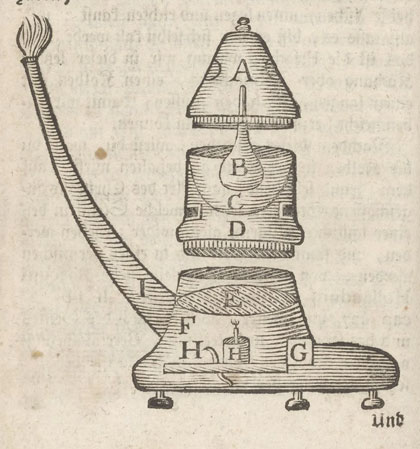
And on the small bowl containing the compressed ashes, marked C, place your flask B; and below set a lamp properly with the wick made from a thread of a wick gathered at the full moon. Cook it with gentle and constant heat; but beware that the fire never goes out.
Thus after more or less time you will see your reddish-black matter at the bottom. This blackness lasts until whitening and calcination, and is called the raven’s head. But, so that I may speak the truth, the matter is not black, as many have written, but, as Lullius himself has sincerely described it in book 3, distinction 5, Quinta Essentia, where he says:
You must not suppose that this matter is black as ink; rather it will be like the juice of a pomegranate apple, whose dark colour is the beginning of digestion and whose end is alteration.
And this same Lullius, chapter 17, in the Theory of his Testament, volume 1 of the Bibliotheca Chymica, page 718, column 2, says:
The first colour is black, and this begins to appear at the end of digestion, and lasts until the end. But when our argentum vivum is congealed, then a white colour appears in it, etc.
That is, when the spirit is dried out and at the same time united with the body, and both have been inseparably joined into one, then the matter begins to become white, because in the dry heat, it brings forth a whiteness, just as before, in the moist state, by its operation it produced a blackness.
Arnold adds in the Practica, volume 1 of the Bibliotheca Chymica, page 683, column 2:
And note that although a blackness does not visibly appear in the rotten matter, you should not be anxious about it, because certainly, according to the constitution of nature, there is a skin over the blackness.
Therefore Sendivogius says in his epistle 52, volume 2 of the Bibliotheca, page 514:
Some wish the first colour to be red, others say it is black, etc.; nevertheless both are true according to the aforesaid.
Therefore, as I have said, in fact only the black matter is at the bottom; above, however, there is something mixed between red and dark, just as it was in the first dissolution of the salt. Therefore many have written of two raven’s heads. This reddish-black colour, as we have said, truly lasts a long time, until the heat begins to work in the dry state; and then the whiteness begins, in which whiteness many colours appear, because of the general reconciliation of the spirit and body, which is also called a great darkness, eclipsis, or a wonderful reconciliation of the sun and moon, until they come to the perfect and very shining whiteness, which the sages have called the shining marble. And this is the true whitening of the Laton; and then we may truly burn the books.
And at the end it is changed into a reddish-black, shining, brittle, and fixed mass. Then you should humbly thank God, the most gracious giver, because the stone has already been brought to redness. But have patience, because much slowness is needed here, etc.
And as Job, chapter 41, says:
His heart will be hardened like a stone, and drawn together like a metal, etc.
This, however, is to be understood spiritually.
Concerning this last cooking or fixing of the stone, see Isaac Hollandus, Opus Minerale, book 1, chapter 131, where it is clearly described. Others have shown it rather obscurely, among them Lullius in the Practica, chapter 22, volume 1 of the Bibliotheca Chymica, page 771, column 1, etc.
Then take your brittle matter out, and put it into a similar glass vessel or bowl in which you also prepared the salt at the beginning. And again perform the work with the philosophical distilled vinegar, always by rubbing, and by often dissolving and congealing, as you did in the preparation of the body, until you bring the matter to the fixity of butter, and until it flows like wax. This last work of inceration you will soon bring to an end; therefore you should not believe that it requires such a long time as was shown in the first work of dissolution.
Then take, to three parts of your fixed stone, always only one part, or half a part, of the spiritus aceti, in order to incerate or imbibe it; and if it is less, it would be better. Afterward evaporate it gently again, and always repeat the work with a small dose of the spiritus aceti by dissolving, congealing, and long rubbing, until it flows, etc.
And thus that one part, or half part, of the spirit will be swiftly fixed with the body; not, however, all at once, but the subtler, airy, fiery, vaporous part, as said above. The watery part will disappear. And then you will make an earth out of the water, and a fire out of the air.
For you still remember what we said above: namely, when we wished to make a water from the earth, we took three parts of the spiritus volatilis to one part of the fixed body. Then the greater part of the volatile drew the smaller part of the fixed with itself into the air and exalted it; and so we made a water and an air out of the earth.
But now, on the contrary, we wish to make an earth out of the water. Therefore, to three parts of the fixed, one part of the volatile must be taken, as Gualdus has explained very well in his epistles. For the proof of this, see Isaac Hollandus in his Opus Minerale, book 1, chapter 38, and elsewhere, etc.
And this is also our multiplication, because always, as we have said, the subtler part of the vinegar is fixed in the body and grows. Therefore our wonderful vinegar also has a red, very subtle, alkaline, invisible, hidden, sulphurous vapour, which is easily united with the sulphur of the stone.
Therefore that same Isaac, book 1, chapter 124, says:
In our stone there is no other multiplication than that you make it very subtle and fusible like wax, and penetrating, by dissolving and congealing it with our vinegar. Then no other multiplication will be found in the art than to make the stone itself highly subtle and penetrating in this way. And whoever seeks another kind of multiplication, or thinks otherwise, does not understand our art, etc.
Therefore dissolve it again, and congeal it, etc.
Lullius adds in the Practica Testamenti, chapter 30, volume 1 of the Bibliotheca Chymica, page 776:
The first mode of multiplication is that you cause the stone to be dissolved by its mercurial white or red water, from which it was brought forth at the beginning in its preparation; afterward congeal it again, and again, etc.
And further, in the same place, he adds:
But the mode of multiplication is that you dissolve each species of it separately in its water; afterward you must again congeal it by distillation or evaporation, and then, when the water has been fixed at the bottom, it can remain behind as an earth, etc. And this must be repeated often, as mentioned above.
Therefore Lullius has said that each species must be dissolved in its water: namely, the white stone with the spiritus volatilis, and the red stone with the spirit of vinegar, which above-mentioned two waters are the white and the red. Likewise Artephius teaches concerning this multiplication in the Secret Book, and all the others also agree in this, except that they have described it with changed names. But now, since you are better instructed, where you find such things, you will understand them.
For instance, when others say: dissolve that red, namely the perfected red stone, and congeal it with the water of the red Mercury, or oleum solare; and whiten the white with the white water, the white Mercury, oleum lunare, etc. For one volatile thing is like the other, as we have explained above.
But Lullius, in the place cited above, confuses this spiritual, first, and true multiplication with another corporeal one, which is to be performed with common Mercury, and which we shall teach below. Yet this same Lullius, in the Elucidation of the Testament, chapter 6, volume 1 of the Bibliotheca Chymica, page 824, column 2, explains it more clearly, saying:
Hear and understand that our multiplication is nothing other than a repetition of our work, originally perfected and completed in the preparation. That is, dissolving and congealing, as you did at first in the preparation.
And since he said above: dissolve the stone or medicine with the white or red Mercury, after the stone has become white or red; so now you know that the white Mercury and the white water are the spiritus volatilis, and that the red Mercury and red water are the spirit of vinegar.
Therefore Lullius said this because you must know that nothing enters into the white work or stone except the white, and into the red work or stone nothing except the red; that is, the silver and the spiritus volatilis, which is the white water in the white stone; and the gold and the spirit of vinegar, which is called the red water in the red stone. Concerning which gold or silver is finally to be joined with the stone, we shall treat further, etc.
Therefore you now see clearly that where the sages truly teach the truth, all of them agree unanimously, both old and new, Latin and Arabic, etc., in all things and through all things. For all true adepts have had this one way, this one matter, this one regimen, this one work, except that some have invented a shorter way in preparing the salt; and therefore their teachings are sometimes found altered, just as they have also mixed the particulars with the universal.
For once one has this universal root, many particulars are made from it, without which general first working root all the particulars of the bad chymists in this art are false. They have indeed mixed in many deceptive things everywhere with diligence, so that the mystery would not be opened to the unworthy. Therefore also the inexperienced fail, because they do not separate the roses from the thorns.
Otherwise, where the sages agree in truth, you see here already that, because their true doctrinal sayings are properly scattered through the books, they are nevertheless explained in all and through all, and agree completely. But the false chymists, since they understand neither the beginning, the middle, nor the end, certainly cannot investigate the above-mentioned things scattered here and there, and consequently can understand nothing, because the sages have not described anything in order, but have mixed the last with the first, and the first with the middle. And no one can collect and understand the teachings scattered in their books except one experienced in the art, as Geber, Arnold, etc., confess and testify.
Therefore without an experienced master no one should presume to attain this science. For this reason thank God, because such a sincere and clear exemplar, in which you have had everything set forth by me in order and faithfully described, has never been seen in the world, nor will be. For not all who are in fact wiser than I have had the will to reveal this secret to posterity. But I, who am already old, without envy, so that so great a science should not be lost, have openly uncovered it here; and I have done this so that this secret should not die with me, because I know well that other envious men do not wish to reveal anything, so that posterity and friends too may enjoy this heavenly blessing, and that it may come to the aid of the poor, etc.
When therefore the first spiritual multiplication has been completed, afterward take one part of the multiplied stone to ten or twenty parts which is better of the purest gold melted in a crucible, and make them well mixed with one another. Although other authors, such as Basil, etc., have joined only three or four parts of gold with one part of the stone, this makes no difference; for it is enough that the stone has been specified with common gold. Therefore do as you will. But I say that it is better with twenty parts, as Isaac also wishes; or at least with ten, as Paracelsus, etc. Thus also, when you desire the white stone, you must specify it with silver, etc.
Afterward let it cool. Then take another very clean crucible, into which you shall put the gold mixed with the stone; melt it, and keep it in constant flux day and night for three days, so that it stands entirely in a constant melting. This is the three-day work of Mary the Prophetess, concerning which many ignorant people have written differently.
After this, take out the matter, of which you shall cast one part upon fifty, or even upon one hundred parts, if you wish, of common Mercury made warm in the crucible; and it will remain at first in the form of an ash-coloured powder. Upon this powder you must cast one part over two hundred parts of common Mercury, as you have done above; then it will again become powder, and the whole will be medicine. Of this medicine cast one part over four hundred parts of common Mercury, as above; and repeat this until it no longer becomes powder, but before it becomes metal.
When you see your matter made into a brittle mass, then take that mass, dissolve it again, and congeal it with the vinegar-spirit as often as you did above, until it becomes like butter and flows upon a copper plate like wax, without making smoke or smell, and without colouring. But if you do not have these signs, then dissolve it again and congeal it, until, etc.
Afterward, so that you may keep it more conveniently in a silver or ivory box, you should hold it so long over hot ashes until you see, in the cold, that it remains dry, so that you can break it up and make it into a powder by rubbing. Keep it, because you will thus have a wonderful powder for projection and an incomparable treasure. This powder will be like the “Bohemian garnets” described, I say, a powder reddish-black, shining, and showing all kinds of colours in the sun; very penetrating, because it is the aforesaid vapour which has been brought to fixity by a long dissolution. Therefore it penetrates every body and tinges it; and because in imperfect metals only with their purer part it unites itself, and casts away the impure, it therefore draws the metals together and brings them to the heaviness of gold. This powder in a lukewarm or moist heat at once flows, but in the cold it at once congeals together, etc. Therefore Paracelsus kept it in his sword-pommel, etc.
Concerning this last corporeal multiplication with common Mercury, which we described above, see Lullius at the end of his Practica, chapter 31, volume 1 of the Bibliotheca Chymica, page 776; or Rupescissa, Book of Light, last chapter, volume 2 of the Bibliotheca, page 87; or Avicenna, volume 1, page 632, chapter 8, column 2; or Clangor Buccinae, volume 2, page 164, column 2, etc.
And concerning the above-mentioned three-day work, for uniting or specifying the stone with common gold which specification is also called by some corporeal fermentation see Basil Valentine, volume 2 of the Bibliotheca, page 421, at the beginning of the second column; Isaac Hollandus, in his mineral work, book 1, chapters 85 and 136; or Avicenna, chapter 8, volume 1 of the Bibliotheca Chymica, page 632, column 2; or Roger Bacon, chapter 7 of his Speculum Alchemiae, volume 1 of the Bibliotheca, page 616, column 2; and Father Joannes Colleson, in his Idea Perfecta, volume 6 of the Theatrum Chymicum, in his Praxis, page 150, etc.
But perhaps you will say: How can so many distillations, incerations, exaltations, dissolutions, congealings, calcinations, fixations, etc., be made in one single, same glass vessel, which for so many hundreds of years the false chymists have not been able to understand?
I answer: if you remember, you have already heard above that at the beginning we rub, imbibe, dissolve, and congeal the salt in this vessel, and the rubbing is our calcination. And see: thus four or five operations are performed with one single repeated regimen.
Afterward, in this same vessel, we bring it to putrefaction, sometimes by moistening, sometimes by drying, as Ripley teaches us in his fifth gate, volume 2 of the Bibliotheca, page 280, column 2, with the example of an oak. From this same vessel we also gently evaporate the superfluous watery moisture, which evaporation is also called distillation.
When you wish, you may set a head over the above-mentioned vessel, and fit it properly with the receiver, which has therefore been carefully prepared.
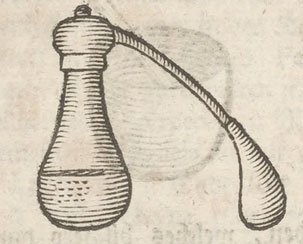
And instead of evaporating, you may distil; but this is only in the second imbibitions, which are to be repeated with the spiritus volatilis, or aqua secunda, because then the tasteless water does not evaporate by itself alone, as happens in the first evaporations performed with the spirit of vinegar; rather a little of the spiritus volatilis always rises into the head with the phlegm.
But the spirit of vinegar, because it is not so volatile, does not so easily rise into the head, but lets only the watery, tasteless part, which is of no value, evaporate away from itself, provided only that the fire is not too strong; and its alkaline spirit is fixed in the body.
Afterward we pour three parts of the spiritus volatilis over the dissolved body, and raise it into the air together with the spirit, and exalt it; this is our sublimation. After the stone has been completed, we place again in the very same vessel, over the already fixed stone, one part of the spirit, and at the same time fix it with it, etc. And here you see eight or nine operations of this art, which are always accomplished in one vessel; and thus everything is enclosed in one circle.
Therefore Arnold, in his Speculum Alchemiae, volume 1 of the Bibliotheca, page 637, has described eight operations of the art, though very obscurely. And in the second operation he testifies that all the aforesaid is to be performed in one vessel, and afterward adds: there are now seven operations of this art; but there have been many who, in the washing, have called it distillation and ascension, etc. Therefore they have set down nine operations, as above, so that the science might be made all the more obscure, etc.
And see that everything the sages have written, wherever they agree, is made true: namely, that there is only one matter, which is found everywhere; a very poor thing; a viscous water; that the poor possess it more than the rich; that it is covered with filth; sweetish, heavy, flowing upon the earth; that it comes immediately from heaven, and mediately from plants and animals; that it is of little value; and that in its center it has a bitter and stinking animated salt, filled with the universal spirit of life.
It is as we shall below clearly prove from all who agree together: all this, and each part of it, can neither be found so precisely, nor properly made, in any other sublunary subject. Also, after the very first division and arrangement in the work, there is always only one vessel; always one small and equal fire; one single regimen; one work; one single straight way; and one repeated ordering, as you have noted above. Also, everything in this art happens from the same thing, with the same thing, and through the same thing, because in that same thing is contained everything necessary in this work, and we add nothing external, etc. Everything that all have unanimously described is found to be true even in the least part. But there is no need to dispute against the unwise who deny this truth.
But how this is to be understood from these many operations enclosed in one vessel, and from those which are to be performed in one vessel, see Nicolas Flamel, volume 2 of the Bibliotheca, page 358, column 2; or Arnold in the second and seventh disposition, volume 1 of the Bibliotheca Chymica, page 690, column 1; or Albertus Magnus in the Compendium on the Origin and Matter of Metals, volume 2 of the Theatrum Chymicum, page 125; or Brother Elias the Assisian in the secret book of Artephius the Arab, etc.
And concerning this single glass vessel or bowl, in which all the aforesaid things take place, and which has no head, since in the evaporations it is enough merely to cover it with filtering paper, so that no dust or ashes fall in, see Brother Johannes de Rupescissa, Book of Light, chapter 5, volume 2 of the Bibliotheca Chymica, page 85, where he calls it a glass bowl; or Artephius the Arab in the Secret Book, near the beginning, where he says:
Place the calcined gold namely the rubbed salt, which you now know in a round glass vessel, four fingers high, or a little more, and pour our distilled vinegar upon it.
Or see Alanus in the treatise, volume 3 of the Theatrum Chymicum, after the fourth page of his tractate which bears the title Dicta Alani, where it is called scutella solutoria, the dissolving bowl. Or Sendivogius, epistle 31, volume 2 of the Bibliotheca Chymica, page 503, where it is called scutella mundatoria, the cleansing bowl; except for the phial at the end, as is read there, and as all the others teach.
Therefore one reads from Geber, volume 2 of the Bibliotheca Chymica, page 357, column 2, in Flamel’s annotations:
After the very first preparation, as in the art, we need only one vessel and one furnace.
Therefore it is certain that in the first preparation to rectify the wine, to calcine the tartar, to draw out the salt, etc. we use several vessels, namely iron, earthen, copper, and wooden vessels, etc., as Philalethes expressly testifies in the Introitus Apertus, chapter 17, volume 2 of the Bibliotheca, page 669, column 2, at the end. And concerning this matter, see Theobald, volume 1 of the Theatrum
Theatrum Chymicum, part 3, page 179, etc. Otherwise it would be impossible for us, after the first above-mentioned division and preparation, to use several more vessels, as is testified in the book Methodical Narration of the Three Medicines of Geber, etc., and as experience teaches.
Therefore Arnold, in Thesaurus Thesaurorum, chapter 17, volume 1 of the Bibliotheca Chymica, page 671, says:
From this it is clearly evident that the sages have spoken the truth, though it seems impossible to fools: namely, that there is always one vessel, one matter, one stone, one work, and one single straight way, etc.
But it is no wonder that it seems impossible to the inexperienced, since the sophists understand absolutely nothing of this art, as experience has taught for many hundred years. For I have known a hundred and more chymists, and I have not yet found one who knew even the beginning in this art, etc.
And at the end, with Joshua, chapter 24, verse 27, I testify to you:
Behold, this stone shall be a witness to you, lest perhaps afterward you contradict me and lie in the presence of truth.
And this is the true, single, and just philosophical work, and nothing else in the world, which I know, have seen, have made, and have worked with my own hands, and which I have now resolved to reveal to the diligent. Therefore you should
therefore, beloved reader, give thanks to the most gracious God, because at last you understand this secret, which for so long was buried in the abyss of the heart of the sages, and until now was so zealously hidden, but now has been plainly explained by me without envy. This secret you will certainly be able to understand thoroughly here, provided you are not altogether too obstinate.
For your greater instruction and surest conviction, I shall confirm it with the following agreements of all the sages, and with their authority, and shall expressly confirm everything previously stated with the sages of the world, etc.
These are all the mysteries of the alchemy of the sages,
which, if you understand them well, I disclose to you one by one.
The Second Part.
The agreements of the sages, both concerning the true matter and concerning the practice or exercise, as also concerning the preparation and the livingness/vitality of the wine and of the philosophical vinegar, which are the first matter and the chief foundation of the Art; without these, to begin the work is sheer folly on the part of the chymists, as we shall further show from the true sages, from that same Bibliotheca Chymica Curiosa of Johann Jacob Manget, so that you may be able to find everything there.
For there is nothing hidden that should not be revealed and come to light. Luke, chapter 8, verse 18. Therefore, as it stands in Wisdom 7 and Ecclesiastes chapter 1: hear me, so I will show you my knowledge, which God has most graciously granted to me.
Therefore we shall first treat of the metals, or ore-growths, with which the common chymists, who do not know the beginnings of nature, are commonly occupied vainly and foolishly; in these the false chymists strive with all their powers, in vain, to find the first metallic seed. And they know no other proof, though without any conclusion and distinction of their own, than this: from man springs a man, from the wolf a wolf; therefore from gold comes gold, and from the metals the metals are brought forth, etc. But certainly with a very bad consequence, as we shall see below.
But to this I answer: whether this is understood from the bodies of man and of the wolf, or from the seeds? If they say from the bodies, it would be quite absurd; but if from the seeds, then surely one cannot obtain this seed from dead men. How, then, can they believe that they can obtain this seed from dead metals? This seed of all things is nothing other than a living vapor, fit for multiplication, congealed, and present in every living body; which living vapor the dead metals do not have, even though they certainly originate from the same from which they have taken their origin; just as also from dead men, in whom this vapor is extinguished and dried out, and therefore is impossible to draw out, and to make alive. Therefore it is not possible to bring the metals, which have already been brought to their last end, in which that vapor has vanished, and which there already, as the grain in bread, is specified and changed into another nature, back again into their first vapor, as Sendivogius concludes in tract 4 of his New Light, etc.; and because it is said by the sages, as by Joh. Augurello, etc.: “In gold are the seeds of gold,” etc., this is understood in our living seed-gold, but not in common gold, etc., as we shall clearly show below, because our salt is called gold by the sages, etc.
They repeat that they are truly made from the seed; but just as in the bodies of animals the seed lies hidden, so, consequently, we must seek that hidden seed in the metallic bodies. To this I answer: does nature then, in the production of metals, take the seed from the same metallic bodies, and are the metals then multiplied among themselves? Or are they only produced from a seed brought forth from one of the elements? For this is certain and established: that nature, from the principles, or elementary vapors which are drawn out from the interior of the earth, long worked, purified, and coagulated, brings forth such things.
Therefore the sages say that at the beginning the first matter of metals, and their original seed, which is brought forth from the elements and is set together in a certain thing enclosed beneath, or within, the earth, must be taken. As, among others, Lullius has clearly described in his Testament, and as we shall below show plainly, since the metals have no other seed than a vapor enriched with heat, sulphurous, mercurial, and obtained from the elements, which is enclosed in our chaos, as Sendivogius says in tract 3.
For this reason also animals and plants contain within themselves a living seed, fit for multiplication and life, and therefore they are multiplied among themselves. But in the production of metals the matter is not so, and therefore they cannot be multiplied among themselves. But when Aristotle says: “That the species of metals cannot be multiplied and changed unless they are brought back into their first matter,” he did not mean the common specified metals, but the first salty, sulphurous, mercurial species, or the first root truly fit for multiplication, with which the metals are produced, he understood; which species, since without excrements it becomes one body, because it is buried in the depth of our chaos, would certainly not be able, in such a state, to penetrate into the metals, if it were not first led back by our art into the first seminal, purest, vaporous matter.
Although Aristotle, in these words, also shows a twofold kind of testing of alchemy: one sophistical, of the bad chymists, and another of the sages, a natural and real one. For the work of those who labor vainly and foolishly in the metals and ore-growths is false, because they cannot bring the metals back into their first seed or vapor, nor can they lead them back by any art. And with such persons Aristotle speaks, as Arnold testifies with these words, tom. 1, B. C., page 701, second column, in the question:
But he has not said this for those who know how to operate, because they know how truly to bring the first formations of nature, which are appointed for the production of gold, back into the first matter, etc. So Arnold, in the place cited. Therefore Arnold adds in the eighth dispositio speciei alchemiae: that Aristotle, in the words mentioned above, laughs at the clever ones who foolishly and vainly believe that the specified metals can be led back into the first matter; as Sendivogius also confirms in tract 4 of the New Light. Flamellus also adds in the Summary of Philosophy: that if someone should try to bring common gold and silver, and the other metals, etc., back into the first Mercury or first matter of the metals, he would become a perfect fool, etc. What, then, will the clever ones now answer?
Therefore, since in the art we must imitate nature, we must necessarily go back to the most seminal origins of the metals, as Hermes says, because bodies are certainly not produced from bodies, but from seed, as Sendivogius adds in tract 6 of the New Light. And this seed is already extinguished in the metals; therefore they also have no power to generate and to multiply themselves, as Riplæus says. And therefore they are not multiplied among themselves, nor can nature itself do this, nor does it use them for the production of other metals, since nature can no longer draw out from them that same seed from which they were produced. We have an example of this in bread, as is read in Clangor Buccinae, tome 2, B. C., page 1159, first column, and as is confirmed in the Rosary: bread brought to its end, although it has its origin from grain, nevertheless can not again be drawn out from it as grain, because it, like the metals, has already been changed into another substance. In nature there is also no return backward; you also will no longer be able to ferment with it, but without fermentation nothing happens. Therefore it is also so in the metals, in which it is likewise impossible to ferment further. Therefore the true ferment in our work is precisely that truly fermenting matter, as Clangor Buccinae adds; and although this last specification of the stone, or the union with common gold, is also called a fermentation, nevertheless it is not the true fermentation, because common gold then is nothing other than the bond, as Isaac openly declares in Opus Minus, book 1, chapter 136; see Paracelsus in his Congeries, chapters 7 and 8, etc.
Yet Clangor Buccinae, in the cited place, page 149, second column, adds: “Then it is not necessary that you trouble yourself to seek this seed in its first simple nature, and hidden in the elements, since without the universal quintessence you can do nothing; but you must seek it in a compounded, elemented species, which namely has been brought forth from the elements themselves,” etc.
Therefore see Christophorus Parisiensis, volume 6 of the Theatrum Chemicum, in his Elucidarius in Praxi, pages 223 and 229, as also in the explanation of the alphabet in the practice, page 231, etc.; and there you will understand the aforesaid.
However, the false chymists, who indeed quote Paracelsus but still do not understand him, object against this: “But Paracelsus says that from metals, with metals, and through metals, metals are made.” But because the simple-minded do not know the secrets of the sages, therefore they dispute foolishly, without drawing a correct conclusion; as Ecclesiastes chapter 3, verse 11 says: “God has given the world to them to dispute about, so that man should not find the work that God has worked from the beginning.”
And they do not know, as Artephius says, that this is a secret art, surrounded with many countless and ambiguous riddles. Paracelsus, however, intended only to indicate obscurely that every thing in the world springs from its own seed: as from the seed of man a man, and from the seed of the dog dogs are generated, etc. So also from the proper living metallic seed, and through the metallic seed, with which nature brings forth the metal, the metals are made but not from so much external, gold-opposed, combustible, unsuitable things, in which certainly the metallic seed is not present, and still much less from the dead metallic bodies, where the seed is extinguished. And although the foolish ones think they can draw it out which is impossible out of regulus of Mars, antimony, lead, marcasite, copper, etc., yet they will never produce gold from these same things, because no one gives what he does not have. And that this is so, let us see what Paracelsus says in Congeries Chymica, tome 2, B. C., page 433, chapter 7, second column:
“One must beware of the sophistical oils of vitriol and antimony, also of the oils both of the perfect and imperfect metals, and also of gold and silver,” etc.
And at the end of chapter 7, page 434, he adds:
“Some zealots of this art have sought their ferment in all kinds of first and middle minerals, and have found that they have run about in vain, because in this work there is always one and the same substance which is sought, namely that with which one begins and ends,” etc.
And chapter 8, page 444, in the cited place, he says:
“Concerning this it is to be noted that you regard those common preparations of Geber, Albertus Magnus, Saint Thomas Aquinas, and John of Rupescissa as nothing other than particular purifications and calcinations of the metals,” etc., which do not at all belong to our universal, which needs only our secret philosophical fire, namely our vinegar.
But the above-mentioned authors wrote this, first, because they as Basil Valentine also did in his Triumphal Chariot with his particular work from antimony, and as the others have done purified and calcined these metals, and afterward especially colored them with the oil of our universal salt; for without this single true universal root, all the particular works of the chymists are false, as Basil himself concludes at the end.
Secondly, because they have diligently mixed all kinds of deceptive prescriptions with the others, as is clearly evident from those same writings, so that the unworthy might not discover the secret and might not understand the hidden matters of the art. Therefore Paracelsus has honestly shown us in that same place that when the sages speak of the metals, they deceive us everywhere; and when they treat of metallic matter, or say that it must be a metallic or mineral matter, they have only wished to indicate as was shown above that the stone is made only from the metallic seed, from its true metallic nature, which is appointed for the production of the metals and which nature uses; but not from a foreign seed that does not have the metallic nature, but from the true, natural, original seed, brought forth from the elements. Therefore it is read from Helia Artista in Dialogo, tome 1, B. C., page 209, second column:
“The opinion of Paracelsus, of which mention was made above, confirms that through the metals, from the metals, and with the metals purified by the spermatic spirits and cleansed from the feces, metals are made; and that the living gold and silver of the sages belong both to the metallic bodies and to the metals, etc., since he namely teaches the sages to prepare this heavenly and spiritual salt, through which, with which, and from which, as it were, the spiritual rays of the sun and of the moon may be incorporated into their mother. And here see the mystery of the same properly explained. And so, with the proper, living, natural seed from immature metalla electrica, metals are made; just as from the proper, natural, living seed of man, men spring forth. Thus from metal comes a metal, from man a man, from an ox an ox, etc.; and it is also understood in no other way: not, however, from corrupted and cut-up bodies, as Sendivogius says; nor can such a thing be made from foreign things which do not have the natural metallic seed, as the clever ones do.”
Then one reads in tome 2, B. Chym., page 784, second column, from a sharp-witted sage:
“In the metals there seems to be a greater difficulty in discovering where they have taken their origin than in plants and animals; for it is certain that animals and plants have sprung from their parents, seeds, eggs, and by means of seeds, and therefore they are multiplied and grow. But the metals do not spring forth in this way, since they do not come from their metallic parents; for of these metals one cannot say that they have sprung from any other matter than from the elements.”
And further this author adds in the same place:
“Therefore we conclude that the first, nearly corresponding subject, bound together by kinship, is the air; and that through this it is, as through the mediator, transferred to water and earth, so that it may be the first, principal, and universal instrument of nature, through which the elemented metallic bodies are made perfect,” etc.
And further, page 785, second column, he adds:
“For the astral spirit, from which the proper form of each metal comes, is one and the same in the beginning, middle, and end of the generation, etc.”
And further, page 786, first column, he concludes:
“Since these metals do not take the origin of their birth from the seed of bodies, which is dried out there, nor are multiplied by the same, but derive their origin immediately from the elements, it is evident that they cannot be brought to the multiplication of metals except through the above-mentioned principles; yet only through the secundaria, which have been brought forth from the elements as necessary means, within which namely their living, vaporous, spiritual seeds are preserved,” etc.
And this is the metallic thing, and is the true mineral root which must be taken, through which, and from which, the metals are made, as Paracelsus understood; and thus Lullius, chapter 57 of the Testament, tome 1, B. C., page 742, second column, openly confirms, namely that this is the metallic matter of nature and of the sages, etc.
These secundaria, or principles brought forth from the elements, can be found pure only in our aforementioned chaos, which chaos is excellently described in Tractatus Gloriae Mundi, volume 6 of the Theatrum Chymicum, page 514:
“Just as in the beginning there was a matter which was neither earth, nor water, neither air nor fire, neither darkness nor light, but a confused mixture of all these together; so also this first subject of our stone is nothing but one single thing, put together from several things, according to the divine ordering, but not according to human handiwork. For it is a fire that does not have the shape of fire; and an air that does not have the form of air; it is a water to which another water is not equal; it is an earth which has no shape of earth.”
Accordingly the deceived sophists may consider whether the aforesaid chaos, which has been so beautifully described by the sages, could ever be a metal. This chaotic, electric matter, found everywhere, Father Kircher in Mundus Subterraneus, tome 2, book 12, section 1, chapter 1, has described very rationally; although he himself did not know it at all, because not everyone knows everything. But just as he was very experienced and learned in all other sciences, so he also well recognized these beginnings of nature, and described and explained this chaos so thoroughly that, if he had had it before his hands, he could not have painted it more clearly than it actually happens.
Concerning Kircher’s very wise description of our chaos, see tome 1, B. C., page 153, where one reads it, cited from him himself, as follows:
From the holy Mosaic wisdom, he says which we must rightly prefer far above every certainty of human knowledge it is known that God, the author of all things, in the beginning created a matter, which we may not improperly call chaotic, out of nothing. For the glorious God created everything at once, under which matter whatever was afterward to be brought forth in nature from mixed things and material substances lay hidden, as it were, in a universal mixture of seeds (panspermia), etc.
Since this, then, is so, one may rightly ask in this place what kind of fecundating power that panspermia was, as a production of all things. I say that it was a mercurial spirit, which was composed either from the subtler part of the heavenly air, or of the elements, or from their quintessence; and it was a sulphurous, salty, mercurial vapor, a universal seed of all things, created by God from the elements, an origin of all corporeal beings that are created in the world.
For this spirit brings forth, according to the nature of the place of birth into which it has been brought, and indeed in the unfouled places of generation: mineral and metallic bodies; in the vegetable realm, plants of all kinds; in the sensitive nature, animals according to each one’s suitable nature, by means of wonderful implantation. And in so many multiplied bodies, as species of things, it becomes distinct by its inexpressible individuation, known to God alone, into a particular individual, etc.
Therefore we have not without reason held this universal seed of nature the sulphurous, salty, mercurial spirit, a substance distinguished by threefold power to be the nearest beginning of all things created from the elements. These elements are, as it were, its vessels, and it is a matter brought forth from the beginning of things, destined by God for the being and composition of all things, since there is nothing in the nature of all things mark this nor also in the threefold kingdom of nature, which does not have its origin from this threefold power contained in the one salt of nature, should exist, etc.
And this same wise author adds further in the same place:
Therefore, just as this universal spirit of the world, this heavenly salt of nature, this true gold of the sages, this most highly desired Mercury of the sages, the quintessence of the elements, warms, nourishes, and preserves all things above and below, so also in this wonderful subject we rightly seek the universal matter of our general tincture, etc.
Therefore Sendivogius, in New Light, tract 3, tome 2, B. C., page 466, first column, says:
“The first matter of the metals, or their seed, is twofold, but the one without the other brings forth no metals. The first and principal one, in the investigation of this art, is the moisture of the air mixed with warmth, namely the universal spirit; this the sages have called their Mercury, which is governed by the rays of the sun and moon in the sea, or in the chaos of the sages. The other matter is the dry warmth of the earth, which they have called their sulphur; this is the aforesaid sulphurous salt of nature,” etc.
And further, in the same place, second column, he begins:
“But of all those who occupy themselves with the mere dissolution of the metals, and strive in vain to dissolve the metals completely, etc., if they properly considered the operation of nature, they would see that the matter is quite otherwise,” etc.
And still further:
“But you, inclined reader, should first take careful note of this chief point of nature, as has been mentioned above; yet you should also use caution, so that you do not seek that spermatic point in the common metals, where it certainly is not. For all common metals are dead, but ours are living, and have the living spirit because they are filled with the living universal spirit which must indeed be sought and taken.”
Therefore see epistle 50 of Sendivogius, tome 2, B. C., pages 512 and 513, where he speaks fundamentally of this general living spirit, which is found in our single living metal, etc.
Bernard, Count of Treviso, also says in the Epistle to Thomas of Bologna, tome 2, B. C., page 406, second column:
“They can indeed bring the forms of the metals back into the form of an oil, but not into a metallic form, as we have shown above from Aristotle; yet that oil can be useful for the medicine of the human body; but it would be unserviceable and useless for our philosophical work.” See further there, page 407, first column, what he concludes concerning the metals and minerals, etc.
Senior also says in the same way, tome 2, B. C., page 234, first column, toward the end of the chapter or discourse:
“Many, who do not understand the words of the sages, have clung to the dry ore-growths and metals, which are dry and also do not have the spirit of life and the tincture, for which reason they also uselessly add the fat and waste the gold. And yet the clever ones do not believe it, contradict everything, and work according to their own conceit in the metals and ore-growths, and in common Mercury, which is the deceiver of all alchemists. And because they seek new matter every day, they also find a new and fresh nothing,” as Sendivogius says.
Therefore, as one reads in Wisdom, chapter 3, verse 11: “Their hope is empty, and their labor without fruit, and all their works are useless.”
Then Sendivogius adds in New Light, tract 4, tome 2, B. C., page 466, second column:
“The sons of the doctrine should know that the seed of the metals is not different from the seed of all things, namely the moist vapor, the above-mentioned heavenly one.”
Therefore the alchemists vainly seek the bringing-back of the metals into the aforesaid first matter, which is only a vapor, which comes only from the elements, as has been sufficiently shown above. Concerning this heavenly vapor, adorned with such great wondrousness namely the universal spirit of the sages see in the Book of Wisdom, chapter 7, and elsewhere, where it is explained still more clearly from Solomon; and compare it wisely with what has been said above.
This living, fiery, spiritual vapor of wisdom is certainly not in the dead, dry metals, as Senior and Sendivogius have said above. Therefore the world-wise men have invented another flowing and white matter, which comes immediately from heaven, is virginal and not defiled, truly universal, in which alone the three first spermatic and vaporous beginnings of nature are contained; with which, and from which, nature brings forth the metals; and from which they easily draw out that first metallic, sulphurous vapor, which was brought forth from the elements together with that chaotic matter, and in whose middle point the coagulated and animated salt lies buried. And from this same subject we have also obtained that universal, fiery, mercurial spirit; and thus have obtained the salt, sulphur, and mercury of nature which are its body, soul, and spirit, and all come forth from one thing; as Geber, Lullius, Senior, etc., openly declare. All this cannot be drawn out from the metals. And from common gold, although it is more perfect than others, no tincture can be drawn out, since it has none except for itself alone, as Senior says in tome 2, B. C., page 234, at the end of the second column, and it does not have the spirit of life.
Therefore Sendivogius adds, tract 4, tome 2, B. C., page 461, first column:
“But I, that I may speak more clearly, admonish all here to beware, that they leave off so many dissolutions and calcinations of the metals, etc.; for this is sought in vain in a hard thing, since our other matter is everywhere soft before itself.”
Therefore Sendivogius concludes in the epistle, toward the end of the cited place, page 473, second column:
“When you work in the third matter, you will accomplish nothing, as those do who work outside this single mercurial salt of nature previously mentioned because that congealed vapor prescribed by him is better than the whole earth in herbs, stones, ore-growths, etc., except in our sun and moon,” etc.
And we have already shown above in the first part that our sun and moon are to be considered in this single twofold sulphurous, mercurial, animated salt of nature, as is testified, among others, from Geber and Lullius, tome 1, B. C., page 915; because at the same time two coloring sulphurs of nature namely the white and the red are contained in that wonderful salt, as Paracelsus also confirms in his Congeries Chymica, chapter 8, tome 2, B., page 434, at the end of the first column, saying:
“Nature requires from the artist that the philosophical namely this salt, which is the virginal, Adamic, white and red earth be transferred into the first mercurial substance, and finally be raised to a sun-stone; because, as he further adds, the white and red come forth from one root alone, without any intermediary.”
Likewise Dausten, an Englishman, testifies, chapter 3, tome 2, B., page 312, first column. And Ripley, in Accurationes et practicae Raimundinae, has described that twofold animated salt of nature still more clearly, saying:
“The gold and silver of the sages are at the same time two tinctures, or two sulphurs of nature, the white and the red, hidden in one body, not yet fulfilled or specified by nature into gold and silver,” etc.
And see why it is rightly called a metallic, mineral matter, and why in this our living gold are the seeds of gold, as Augurellus says, etc. Therefore see Laurentius Ventura, chapter 25, and read everything there diligently, and compare it together, as also in the same place, chapters 11 and 28, etc.
Therefore Philalethes, in Introitus Apertus, chapter 1, tome 2, B., page 662, first column, after he had previously written much about this our red-and-white, twofold, hermaphroditic gold because in truth everything that is found in the books of Philalethes as written by himself is remarkable, but much else, which was added to the writings of Philalethes after his death by the friends of Pontanus, in order to make their own clever inventions about regulus, antimony, etc., believable, is false; and Philalethes did not even dream of it, since they also, to exalt their Pontanus, cite and quote those foolish sophists in the writings of Philalethes, although the unwise Pontanus was never known to Philalethes; otherwise the things themselves show that Philalethes was an adept at the end of the chapter concludes:
“That our argentum vivum is this salt of the sages; without this salt every worker who has entered into this art would be like a bowman who shoots without a bowstring.”
And in chapter 2 he adds further:
“That this mineral, sulphurous argentum vivum is nevertheless not properly mineral, nor a metal, etc., but an animated heavenly salt of nature,” etc.
Therefore Isaac Hollandus says in Opus Minus, book 1, chapter 64:
“This very precious twofold salt, because it has hidden within itself a red sulphurous soul, the ancients therefore called it the animated salt,” etc.
Therefore one reads in tome 1 of the above-mentioned Bibliotheca Chymica, page 914, first column, from Geber and Albertus Magnus:
“The first mineral matter of the metals is one single salt of nature. But the metals cannot properly be turned into a salt except by the mixing of many calcinations with external things mixed into them. Such calcination, however, cannot afterward happen to common gold. The mass of the sages must be calcined without any mixing of another thing, but with its own external combustible sulphur, which kindled sulphur is not present in gold and metals; therefore they cannot be properly calcined and brought back into the first matter,” etc., as Aristotle has said above.
But the clever ones, because they want or understand nothing other than the common metals and ore-growths although we have clearly shown above from Pythagoras, Geber, Albertus Magnus, Paracelsus, Helia Artista, Lullius, etc., that when the sages speak of the metals, they always and everywhere understand our spermatic, living metal; and thus, under the metallic names, deceive the simple-minded. Yet, which is to be wondered at, they do not wish to believe this, and they try to explain the contradictory authorities of the sages according to their own opinion, and therefore take from the teachings of the sages what they want, and reject what they do not want.
And although not a single one of so many circumstances, signs, and contrary indications can be assigned to the metals, but only to our chaos, they still find no other ground. Therefore there is no arguing with such people. Therefore, when they also read many authors who reject all metals in this art, or sincerely confirm that it is impossible to bring the metals back into the first mercurial matter, they immediately say that these were not adepts. But let us return to our subject.
Therefore it is clearly evident that when the sages treat of the calcination of the metals, they do not understand it of the common metals, as you have heard above from Paracelsus and the others, but they have understood it of their living, electric, unripe, tartarized metal, whose tartar, although it is first calcined by fire, nevertheless, before the salt is drawn out of it, has many combustible sulphurousnesses, as we have shown above from Geber and Guido de Montanor. On this matter see Theophrastus Paracelsus himself in Congeries Chymiae, chapter 11, tome 2, B., page 438, first column, where he begins:
“Also the arcanum of tartar is to be set aside for a time,” etc., until afterward, as he has said above, “by mediation of the fire, the sole, pure, middle, white substance is found in the center; which substance, namely the salt, can easily afterward be brought into an oil or philosophical water, namely the first matter,” etc.
Therefore, as you have read above from Lullius, etc., from this calcined tartar our most precious salt is taken out, which salt is the true and only congealed seed of the metals; and it is called the solar and lunar body of the sages. This body is drawn out, by means of calcination, from the ashes by the artist through the combustible sulphur often present in the tartar; from the ashes, which afterward are dissolved thoroughly by the artist through the water of its own kind, it is brought into the first natural seed of the metals.
Therefore one reads in Clangor Buccinae, tome 2, page 155, first column:
“For then one has the first seed of the metals, from which the metals are artificially or by the earth, made, just as they are produced by nature beneath the earth from that same seed.” See Petrus Bonus Lombardus in Margarita Novella, chapter 25, etc. Therefore compare the following reasonably with the aforesaid.
For one reads from Lullius, tome 1, B. C., page 915, at the end of the second column:
“Just as the first mineral matter of the metals is, as we have said, one single salt, so also, since we wish to follow nature, we transform by the mediation of fire our living metal into a white salt like silver, which is called by the sages silver. And in its depth it contains that hidden red sulphurous vapor, namely the soul, which is called by the sages gold. And by this gold and silver the sages have always understood this.”
Therefore it is not fitting in this science to build a foundation upon common gold and silver, nor even, from a stronger reason, upon some other metals; for all the sages have said that this medicine must be made from a very lowly thing, which is found everywhere and is known to all, etc. What, then, could he have said more clearly of this wonderful salt of nature, in which, as you have noted above, all things agree?
Therefore it is evident that one must examine this body for the philosophical work, but not regulus, lead, gold, antimony, etc.; this animated body is in truth of the very same kind as the mercurial universal spirit mentioned above. For this reason it is also dissolved in the same, and both are at the same time united, because one nature rejoices in the other nature, delights in it, and embraces one another.
Therefore Count Bernard says in the Epistle to Thomas of Bologna, tome 2, Bibl., page 400, at the beginning of the first column:
“Therefore the thing that dissolves is different from the thing that is to be dissolved, namely in proportion and digestion, but not in matter,” etc.
And further he says:
“But the foolish make and draw biting waters from minerals, into which they throw the species of metals, and corrode them. But they do not dissolve them with a natural dissolution, which natural dissolution requires that both things remain, and that there be a true union of the dissolving and the dissolved,” etc.
This the bad chymists certainly cannot do with their waters and metals, because they are not of one kind, but have a contrary nature among themselves, etc.
Therefore you should diligently read the Epistle of Arnold to the King of Naples, tome 1, B., page 683, as where you will find all the aforesaid confirmed by careful comparison. And this same Arnold says in his Flos Florum, in the cited place, page 680, first column:
“Some believe that they can bring forth a medicine from the metallic bodies, and they have been deceived; for they err in this, that they have not taken the first seed of the metals from the beginning mark this, from the beginning but rather the body as it is in its nature,” etc.
Therefore remember what above has been said unanimously by all concerning this first seed, to be sought from the beginning. And now let the bad chymists answer whether regulus, gold, or antimony, etc., are the first seed of the metals, or bodies as they are in their nature.
Therefore one reads in the annotations of Flamel, tome 2, B., page 353, first column, from the Rosary:
“When you desire to search out the secret of this art, you must above all recognize the first matter of the metals, with which namely they were first produced; otherwise you will labor in vain.”
But what this first matter is, which is to be sought or recognized from the beginning, we have already shown above from Sendivogius, tract 3 of the New Light: namely, a fiery heavenly spirit and a dry sulphurous earth, both of which must be fished out of the philosophical sea.
Therefore Sendivogius, in the same New Light, tract 6, tome 2, B., page 468, second column, adds:
“Although the body of the metals is said to have been brought forth from Mercury, nevertheless it must be understood only of the Mercury of the sages; that is, from that aforesaid fixed sulphurous salt of nature, which has been united with the fiery, mercurial, volatile universal spirit. This is that first matter of the metals which an artist must recognize; and, joined together with it at the same time, the true double Mercury of the sages is made.”
Concerning this single, fiery, mercurial spirit of the sages, which is found only in our magnesia, see Sendivogius in his epistles, epistle 44 and the last, in the cited place, pages 510 and 515, where this is shown openly and very clearly.
This, therefore, is the matter which must be sought from the beginning in this art: namely those two things proceeding from one thing, which have been sufficiently proven above and are called Rebis; namely the fixed, animated, sulphurous body and the volatile, fiery, mercurial spirit. Both of these have been drawn out from that heavenly second matter, but not from a third matter, as the metals are; in which they certainly are not. For above you have heard that those two things joined into one are the true heavenly Mercury of the sages. And that this Mercury is the first matter of the metals, and that with this Mercury the metals were created. This, therefore, is the first matter which must be taken in the beginning.
Therefore Sendivogius continues in tract 6, in the cited place:
“The errors of all these will be made clear from the following example: for it is evident that men have their seed, in which they are multiplied. Therefore whoever wishes to generate a man does not take the body, but the seed, which is a pure vapor. But the common chymists act perversely, who in the beginning take the bodies instead of the seed, because they do not know that bodies are not generated from bodies, but from seed; which seed the metals do not have,” as Sendivogius has already said above in tract 3. Therefore he concludes at the end of tract 6:
“One must therefore, in the beginning, investigate the seeds and not the bodies,” etc., as Lullius also confirms with clear words in the theory of his Testament, chapters 55 and 56, tome 1, Bibl., pages 741 and 742, etc.
Since, therefore, the Rosary has said above that all work is in vain without a true knowledge of the first matter of the metals, and Sendivogius, in tract 3 cited above, clearly confirms that the first matter of the metals is a mercurial moisture of the air, mixed with a heat, together with the dryness of the sulphurous, salty earth, and that these two things are the Mercury and Sulphur of the sages, both of which are found only in their sea, therefore this is the first substance of the metals and the first natural seed which must be taken in the beginning.
Also, since Sendivogius repeats that one must investigate the other universal airy matter, but not the third, already specified matter, and since under dew this is explicitly stated and concluded: that you will accomplish nothing if you work in the third matter, such as metals, stones, etc. what else, then, will the clever ones answer, except that they understand only the foolish chymistry, while we understand the true Hermetic chymistry?
For our other matter is heavenly, spermatic, chaotic, electric, virginal, universal, brought forth immediately from the elements and commonly coming from them. Of this Lullius, tome 1, B. C., page 711, first column, in the Testament, chapter 3, has written thus:
“We say that the first and principal means are the four elements; the others are the vapors composed from the elements, immediately from the first composition of nature, in which vapors all bodies are dissolved.”
“The third is the clear, composed water from the above-mentioned vapors, through the thickening of its nature, which vapors come into the aforementioned vapors of the four elements namely the universal spirit drawn out from the first composition of nature, in the true form of the aforesaid clear water. And that thing is more akin to argentum vivum, which indeed is found above the earth, and not under the earth, running and flowing. And this argentum vivum is properly produced from the matter of the air; therefore its moisture is very difficult. And indeed this is true, since no heavier close moisture is found in the world, as you will see below from Morienus; of which, as Ripley says in his book Terra Terrae, there is many times mention in Holy Scripture, and it was laid upon the altar by the priests, etc. Which then is also perfectly true.”
And that in truth this matter is found above the earth, but not everywhere under the earth, see Richard the Englishman in the Correctorium, at the end of chapter 11, tome 2, page 271, first column; or Arnold in the eighth Dispositio of his Speculum Alchemiae, tome 1, B., page 693, at the end of the first column; or Guido de Montanor, in the preface of his Scala, tome 2, B., page 135, second column; and also volume 6 of the Theatrum Chymicum, page 511, in the Rhythms from the Brothers of the Golden Cross, who speak there thus: that where this matter is found, no metals grow; and that the first seed of the metals to be sought is twofold, as Sendivogius above said in tract 3, and is a double thing, namely aqua volatilis mercurialis and terra fixa sulphurea volatile mercurial water and fixed sulphurous earth.
Who now, with so many sages as masters in this art, who agree everywhere, will dare to contradict? Thus Lullius also speaks in the place cited above, chapter 73, page 752, second column:
“Hear what we say: because neither Bresca, nor Zaccara, nor even a spiced balsam would delight you as much as our first confection; for, when you have tasted only a little of its lovely flavor, I swear to you that you would have a greater desire to eat of it than before.”
See Lullius himself, chapter 24, and compare him with this.
Morienus also adds in his Colloquy with King Calid, tome 1, B., page 515, first column:
“The preparation of this stone is soft” as Sendivogius also confirms in tract 4, tome 2, B., page 467, first column, that our matter is soft “and there is greater softness in it than in its body. Its weight, however, is very heavy, as Lullius said above; and its taste is very sweet, and its nature airy, namely heavenly, and it is found under the dunghill, etc.”
Petrus Bonus Lombardus adds in Margarita Novella, chapter 14, tome 2, B., page 51, at the end of the first column, near the end:
“For in this stone, when it springs forth, because it is fresh, flowing, and suffering, it is called woman; but its coagulum, namely that of the body from which it is coagulated, because it is firm, thick, and nourishing, is called man,” etc. namely the salt.
Flamellus, tome 2, B., page 358, second column, speaks from this of what has been reported: “If only you are understanding, you will taste this refreshing drink of heaven, upon which the whole intention of the sages is founded.”
Sendivogius wrote at the end of epistle 50, tome 2, B., pages 512 and 513:
“The mercurial substance must be chosen, in which the universal coagulating spirit is; in which state it can nowhere be found except in our one subject, from which, once it has been separated, it is very bitter.”
That is the body, or the salt drawn out from that heavenly substance, which in truth is bitter and shining. Hereupon Sendivogius continues further:
“But when the other matter is spoken of, then the aforesaid properties and qualities come together,” etc. “For the said subject is thick, dark, reddish and white, sweet and of a lovely smell. But the salt is extremely dry, because it is an earth, and bitter, as he said above.” And he further adds: “But the new thing is to be chosen, because this matter easily lets out the universal spirit with time.”
Concerning this universal spirit, or our water, which is the little wife of our stone, as Petrus Bonus said above, Lullius, chapter 42, tome 1, B., page 733, second column, says:
“The woman opens the man” namely, the spirit dissolves the salt “but the stone still cannot be made by the little woman alone, because it itself is taken from the universal sex. But it is necessary to unite it with its body or salt, which is the coagulum,” as has been said above and as we have proven from all those who agree.
Therefore the clever ones should reasonably consider whether our heavenly, chaotic, universal subject could ever be a metal, since the metals certainly do not have the universal spirit, nor can they ever let it out from themselves; the metals also are neither sweet, nor do they have a smell, nor can we eat them, as Lullius said above, etc.
Therefore Sendivogius, in his epistle after his twelve treatises of the New Light, tome 2, B., page 472, second column, says:
“There is hidden in the air a food of life, which we call the dew of the night, whose congealed spirit namely the central salt of nature, which is congealed in our dew is better than the whole earth,” etc.
And further he continues:
“For you must take it as it is, but it will not be given until it pleases the artist” namely this central salt of nature hidden in the magnesia, and the universal fiery spirit enclosed in the same. “For it is the water of our dew, from which is drawn out the salt of the stone of the sages,” etc.
And further he adds:
“In this way you will have the truest explanation of Hermes, who confirms that its father is the sun, its mother the moon, and that the wind has carried it in its belly; that is, from the air, namely our alkaline salt, which the sages have called sal armoniacum, sal vegetabile, a sulphur of nature, etc., hidden in the belly of our magnesia.”
Therefore one reads of this salt, which, as you have heard above, is called our gold, in the Rosarium Abbreviatum, tome 2, B., page 133, first column:
“One must dissolve the gold which lies hidden in our magnesia, so that it may be led back into its first spermatic matter,” etc.
Therefore you see clearly that all the sages agree in this one salt hidden in the middle point of the magnesia, which is to be led back into its first natural seed. Therefore this is the silver and gold of the sages, as you have noted above from Lullius: their single and true body, and the true metallic kind that must be examined, and the true mineral root which must be taken in this art; not the common metal, as has been sufficiently shown above from all in agreement.
Therefore one reads in Arca Arcani, tome 2, B., page 598, from Rusticus, part 2, first column:
“For the natural seed of all metals is in this one thing, which is rightly called an unripe electrum, magnesia, and lunaria,” etc.
Now we shall see another agreement: whether this salt is that bitter, alkaline one, a congealed air, sal armoniacum, sal vegetabile, and a sulphur of nature, as it has been described above by Sendivogius. For Lullius says in the Testamentum Novissimum, tome 1, B., page 794, first column:
“My son, by various names the sages have called that glorious sulphur; for it is called sal armoniacum, sal alcalicum, sal amarum, a congealed wind or air, a sal nitri, a salt of nature, a vegetable salt, etc.”
Therefore this sulphur of nature is not drawn out from the metals, but from our magnesia, in whose middle point it lies hidden. I could fill three books with such agreements, but I think this is enough, since now, being instructed, you will find such things everywhere by diligent reading. Previously, before you, they were unknown words written in a sealed book, as Isaiah said to the Jews, chapter 29.
Therefore, since these testimonies do not fit the metals and ore-growths according to your opinion, you have paid no attention to them. But now you see what difference there is between a true Hermetic chymistry and the false metal-separation of the clever ones; and say thanks to God.
Lullius also says, chapter 23, tome 1, B., page 721, second column:
“Our elements are drawn from one single nature, into which a mineral species has been enclosed according to power,” etc.
And at the end he concludes:
“Therefore we bring the same from power into action,” etc.
And of the above-mentioned sal amarum Ripley says in the book De Mercurio:
“Consider well that from all precious fruits their first matter is bitter and sharp; so also the salt of nature, as the first matter of the metals, is bitter and sharp.”
For this reason Avicenna also adds, tome 1, B., page 634, at the end of the first column, in the Declaration of his Stone to his son Aboali:
“The form of the great elixir must be brought from the power of this matter, which is appointed for the production of gold, into operation, in which it is naturally present. But it lies hidden in that same thick darkness of the elements. Therefore the original and first stone is called a vapor, because it is gold in the beginning, or on the way of digestion, not yet made fixed by nature, nor brought to metallic perfection, or specified, but unripe,” etc.
What, then, can be said more clearly: that we should recognize that the first seed, or original metallic vapor, is to be sought in this art the one which nature itself uses?
But Lullius says at the end of chapter 24, tome 1, Bibl., page 722, first column:
“But when you wish to make bread, first take the flour, and understand this when we speak figuratively of the elements,” etc.
That is, as Sendivogius above says, tome 2, B., tract 6, page 468:
“Know, therefore, that the multiplying seed is the other matter and not the first; for the first matter is not seen, it is hidden in nature or in the elements, while the other sometimes appears to the sons of doctrine,” etc.
For this gold-making seed is not to be sought in the elements themselves, nor in the air, as we have explained above from Clangor Buccinae, tome 2, page 149, second column, which says:
“You should not seek it in its first simple form in the elements; rather, you must seek it in a form composed out of the elements.”
That is, as Sendivogius has said, in the second elemented matter. But you must not, as Lullius says in chapter 24, take the very most distant and subtle beginnings, nor also the very thick and earthly ones, because the principles are the elements, and the specified metals are the last, as the third and raw matter; rather, you should take only the middle matter, in which the elements are elemented, and the living seeds, already made fit for the generation of metals, are found, etc.
Therefore Lullius said: first take the flour, which is the other or middle matter, fit for making bread, and do not seek the first, which is hidden in the elements. Therefore Lullius says in the cited place, chapter 24:
“In these elements are the mineral entia realia, by which the heavenly, instrumental power is moved; and this power moves our hidden matter, and this matter is moved by the artist from its potency into action.”
And this same Lullius adds in chapter 25, tome 1, B.:
“And we have said that there is a mineral power, which comes from heaven into the mineral nature in potency,” etc.; “and we bring it into action out of potency,” as he said above, etc.
And this is what the sages mean when they say: you must take a mineral nature, because everything produces its like from its like, and is multiplied in the same; for outside the mineral nature you will accomplish nothing, etc.
Namely, as Lullius has said above, this matter descends from heaven into a mineral nature according to force and power; that is, it descends into the first natural mineral seed appointed for the generation of metals. And so we make gold from gold, and metals from spiritual metals; not, however, as the simple-minded suppose, that by the words of the sages one should understand the metals already specified, brought to their end, dead, earthly ore-growths. But this is their ignorance, because they do not understand; or, when they apply themselves to it, they act as those who drink from the river Nile like dogs while fleeing, and therefore they understand nothing. How many there are who work in the martial regulus and cite Basilius as their author; although Basilius, in book 1 of his Triumphal Chariot, openly says that they are fools and know nothing of this art, etc.
This same Lullius says, chapter 35, in the cited place, page 730, first column:
“Therefore, my son, you must be sufficiently enlightened, because, if there were no general and highest genus by which nature is ruled, there would also be no thing,” etc.
“Which genus is the matter of nature,” etc. Therefore it is necessary that, through the alteration of its form, by certain degrees of separation, you bring the aforesaid matter from potency into operation, etc., and transform the natures to the metallic line, or to the figure in which they began to work at first, from which matter or kind nature began to work, etc.
And this is our metallic, natural, sulphurous matter, as Lullius adds, chapter 57, page 742, second column. For this reason all who have written with Basil Valentine have also said that without the universal root everything is in vain. And Basilius himself clearly testifies that he made his particulars from antimony only through the mediation of this universal salt of nature, united with the universal mercurial spirit; otherwise nothing. For in his tract On Natural and Supernatural Things, and On the First Root of Metals and the Universal Mercurial Spirit, chapter 3, he openly says that his universal origin of the metals, or of the particular works, was just that universal spirit of mercury which all the sages have had; nor can they conclude otherwise.
And elsewhere he says that without the universal root, which is found only in one single thing, no one should believe that he can make either the particulars or the stone of the sages, etc.
Therefore see Cheiragogia Heliana, volume 4 of the Theatrum Chymicum, pages 275, 278, and 285, what is told there from Basil concerning this matter. And then those foolish men, working in vain in their antimony, martial regulus, and vitriol, will see from Basilius himself in his Triumphal Chariot which they have not interpreted rightly, but have explained very badly how far they have departed from the opinion of Basilius, since they remain with those false subjects. Concerning that Basilian antimony, etc., and how it is to be understood, see Eugenius Philalethes Germanus, in his Euphrates, in the appendix, etc.
Therefore Lullius, chapter 43, tome 1, B., page 734, first column, adds:
“Through the attractive power and agreement of nature, it draws it and makes it thick through a subtle vapor of sulphur, which is in our mineral, in the likeness of a mercurial, drier, and sulphurous smoke, in whose belly there is a fire, so that it does not burn. This is the aforesaid dry, sulphurous, mercurial, fiery salt of nature,” etc.
And further Lullius says, chapter 48, in the cited place, page 737, first column:
“And therefore, when we wish that the dry thing namely the salt should be turned back into the first moist seed, we take the water into which the spirit has been brought, namely that airy vapor namely that universal spirit without which vapor, which is the matter of our origin, which comes from the most universal kind, it cannot be congealed. Therefore I tell you that you should well know how to unite that airy substance of our stone namely our universal spirit and the substance of the earth of this same stone namely the salt, which is the mother until, without separation, they are well united,” etc.
“My son, the airy substance is the matter of our origin; its spirit or moisture is very fiery, because it is endowed with the property of the fire of nature,” etc.
Therefore this our earth, namely the salt of nature, if it were not first brought by means of the spirit into the purest vapor, could not penetrate into the metals. Let the clever ones therefore see whether it is possible to bring their metals back into the aforesaid vapor. O simplicity! O foolishness!
This same Lullius says, chapter 78, tome 1, B., page 754, second column:
“Our matter mark this is a very fat, red, sticky, and airy substance, in whose belly is that fire which we seek,” etc.; namely the universal spirit, which is our Mercury and our fire.
With this fat matter, as said above, we first make the philosophical wine and vinegar, from which, when it is well putrefied and digested, we draw out that universal spiritus volatilis, or burning water, which is our mercurial aqua vitae, and also the sharp and almost alkaline spirit. And from the dregs, or calcined tartar, we draw out the salt of nature. Afterward we dissolve the salt with the sharp spirit; the dissolved salt we unite with the spiritus volatilis, and cook it into a stone, etc. And this is our art.
Therefore, after this matter has been bound into a very pure vapor and brought to fixity, it easily penetrates through every metallic body, colors it, it draws it together and makes it perfect, etc., because it is the same first true species and natural root, etc.
Therefore Lullius, in the Testamentum Novissimum, tome 1, B., page 791, second column, says:
“And this we have understood to happen in this great art, when we have said: calcine the faeces of the wine, or its tartar; draw out the salt, and soak it with its rectified water of life,” etc.
“And in this way you will multiply it, and will perfect the sal vegetabile; and of this sharpening and perfection of the salt we have often spoken in our books,” etc.
“My son, this sharpening and perfection of the salt happens with its own water,” etc., “and not with a foreign one,” etc.
And see the Concordance in the Tractatus Gloriae Mundi, volume 6 of the Theatrum Chymicum, page 516, and join both together, etc. But always understand it of the philosophical wine, although it is seldom named by the adepts; therefore many are deceived, thinking that it is either urine, or that they understand it of the common spirit of wine, and they deceive themselves. And also concerning its calcined tartar: this tartar, after the first calcination, is coal-black, and therefore the sages have compared it to foam, or to iron slag. And then it is the blackness so often described by the sages, which is blacker than black, from which, as Antonius de Abbatia says in the second epistle, is drawn out the first matter of the metals and of the sages, namely the salt, of which Lullius says:
“This tartar is blacker than that which is produced from the wine-lees of Catalonia.”
Although the sages have often said in a veiled way of the putrefied wine, since it is black at first, sometimes cabalistically: “Distil the blackest of all,” etc.
From this wine and vinegar two wonderful waters are drawn out: namely, the spiritus volatilis from the wine, and the sour, almost alkaline spirit from the vinegar; all two of which are our Mercuries, as said above, and are called our fire of nature, and again nature.
Therefore see Isaac Hollandus, first De Opere Vegetabili, De Quintis Essentiis, and afterward also De Opere Minerali, where throughout the whole work he speaks of nothing other than the spirits, etc.; and compare this with the aforesaid.
Of these two aforesaid waters, or spirits, Lullius speaks in Compendium Artis Alchymiae, chapter 2, tome 1, B., page 876, first column:
“My son, two waters have been drawn out from one part of nature; through these our whole art of alchemy receives form. One makes the stone volatile” that is, the spiritus volatilis and the other makes the stone fixed namely the spirit of vinegar. Understand this: for the whole art is carried out by the aforesaid two waters, without which nothing is accomplished. But they are of another nature, although they are sisters and were made from one matter at their origin, etc. Concerning this matter, see Roger Bacon in Speculum Alchemiae, chapter 7, and grasp his meaning, etc.
Since therefore the whole art of alchemy depends on these two waters, and the clever ones have neither one of them, nor know these waters, how could they believe they can make our stone? What blindness! What nonsense!
These waters, or aforementioned spirits, are adorned with many names. As you will now be able to understand everywhere, since you have been instructed about it, see concerning the names written about them Lullius in Testamentum Novissimum, part 1, tome 1, B. C., page 792, second column; or Senior, tome 2, B., page 219, first column. But when you are wise, then, because you have now been instructed by my clear explanation, you will surely understand that everywhere the sages speak of all metals, stones, known salts, and other fixed bodies, they always mean our wonderful salt, which has been drawn out of the lowest thing; as Pythagoras testifies in the Turba, sermon 31 and 64, tome 1, Bibl., page 454.
Therefore Alfanus, in the same Turba, page 458, first column, at the end of sermon 42, adds: this sulphurous natural body is named with all the names of the world.
Therefore also Philalethes, in Fons Chemicus, tome 2, B., page 697, first column, says:
“Therefore I command you to take that subject which is lowly and clearly known to the whole world, from which you will, in a wonderful way, draw out what is most hidden in it; that is our sun, and our menstruum, or our fiery water,” etc.
There he explains at the same time that these aforesaid two waters are our fires, etc.
And wherever they write of fluid, hot, fiery, oily, dewy, fatty, watery, urinous, and dissolving things, the sages have always understood it of the aforesaid two spirits, but with this distinction: that all white, flowing things are to be taken for the volatile spiritus vini, and by all red, flowing, or sour things is meant the spirit of our vinegar, which the sages wished to indicate, as Senior, tome 2, B., page 220, first column, and elsewhere explains.
Likewise also, when they speak de vase naturae, of the bath of the king and queen, of the bath of Mary, of horse-dung, of the fire of nature, etc., you should always understand it of the said spirit.
This, then, shall be your general and infallible rule: for in reading through the authors you will everywhere be able to notice clearly that, although they describe the dissolution of the aforesaid body under the name of aqua fortis and of metals, of urine, aqua tonitrua, horse-dung, quicklime, aqua vitae, lead, quicksilver, gold, etc., always in this way, mysteriously, in different forms, nevertheless in substance they all include this single work of the dissolution of our salt: namely, to unite the moist with the dry, the body with the spirit, the volatile with the fixed, together by dissolving and congealing; as all the sages unanimously agree in this, and as it is confirmed in the Turba.
Therefore one reads in the annotations of Flamel, tome 2, page 353, first column, from Clangor Buccinae:
“This whole art consists in this: that we join the moist to the dry; that is dissolving and coagulating. The moist is the spirit; the dry is the perfect body, namely purified from all uncleanness and brought to perfection.”
As you have noted above from Guido. And further from Villanova, page 354, second column, where he says:
“What dissolves the body is from the spirit; but what coagulates the spirit is from the body,” etc.
And read diligently the rest, what is written there concerning the preparation of this salt.
But because, as was said above, the spirit of the vinegar draws the soul from the body, and is colored like blood as one reads in the Turba from Dardarius, tome 1, Bibl., page 451, second column, sermon 19 it is called aqua rubra, red water, although it is white; namely because of this its action, as is explained in Senior, tome 2, Bibl., page 224, at the end of the second column, and further; or in the tract Clangor Buccinae, tome 2, B., page 159, second column, from Lullius.
And it is also called the blood of the dragon and of the lion, human blood, menstrual blood, etc.; or aqua fortis, spirit of vitriol or of nitre, the sour grapes, the juice of the pomegranate, etc.; and it is called a wonderful fire of nature.
And, on the other hand, the spirit of the volatile wine is called aqua alba, the milk of the virgin, the white of an egg, oleum lunare, etc., and also a natural fire. And both are our Mercuries, the white and the red, which are also called oleum solare and oleum lunare.
Now you will understand Arnold of Villanova in Thesaurus, chapter 8, tome 1, B., page 669, first column, where he says:
“Just as you have done with the red water, so you will also do with the white, because they have one and the same kind of washing and the same effect; except that the white water belongs to whitening, and the red to making red.”
Therefore you should not mix one with the other, because otherwise you will fail, if you do it differently, etc.
And further, chapter 10, in the cited place, same page, second column, he repeats:
“Therefore do not mix the oil of gold with the oil of silver, because otherwise you will err,” etc.
By this we should recognize, as was said above, that all flowing, oily, dewy, airy things, etc., indicate nothing other than the two aforesaid spirits. Likewise also, when you read: “pour over the body from the air,” or “from fire,” “soak,” or “amalgamate the gold with the white or red Mercury,” or “with the aqua solaris and lunaris,” or “with the oleum solis and lunae,” or “dissolve the body with aqua fortis,” or “with the fire against nature,” and the like you should believe nothing else than that the aforesaid body is to be soaked, impregnated, united, and dissolved with its spirit, etc., either with the spirit of vinegar or with the spirit of our wine, according to the aforesaid names: white or red, sour or sweet, etc.
For in this first perfect dissolution of the salt by means of our vinegar, and afterward, secondly, in an indissoluble union with the volatile spirit, our whole art consists, as you can learn in Flamel’s Annotations from all those cited there. Concerning these two waters, furnished with so many names, one also reads in the annotations of Nicholas Flamel, tome 2, B., page 357, second column:
“The philosophical water is twofold, namely solar and lunar,” etc. See previously there from the Rosary, and grasp his meaning.
Therefore Lullius confirms this in the Practica, chapter 18, tome 1, B., page 769, first column, where he says:
“Just as you have made it with the water of the moon, so make it with the water of the sun; and, as you have heard about water, understand it also of air, oil,” etc., “which are all one, as is explained in the Rosary.”
Therefore Arnold has said above that we should not mix the white water, or oil of silver, with the red water, or oil of gold, because the white water, or oil of the moon, belongs to whitening, and the red water, or oil of the sun, belongs to reddening, etc.
Therefore we first use the spirit of vinegar, or the red water, for the dissolution of the body. For this reason it is also called the first water, and by it, through the drawing-out of the soul from the body, the body together with the soul is made red like blood. And so it is called aqua rubra, red water, although in its own nature it is white.
And afterward we make the body, or our laton, white with the white water, oleum lunare, namely with the spiritus volatilis, after it had first been made red by the vinegar. And so it is called aqua secunda, or aqua alba, the second water or white water. Finally we unite the body with the aqua alba; afterward, one after another, we proceed in the preparation of the salt, without mixing the waters or spirits, by soaking them onto the body; otherwise, if both waters were mixed together at the same time, the body would never be dissolved. And these are the incomprehensible secrets of the sages for the inexperienced, as you will now truly know and understand: that I have experienced something in this art. For such things, confirmed by all the agreeing sages, you have certainly never before heard or seen; therefore no one can explain all the aforesaid except he who is experienced in the art. And if at the beginning I had had such a pattern, I would have given 100 gold-gulden, etc., and would not have exerted myself so long to discover this secret.
Therefore the sages say that we must dissolve the gold with the water of its own kind; that is, that we must dissolve our salt, which is our gold, with the spirit of the philosophical vinegar, which certainly is a water of its own kind and comes from one source. Otherwise it would be foolishness to believe that a water of common gold is found in the world.
And now repeat what Lullius said above, in the Testamentum Novissimum, tome 1, B., page 791, second column:
“Calcine the tartar of the wine, and afterward soak the same salt with the rectified aqua vitae,” etc.
“My son, this sharpening or preparation of this salt is done with its own water,” etc.
Although the first preparation of this salt is always hidden under other words, since it is always described by altered speeches and veiled under the dissolution of the metals with sharp waters, still now, in the conclusion, you will understand that the aforesaid dissolution of the body which is covered with so many names and words and afterward the union of the universal spirit and the body, is in sum nothing other than what Lullius said above: calcine the faeces of the philosophical wine, draw out the salt, and soak it with the universal spirit drawn out from that same wine, because it is a water of its own kind.
Also, when they say that gold does not color unless it is first colored, this is likewise understood of this one salt of nature, or gold-making salt of the tartar of our wine; because, if it were not first dissolved from the ground up by means of our vinegar which is a water of its own kind it would never draw its inward fixed tincture out of itself. Consequently the dry body would not give its tincture, as Artephius says, and would not be able to penetrate into other metals.
But when the red soul is drawn out of the aforesaid body by our vinegar and raised, and so, in our way, sublimed, then it is colored with its tincture. From which, therefore, with proper with a sincere heart, see the secret explained by me; see Menabdes in Turba, chapter 25, tome 1, Bibl., page 453, second column, where you will find the aforesaid very clearly confirmed, and will learn that I am sincere and experienced.
This vinegar the sages have hidden not only under so many names as they have also done with the salt and the spiritus volatilis but they have also called it the eagle, which certainly none of the clever ones has ever understood or heard of until now. Therefore one reads of this piece in Concilio Conjugii de Massa Solis & Lunae, tome 2, B., page 240, first column:
“Nine eagles are nine parts of the vinegar, because nothing is more contrary to our sun than our eagle,” etc.
And further he adds:
“Therefore Moses says in the Turba as in sermon 61 ‘Unite first’ mark, first, and think of the aforesaid nine parts of the vinegar, etc. ‘for these eagles have stretched bows, which kill the body and draw out its soul, which is the dissolved tincture,’” etc.
Concerning this philosophical vinegar, see Micrer, volume 5 of the Theatrum Chymicum, page 99, etc.
Therefore Senior adds, tome 2, B., page 220, first column:
“The reddening of the body is carried out with nine parts of the aqua prima; and thus the first preparation is made, which is the dissolution,” etc.
These are those eagles drawn on the table in Senior, tome 2, B., page 216, figure 12, which are truly seen there, because for the dissolution and preparation of the body, before it is thoroughly brought into an inseparable oil, often nine parts of the vinegar are not sufficient, and often no fewer than ten. Although Philalethes says that seven are enough, etc., as is noted in his Introitus Apertus, chapter 7, tome 2, B., page 663, second column. But this happens according to how practiced or attentive the artist is, and according to the nature of the fire and of the matter itself.
For I used more than ten parts for such a dissolution; but, as said above, little by little, weekly, namely by soaking, and afterward by gently evaporating it for eight days with a mild heat, so that only the watery or water-fleeing part, as Gualdus says, disappears, and the subtler airy and spiritual part is fixed in the body. Otherwise, if the fire were too strong, the subtler spirit would also rise into smoke together with the phlegm, and the salt would never be dissolved.
Therefore one reads in the Turba, tome 1, B., page 450, sermon 16, second column, from Socrates:
“And know that the first strength is the vinegar,” etc.
And further he says:
“Therefore rub it with the sharpest vinegar, and cook it until it becomes thick; but beware that the vinegar is not turned into smoke, and the art perish,” etc.
And further:
“Rub it with the sharpest vinegar, and cook it seven days; but beware that the mystery of the vinegar does not smoke away. And let it stand through the nights over a very slight fire; and when you see it beautifully dry, then soak it again with vinegar,” etc.
And so Socrates teaches this eight-day or seven-day soaking, which is to be repeated with our vinegar. The aforesaid very gentle evaporation is also meant; and at times, with such gentle evaporation, neither seven nor eight days are enough, as you have read above from Lullius, until the salt remains dry, etc.
Therefore remember what we said above in the first part: namely that we must soak the body weekly by gentle cooking, and evaporate it for eight days by light rubbing, etc.
Concerning this vinegar, or dissolving menstruum, or our eagle, this is noted from Paracelsus in Congeries Chymica, chapter 11, tome 2, B., page 437, first column. For he says in the cited place:
“The unripe mineral electrum must often be dissolved by the sharpness of the eagle, until,” etc.
This also must be added, so that you may understand everything from the ground up: namely, when the sages say that our matter comes from plants and animals, as you will find in many places by reading the sages for example, among others, from Roger Bacon, chapter 3 of his Speculum, tome 1, B., page 614, first column it is to be understood thus: I say, therefore, that first the matter from the vegetabilia, such as herbs, trees, etc., must be chosen. Or, as Flamellus says, tome 2, B., in the Summarium Philosophicum, page 379, first column:
“The vegetable, animal, and mineral things which are united in one thing: these are our matter,” etc.
But why it is called a mineral salt, and why this salt is also called vegetable and animal, it is not permitted for me to say openly; rather, I shall say it to you orally. Or, as Lullius says, chapter 41, tome 1, B., page 733, first column:
“We have drawn this from herbs and animals, in the form of a thing, from the spirit of the quintessence, drawn from the water, which afterward we concentrated into the vapor of its sulphur” namely, we made that clear spiritual water fixed in its sulphurous salt “and then there appears a stone, which was previously hidden from us in its fluid magnesia,” etc.
Namely, the salt appears, which is called the lapis, and the sulphur of nature hidden in the center of our fluid magnesia; in which afterward we congeal and fix the mercurial spirit of the universal quintessence, which is drawn out from the aforesaid moist, spermatic, heavenly subject, which subject, or our magnesia, comes immediately from heaven; and on earth it is obtained mediately from plants and animals, as, for example, urine, silk, honey, etc.; or, so that I may speak more clearly, like paper, which springs from a vegetable thing and afterward comes from men, and yet is not vegetable nor animal, etc.
Concerning this central salt, Lullius adds, chapter 51, in the cited place, page 738, toward the end of the first column:
“My son, you must prepare your elements until you have that pure nature of the first thing, which has been drawn out from the middle point of the same, in a clear, shining, and crystalline form” namely, the salt. Concerning this, see the tract De Vera Ratione Lapidis Progignendi, volume 4 of the Theatrum Chymicum, page 396, where it is openly said that it is the first seed that makes sun and moon, etc.
Although, therefore, concerning this vegetable and animal matter you find something everywhere in disguised fashion, yet for the reason known to us, as said above, and also in Christophorus Parisiensis in his Elucidarius, or in Protoster, a German, likewise in his Elucidarius, and in so many others, you should not believe that this thing although it is called lunaria, chelidonia, etc., or basilisk and dragon is vegetable and animal, nor in any way that it comes immediately from those things or consists of them. For immediately it is a heavenly matter, brought forth from the elements, the daughter of sun and moon, as Hermes says. But it comes forth only mediately from dragons and basilisks, herbs and trees, in a way known to us, just as light comes from the candle.
Therefore, in order to deceive the simple-minded, the sages especially Lullius, Parisiensis, the Rosary, etc. have so often written everywhere of a vegetable menstruum, salt of tartar, aqua vitae, white and red wine, tartar of wine, lunaria, etc., and other such things, although, as we have said, not without a cause known to us.
Therefore Paracelsus says in his Congeries Chymica, chapter 7, tome 2, B., page 432, second column:
“The sages have said, and indeed not unreasonably, that their matter is vegetable and animal, or comes from such things; but Mercury the Philosopher, with King Calid, has spoken of this matter in this way, when asked: ‘This secret is granted to be known only to the prophets of the Lord. Why is this matter called vegetable and animal?’” etc., and to those who know this matter.
Also one reads in the Rosary, tome 2, B., page 88, first column:
“Our stone is from an animal, vegetable, and mineral thing.” And further, in the cited place, page 89, first column, he adds:
“Succus lunariae, aqua vitae, quintessence, burning wine, vegetable mercury, burning water, vegetable menstruum,” etc., “are all one and the same. For the succus lunariae is made from our wine, which is known to few; and with this juice” namely, with the spirit “our dissolution is made, and our drinkable gold, aurum potabile, is made through its mediation, but without it nothing is done. For an imperfect body” namely the salt still in its first nature and not yet purified “is, by means of that spirit” our vinegar “turned back into the first spermatic matter,” etc.
And the philosopher adds:
“Thus there are three origins of the stone of the sages: namely the animal, the vegetable, and the mineral threefold in name, and one in essence.”
Therefore the sages have described three different works, by which many are deceived, because they believe that the sages had different matters and different works, although there is always one work and one single matter. Therefore Lullius, in Elucidatio Testamenti, chapter 1, tome 1, B., page 823, second column, says:
“We have introduced many outward things by way of likeness, since there is only one thing of our stone; and in the thing we add no outward thing to it. We have also described three stones, namely the mineral, animal, and vegetable, although there is always only one stone of our art,” etc.
But the simple-minded, who do not understand the secrets of the sages, apply all their diligence to the metals and ore-growths, since they believe that the mineral work is made from these, and they are greatly deceived.
Therefore Paracelsus, in Congeries, chapter 7, tome 2, B., page 432, second column, writes:
“There have been ignorant persons who believe that the stone is threefold and separated into three kinds, namely from the vegetable, animal, and mineral, whereby it happened that many have also sought this in the minerals and have been deceived. For this science is far removed from the opinion of the worldly-wise. For the sages confirm that their stone is, under one form, vegetable, animal, and mineral. For it is to be noted that nature has divided her mineral seed into many kinds, namely into sulphur, salt,” etc.
Therefore our salt is called mineral, etc.
And further Paracelsus adds:
“Therefore the clever ones have taken occasion from this name ‘mineral,’ and have taken common mercury, gold, antimony,” etc. purified in all kinds of ways, which errors are all to be avoided, together with all the other preparations of minerals and metals. For everything that is described by the world-wise concerning metals and ore-growths are only sophistical purifications, cementations, and calcinations, in order to deceive the simple-minded, etc.; or under those same names they wished to indicate the preparation of our salt.
Therefore, from all the metals and their preparations which were described diligently by the sages in order to deceive the simple-minded, and under which they hid and veiled the true preparation of the salt, as Paracelsus also honestly said above, you should understand Parmenides also in the Turba, tome 1, B., page 448, sermon 11, second column. For this art, as Pythagoras and Eugenius Philalethes say, does not consist in the tormenting of the metals, but in the knowledge of the elements. Therefore you should understand the following well, and you will not err.
For one reads in the Rosary, tome 2, B., page 88, first column:
“The sages have said that their stone is made from one thing, and it is true; for everything happens with our water, which comes from one thing. For this same thing is the seed of all metals. This salt is also the salt of the metals, and the stone of the sages and the first metallic coagulated thing, the seed hidden in the belly of our magnesia as is added at the beginning of the Rosarium Abbreviatum.”
And our water, salt, vinegar, and everything necessary for our work springs from one root: for from our wine, and from its tartar, which was made with that heavenly, tough subject, everything aforesaid is drawn out.
Therefore Brother John of Rupescissa, book Lucis, chapter 2, tome 2, B., page 84, says:
“The matter of the stone is always one, and the very same thing, of lowly worth, and is found everywhere in a tough water,” etc.
Concerning this one matter, D. Thomas adds, tome 2, B., page 93, second column:
“But the matter of the stone is a thick, fatty water; and I believe that the more precious one is that which comes from animals.”
And further he says:
“This stone cannot be prepared without our green, fatty duenech, which grows in our ore-growths,” etc.; namely in our green and not dry subject, etc.
Concerning this, Theodorus Mundanus, or Edmund Dickinson, an Englishman, says:
“The green, flowing, and vegetable substance of our subject is the food of our basilisk.”
And below, tom. 2, B. pag. cit. ex Malchamech, one reads: “The stone which is necessary in this work is a blessed thing, which thou wilt find everywhere on the plain, on the mountains, in trees, and in forests; even the poor have it, and it is a very common thing.” Therefore see dist. 1, Allegoriae super turbam, and grasp the meaning.
And further, tom. 2, B. cit., it is said: “The sages have written that their stone is from spirit, soul, and body, and is one thing; and they have spoken truly. For the imperfect body is the salt, the ferment is the soul, and the water is the spirit.” Therefore Lullius, cap. 9, theoria, tom. 1, B. pag. 714, 2 col., says: “That the universal spirit or Mercurius is drawn out from our lunaria, in which the dragon is dissolved, namely the salt.” Therefore Geber says: “From itself, with itself, and through itself, everything is made; for in itself is everything necessary for the work.” Therefore we add nothing foreign to it, nor do we diminish anything of its pure substance, except that, in its preparation, we remove the superfluous and corruptible things, etc.
The quibblers may therefore answer whether all this may be made from their metals and ores, only in one subject, and whether they possess nothing foreign in their work? Certainly not; therefore they are surely occupied with a false chymistry. Therefore Senior says, tom. 2, B. pag. 227, 2 col.: “The stone of the sages in it, and from it, everything is made: the root, and the branch, the leaves, blossoms, and fruits; for our single matter is like a tree, whose branches and leaves, and blossoms and fruits, and everything from itself, in itself, and through itself, is; and it alone is something whole, and from itself something whole is made,” etc.
What, then, will the bad chymists answer to this? This single sentence of Geber and Senior should be enough for the false chymists who labor in vain in their minerals and metals, as above Paracelsus and Sendivogius have said, so that at last they should abandon their undertakings, since certainly all that is necessary for our work is not there. And without foreign things they cannot deal with the metals. Why, then, do they waste their time so uselessly, and throw away money, as it were, with harm to body and soul? And yet they cannot say that it is another particular work; for they have already heard that without the true universal root all particular things are false, as Sendivogius openly testifies in tract. de sulph. item de tribus princip. omnium rerum, tom. 2, B., p. 488, 1 col.
1 col. For common gold, although it is more perfect than others, still cannot communicate its tincture to others, since it has no more tincture than is enough for itself alone, as Senior, cited above, tom. 2, B., p. 234, 2 col., clearly explains. How then can they believe that from other imperfect metals they can draw out a tincture or gold-making seed? On the truth that gold, however it may be prepared, can give no tincture to other metals, see Arnoldus in Thesauro thes. cap. 8, tom. 1, B., p. 665, 1 col., and also Roger Bacon, cap. 3, Specal. alchem., in tom. 1, B., p. 614, 2 col. Therefore Geber says, tom. 1, B., p. 581, 1 col.: “The sages have hidden the science under the names of all things in the world, but especially under the names of all metals; therefore it is no metal.”
Therefore it is to be noted that, although this matter is called mineral, and also animal and vegetable whether this happens not without cause yet it is expressly neither a mineral subject, nor vegetable, nor animal; nor does it originally come from them, as Sendivogius testifies from all the sages in epistle 54, tom. 2, B., p. 515, at the end of the epistle, and as the brothers of the Golden Cross confirm. Since, therefore, it is excluded from the threefold kingdom of nature, it must necessarily be a universal, heavenly, airy subject; moreover, it is something so constituted that one may, without contradiction, say that it is and is not animal, vegetable, and mineral, as Marc. Eugen. Bonaccina in compend. de auro potabili, cap. 2, and others have written; because, although it comes immediately from heaven, nevertheless it is found by means of animals and plants, and also of the earth, and is preserved among the dung-heaps.
But, as we have said above, it cannot be explained in any other better way than that such a heavenly subject comes forth from animals and plants, as light comes forth from candles. Otherwise, if it were not brought forth in some manner from the things mentioned above, then so many cited sages in their writings would certainly not have called it vegetable and animal; of this Flammel speaks in Summario Philosoph., tom. 2, B., p. 370, 1 col.: “Therefore the sages have a garden in which their sun is sprinkled, both in the morning and in the evening hours, day and night, with the most sweet dew, and this without ceasing; whose earth brings forth trees and golden fruits,” etc.
And this is our dew, as Sendivogius shows, epistle post. 12, tract. tom. 2, B., p. 472, 2 col., and still more clearly in epistle 54, loc. cit., p. 515, 1 col.
And Basilius Valentinus, in his tract De Magno Lapide Antiquorum, tom. 2, B., p. 412, 1 col., says: “But it is not necessary to seek this seed in the elements, as we have shown above from Lullius, Sendivogius, and Clangor Buccinae, but in a dewy subject, namely in that matter brought forth from the elements.”
Therefore Basilius says thus: “For our seed is not so far removed; rather, the place is nearer where the above-mentioned seed has its certain dwelling, so that, when thou only extractest from it the Mercurius, sulphur, and sal understand: of the sages or the body, soul, and spirit, rectifiest them, and at the same time joinest them together inseparably, then,” etc. “And know mark it that this is nothing other than a fluid, dewy key, and heavenly substance, and dry water which does not wet the hands which water has been added to the earthly substance, namely the salt; which pieces are all one thing, sprung from three, two, and one, and generated,” etc. And see vol. 5, Theat. Chymici, p. 444, from Hamuel, etc., and connect it together.
Therefore one reads from Arnoldus so that we may recognize that the above-mentioned first seed of gold is to be sought in this art in the common or indicated thing, but not in the metals in Thesauro thes., at the end of cap. 4, tom. 2, B., p. 664, 1 col.: “Therefore the most glorious God should be praised, who from so poor a thing has created the precious thing, so that the same chiefly keeps an equality with the nature of the minerals, and has given it a substance, and the property of the substance, which one can find in some other thing; since it alone is what overcomes the fire, and is not overcome by the fire namely this wonderful salt and contains the whole in itself, of which we have need in this work and in our mastery; nor is anything like it found anywhere,” etc.
What will the quibblers now say? Is this the regulus, antimony, and gold?
Therefore Pythagoras, in Turba, serm. 64, tom. 1, bibl., p. 463, 1 col., says: “In this most contemptible thing, in which the precious is hidden, the sages agree; and if the common people and all investigators of this art knew this little thing, they would hold it for a lie.”
Therefore M. Georgius Phaedro, in Latrochemia, p. 185, says: “Which matter is so common and well known that, if I were to name it, I would make myself into ridicule and mockery.”
You will find which matter it is, in his Aenigmata, described by Phaedro himself so clearly that, unless you are of a very hard head, you will immediately recognize it on pages 118 and 187. Of this matter it is necessary, as we have said, that one may say without contradiction and without lying that it is and is not animal, vegetable, and mineral. It is therefore called mineralis because, first, it comes from a heavenly ore-mine; secondly, because it is our minera; thirdly, because its salt is the first seed of the metals; fourthly, because all salts are called mineralia.
Also, that it is truly and not metaphorically covered with filth, as one reads in Concilio conjugii de massa solis & lunae, tom. 2, B., p. 240, 1 col.: “This house of the treasure is a mine of the art, hanging in the filth of the dung-heap.”
Thus, after the true principles have been recognized, one easily understands all the riddles set forth by the sages concerning the matter itself, as the following verses themselves clearly explain, etc. For one reads in the very ancient author of Roris aurifici, p. 71, at the end of chapter 11:
“Offer purple roses and flowers of the dragon,
That he may offer you his own fruit.”
Also from Malchemech, an Arab, tom. 2, B., p. 897, toward the end, 2 col., number 33, table 9, the following verses are noted:
“Our stone, in its order, draws from animals
its origin,
For beautiful Apollo receives
thy rays.”
Also tom. 2, B., p. 196, 2 col., from Marculinus:
“And the stone is hidden, buried in the lowest spring,
Low and cast away, covered with mire or dung.”
And again in the same place further:
“This stone here is not a stone; it is an animal, which thou art able to beget,
And this stone is a bird, and not a stone; or this is a bird.”
Philaletha, in Fonte Chemico, tom. 2, B., p. 693, 2 col., speaking of this common, salty, filthy, mercurial, dewy, heavenly matter, found everywhere upon the earth, in agreement with all the sages cited above, says: “By our Mercurius I understand that which the returning sun pours forth in spring through all places; gather this in the month of October, because it is then found at the proper time, and it is the most precious treasure of the whole world,” etc.
Therefore Richardus Anglicus says in Correctorio, cap. 1, tom. 2, B., p. 271, 1 col., and thus, according to the opinion of all sages, we have the nature of sulphur and Mercurius above the earth, from which gold and silver have been made by nature beneath the earth.
And Ripley, cap. 3, De Lapide Animali, adds: “Consider well the noblest bird, which begins to fly when the sun is in Aries; but I advise thee that thou seek the matter from its minera, or from the earth, so that it may not spoil in the purchase, through the deceit of the sellers.” Therefore see Calid, the son of Joachim, cap. 10, tom. 2, B., p. 187, 2 col., and Gynaeceum Chymicum, pp. 673 and 696, and consider it well.
One also reads in the tract of Philaletha, which is entitled Euphrates, or the Water from the East: “But that work is to be regarded as a bird which flies out of the nest in order to feed the young. Learned men have already noted this; therefore they have called this sweet, milk-like moisture found in it the milk of the flying bird; since they further write that from such birds their stone is carried farther.” Therefore see Proteus Mercurialis, p. 162, from Laurent. Vent., and Laurent. Ventur. himself, cap. 11 and cap. 16, and connect it with the German verses of Calid and with the remaining things mentioned above.
Also one reads in the tract Heliae Artistae, and elsewhere, this following riddle from Ptolemy:
“Go toward the midnight region of heaven, and there thou shalt see standing an animal marked with seven shining stars besides other stars; take the earthly thing, which is like it in nature, and dwells in the caves of the mountains,” etc. namely the dragon. And see why this matter is called animal.
See also Das entdeckte Chymiatristische Geheimnus, vol. 1, p. 246, and Lucerna Salis, p. 32, or Philaletha, De Metamorphosi Metallorum, cap. 7, and connect the lower with the above three corners, in order to discover the wonder of one single thing.
Concerning the mentioned riddle, see Ripley, in Epist. ad Regem Eduardum 4tum, where he begins:
“We have in heaven a bird adorned with signs and shining stars, which our universal indicates the matter, from which we draw out our sulphur and Mercurius, white,” etc.
One also reads from Geber, tom. 1, B., p. 583, 2 col.: “When our matter has felt the fire, it will soon be dissolved into a water, and afterward the universal spirit, enclosed in it, will lift itself up into the height and will ascend through the helmet.”
Now, is the regulus, antimony, or some other metal such a matter? O you foolish ones, open your eyes for once, abandon your undertakings, and do not believe that this secret is to be fathomed in that single book called Currus Triumphalis; for one must read and reread all authors diligently. And where all agree, there we must rationally compare the agreements with one another, if we wish to discover the truth, as such is evident.
But the reason why all sophists err is that the sages, when they speak of this our wonderful salt, have always hidden it under the names of the metals, as you have observed above from Geber. Although they have also called it by the names of salts, or alums, etc., and have drawn the same in its first nature from the tartar of our magnesia, surrounded with many earthly white things, nevertheless they have then said that it is an imperfect body; and in order that the science might be made still more obscure, they have added that our sulphur and tincture are to be drawn out from the imperfect bodies.
This, in truth, is a very great riddle for the inexperienced. And at times, when this salt has been perfectly purified, they have called it a perfect body, or gold; and then they have said that from the perfect, but not from the imperfect, bodies the twofold Mercurius of the sages is prepared, and from the same a true tincture is drawn out. And thus everywhere new secrets are invented, and so the pitiable chymists can understand nothing; indeed, they falsely believe that the sages contradict one another, although in fact it is not so. For, as has been said, they have called the impure salt an imperfect body, and the purified salt a perfect body.
And see an example of this, for one reads in tom. 2, B., p. 357, in the annotation of Nicolas Flamel, 1 col., from Albertus Magnus: “Our Mercurius is made from the perfect, but not from the imperfect, bodies; that is, with the aqua secunda, after they have been duly calcined by the first water; namely, after they have been cleansed and dissolved,” etc.
Therefore, when you still remember that you heard above that two are our waters, of which the first is our vinegar, but the other the burning spirit of our wine; and with the first sharp water we cleanse the imperfect body, calcine it philosophically, and dissolve it perfectly. Afterward, with the other volatile water, we make it white, volatile, perfect, and unite it at the same time with the spiritu volatili.
And then, when the body has thus been brought by our waters to the final degree of perfection, it is a perfect body. And when it has afterward also been joined with the aqua secunda volatili, then these two things, which are called Rebis namely the volatile and the fixed united together make the true twofold heavenly Mercurius of the sages, or Mercurius exalted with its calx, as Ripley says in cap. 3; this is the single elixir of the second order of the sages. Therefore Albertus here clearly explains the secret for those who understand it.
For it is certain that, if the corpus is not first purified, subtilized, and dissolved from the ground up by our vinegar, and brought to its final perfection and purity, it would never be united with its second volatile spirit contrary to the ignorance of Pontanus and consequently our double Mercurius would not come forth, which is made from that Rebis: namely, from the dissolving and dissolved, from the volatile and fixed, from body and spirit, from man and woman, from the wet and dry, from sun and moon, from water and earth, from Kibrit and Beja, from sulphur and Mercurius at the same time united and married, as the sages everywhere teach nothing else.
Therefore Richardus Anglicus says, cap. 11, Correctorium, tom. 2, B., p. 270, 2 col.: “Thus it is one stone and one medicine, which is called Rebis; that is, two things, and these two things are one thing: namely, the water united with the earth; that is, the spiritus volatilis united with a fixed body, by which spirit the body is dissolved into a spirit. That is, into the mercurial spermatic water, from which the gold was made from the beginning beneath the earth. And so again, from the fixed body and the volatile spirit, a water is made, which is called mineralis, the double Mercurius, the elixir, from which our permanent tincture is made,” etc.
And add Philaletha, in Introitu Aperto, cap. 29, tom. 2, B., p. 671, 2 col.: “The darkness and suffering of one thing happen in a twofold matter, from which two we take only the middle pure substance, by means of the separation of the second,” and Basilius Valentinus, tom. 2, B., p. 421, in Suis Rythmis de vera lapidis materia, adds: “The body, the soul, and the spirit are in two, from which the whole thing comes forth; but it comes forth from one, and is one thing, the volatile and the fixed joined together at the same time.”
Therefore see a discourse of an Anonymous author in Turba Philosophorum, immediately after the Turba, tom. 1, B., p. 465, and compare it with the above-mentioned things, so that at last you may see that all sages in general, both old and new, Arabic, Latin, Greek, English, etc., as masters of this art and true adepts, after so many secrets and riddles, conclude in the end nothing else unanimously except the conjunction of the fixed body and the spirit; and that both of these come from that one dewy, heavenly, universal subject, without any foreign admixture, as we have above proved singly and abundantly from all authors.
These two are, in short, nothing other than the spirit of the philosophical wine and the sal tartari of that same wine, as Lullius has said above, although both are hidden under various names. And this is the whole secret, concealed through so many centuries, which now, without any jealousy from me, has been faithfully discovered and most clearly explained to all lovers.
Therefore Comes Bernardus, to teach us sincerely, has written that we should carefully observe where all the sages agree, for only there is the truth, as you now see very clearly. Yes, this same Bernardus, in Epist. ad Thomam de Bononia, tom. 2, B., p. 406, 2 col., likewise agrees with the above-mentioned, where he says: “In the same way it happens in the philosophical work, because the spirit is united with its body, when it is dissolved in the first washing; therefore it is called Rebis, because it is composed of a twofold thing, namely of the male seed the salt and of the female the spirit that is, of the dissolving and the dissolved, body and spirit, sulphur and Mercurius, although it is always one thing and one matter,” etc.
Concerning this, see Henricus Kunrath of Leipzig, in Amphitheatro Sapientiae, p. 75, etc.
Therefore mark well the above-mentioned, and keep it, namely that, as you have heard above from Geber, Pythagoras, Altanius, etc., wherever you read of both perfect and imperfect bodies, of the sun and moon, of metals and minerals, of all salts and common stones, of the calx of metals, vitriol, arsenic, quicklime, antimony, marcasite, tartar, etc., you should understand nothing other than this one salty, heavenly, mercurial salt of nature, the true solar and lunar body of the sages, and our sal tartari, adorned with a double tincture, as has now been shown above more than enough; and all fluid, dewy, watery, urinous, oily, juicy, etc., is nothing other than our heavenly, indicated water, etc. Keep this in mind, and you will not go wrong, as Avicenna testifies, tom. 1, B., p. 635, 2 col.
Of this single above-mentioned salt, or corpus philosophicum, Clang. Bucc., tom. 2, B., p. 153, at the end of the 1st column, says: “This body is, in this art, the first water of the metals, in which the power of the mineral spirit naturally rests; and the metals are from the same,” etc. And further he says: “But the spirit is called the mineral power, in which the natures of the metals rest according to the seed and in the power.”
And note what this same author concludes on p. 159 concerning common gold and metals, where he begins: “From the perfect nothing comes, as we have an example in bread,” etc.
Therefore it is certain that, if this body were common gold or another metal, it would be impossible to draw it back into a spiritual vapor, as you heard above from Sendivogius, tract 4, Novi Luminis, where he expressly said that this is attempted in vain by the alchymists. And I also say: since we read everywhere that from our single subject, made into a wine, we obtain a truly burning and most volatile water, like the spirit of common wine, how then do the chymists undertake to draw this burning, spiritual, and volatile water from the metals?
Therefore Cato Chymicus, cap. 6, tom. 1, B., p. 372, 2 col., says: “Foolish chymistry has a matter which is only mineral; but true alchymy has a matter whose nature is vegetable, animal, and mineral.” And further he says: “The matter of foolish and false chymistry, which they doubtfully choose for the body, is mineral, such as common Mercurius, common gold, antimony, regulus, and their tracts, wondrous though they may be; but from true dissolution,” as Sendivogius has said, “namely into a vapor, it is as far removed as heaven from earth.”
But the adept chymistry takes, with steadfast mind, a single philosophical, suitable matter: namely, the philosophical, spiritual, very bright water namely the above-mentioned universal spirit of a truly heavenly origin, in which they possess their heavenly hoard, namely the heavenly gold, which is of the nature of that very spirit, easily dissolving into a vapor; which can be fetched back by its natural flight into the former state, and afterward taken, oily, juicy, etc., is nothing other than our heavenly, indicated water, etc. Keep this in mind, and you will not go wrong, as Avicenna testifies, tom. 1, B., p. 635, 2 col.
Of this single above-mentioned salt, or corpus philosophicum, Clang. Bucc., tom. 2, B., p. 153, at the end of the 1st column, says: “This body is, in this art, the first water of the metals, in which the power of the mineral spirit naturally rests; and the metals are from the same,” etc. And further he says: “But the spirit is called the mineral power, in which the natures of the metals rest according to the seed and in the power.”
And note what this same author concludes on p. 159 concerning common gold and metals, where he begins: “From the perfect nothing comes, as we have an example in bread,” etc.
Therefore it is certain that, if this body were common gold or another metal, it would be impossible to draw it back into a spiritual vapor, as you heard above from Sendivogius, tract 4, Novi Luminis, where he expressly said that this is attempted in vain by the alchymists. And I also say: since we read everywhere that from our single subject, made into a wine, we obtain a truly burning and most volatile water, like the spirit of common wine, how then do the chymists undertake to draw this burning, spiritual, and volatile water from the metals?
Therefore Cato Chymicus, cap. 6, tom. 1, B., p. 372, 2 col., says: “Foolish chymistry has a matter which is only mineral; but true alchymy has a matter whose nature is vegetable, animal, and mineral.” And further he says: “The matter of foolish and false chymistry, which they doubtfully choose for the body, is mineral, such as common Mercurius, common gold, antimony, regulus, and their tracts, wondrous though they may be; but from true dissolution,” as Sendivogius has said, “namely into a vapor, it is as far removed as heaven from earth.”
But the adept chymistry takes, with steadfast mind, a single philosophical, suitable matter: namely, the philosophical, spiritual, very bright water namely the above-mentioned universal spirit of a truly heavenly origin, in which they possess their heavenly hoard, namely the heavenly gold, which is of the nature of that very spirit, easily dissolving into a vapor; which can be fetched back by its natural flight into the former state, and afterward taken to itself the colors, until it purifies itself in a purple-colored garment, etc.
Therefore Geber, tom. 1, B., p. 587, 2 col., says: “By the perfect bodies I understand neither common gold nor silver, but the above-mentioned two already prepared sulphurs for the fixed part” namely, those which have been considered above as both being in this one salt, namely the white and the red “and by the imperfect, I understand the above-mentioned salt, which is also indicated under the name of argentum vivum,” etc.
What, then, is clearer? Concerning this our single salt, Flamel, in the annotation from Avicenna, tom. 2, bibl., p. 357, 2 col., says: “The salt is the first root of the work; but the salts, whatever kind they may be, are contrary to our art, except this single salt of our lunaria, which salt sends back the lunaria from the rotten and dissolved body,” etc., as also Lullius, etc., has written.
I advise you to read diligently all the annotations of Flamel, and also the Opus Minerale of Isaac Hollandus, which you will also find in vol. 3 of the Theatrum Chymicum, where he, except for many sophistical recipes which he added in order to mislead the simple as all have done nevertheless, in those things in which he agrees with all, very clearly teaches the whole work from beginning to end, excluding the wine of Lullius. But if you well know this nearest matter, namely the body and the spirit, you will be able to learn everything there. Read also attentively the tract De Alchymia Sophistica & Vera, which has the title Confectorium Antitheticum, etc., tom. 1, B., p. 109; there you will see the difference between sophistical alchemy which busies itself with Martial regulus, gold, and antimony and the true chymistry of the sages, who work in the above-mentioned one heavenly subject, etc.
Concerning this above-mentioned single astral salt of the sages, Philaletha, in Intro., cap. 11, tom. 2, B., p. 665, 1 col., says: “The sages have rejected all known salts in this art, except this one, which is the first being of all salts.”
Of this also Plato, in Turba, serm. 45, tom. 1, B., p. 458, says: “This salt must be turned into an oil, and made fat through the mediation of the spirit.” Therefore Arnoldus, in his Breviarium, tom. 1, B., p. 684, 2 col., says: “For he who works without this salt is like one who wishes to shoot arrows from a bow without a string.” And finally: “If God had not created this wonderful salt, then how would the alchemical study would be in vain.”
Concerning this wonderful salt, see Bernardus Penotus, vol. 1, Theat. Chym., p. 681, where, after various descriptions of the salts, he gives the conclusion of the whole work thus: “That this single fixed alkaline salt, when it is dissolved from the root, is then an oil of the metals, which penetrates and tinges all bodies.”
Therefore Rolinus says, quest. 8: “Consider, therefore, that which is found in the books of the sages, namely ore, gold, lead, iron, and all other bodies, which in sum are nothing other than that single revealed salt, which is rightly to be prepared,” etc. If you wish to learn this preparation with our vinegar, for the complete dissolution of this salt, see Opus Minerale of Isaac Hollandus, and Allegoria super Turbam, dist. 3, tom. 1, B., p. 469, 2 col., etc.
This single heavenly salt of nature is therefore our gold and our metal, and is the single body which alone is to be sought for our philosophical work, drawn out of our heavenly magnesia; but not the regulus, antimony, common gold, etc. This salt is easily united with its spirit of the same kind; and just as, in their union, one swallows the other, so one says that the dragon devours his head with his tail, or the reverse.
Thus Senior says, tom. 2, B., p. 232: “The dragon is the spirit, and the tail is the same salt”; because, in their extraction, first the spiritus is drawn out of the magnesia; therefore it is called the head. And the salt is drawn out at the end in its center, secondly; therefore it is called the tail.
And this same Senior, loc. cit., p. 228, adds: “This lapis or salt is the noble body of the magnesia, which the sages have recommended.” Therefore one reads in Allegoria super Turbam, dist. 3, tom. 1, B., p. 471, 1 col.: “And know, my son, that in this work the tincture of the salt and of the fire” namely, of the spirit, which is our fire “will be enough for thee,” etc. For the fiery spirit of the vinegar also has its hidden tincture; therefore it is also rightly called the red water, or oleum solis.
Therefore we conclude at the end that, in order that we may obtain the universal spirit and this salt of nature, we must necessarily first make the philosophical wine from our heavenly magnesia. And natural reason teaches us this, because if we wished to draw the spiritus of a common wine out of grapes, it would not be possible; for without fermentation neither the grapes nor the new must would give a spirit. Therefore, likewise, only from one common, already prepared wine can its spirit be drawn out; therefore we also use just such an art, and from our well-prepared wine we draw out the spirit, and afterward this salt from its burnt and well-calcined tartar, as you have read from Lullius, Ripley, Paracelsus, etc. Therefore this body is rightly and very often called by the sages the sal tartari.
Although this salt could also be drawn from the burnt subject itself, the spirit would nevertheless be lost in it; and therefore it is better first to make the wine, from which we have the spiritus and the body. And from this same wine we can also make the vinegar; and from the feces we can also, by calcination, have the sal volatile. For this reason Lullius, Parisius, Rosarius, etc., in all their writings teach nothing more than to make the wine, to draw out the burning water, to take the salt from its tartar, to prepare the menstruum vegetabile, to rectify the aqua vitae, to put together the quintessences of the wine, etc.
Since this wine is the first foundation in this art, as Lullius clearly testifies, it seems impossible to the common chymists, because they understand no more in this art than I do of the Chinese characters. Yes, when they hear of the wine, or the burning water, or its quintessence, they laugh and think these are jesting words. But Solomon says, Proverbs chapter 14: “The mocker seeks this wisdom and does not find it.” In truth, the quibblers and mockers have never found it.
Thus from the volatile feces of the wine, after their calcination, we can first easily bring forth the sal volatile, which cannot be obtained at all from a raw, undigested matter, or only with the greatest difficulty. Then, when upon the same, remaining on the bottom like a fluid pitch, you pour a part of the philosophical phlegm of the aqua vitae, which remains after the extraction of the spirit, and afterward pour off that colored water, and then pour on another, and again pour it off, until the same water is no longer colored, and finally distill gently that is, according to the art, evaporate the superfluous moisture you will obtain a volatile, white, bright salt, with which you may ensoul the spirit.
And thus, with such an ensouled menstruum, you can draw over the fixed salt, or multiply that sal fixum, since the salt is easily united with the salt, and the sal fixum holds back the sal volatile and makes it fixed, as Lullius teaches in Test. Noviss., tom. 1, B., p. 790, 1 col.; and further p. 791, or in his Experimenta, p. 826, although he is obscure and has hidden this true quintessence under other names, such as Chelidonia, Portulaca marina, urine, human blood, etc., except in one single experiment, wherein he has revealed this art in practice quite openly, although in a disguised manner.
Likewise Hollandus, in his Opus Vegetabile, among his quintessences, has described the true quintessence in the same way, though disguised, clearly enough, where he speaks plainly of drawing out this sal volatile. The sages have spoken sparingly of this volatile salt, since it is not expressly necessary, except for multiplying another sal fixum; for it is found in a small quantity in our chaos, since it has been drawn out of the above-mentioned feces, or at times from the well-calcined tartar that has been reduced to ashes.
Concerning this, see Basil Valentine, in 4ta Clavi, tom. 2, B. C., p. 416, at the beginning, 1 col., where he openly says that from the ashes of the philosophical tartar this salt of the metals and of the sages is drawn out; which afterward, through the perfect dissolution of the same, is changed into an incombustible oil of the sages. And concerning the above-mentioned sal volatile, see also epistles 30 and 33 of Sendivogius, tom. 2, B., p. 503, etc.
For Lullius says in Liber de Medicina Secreta, p. 336: “Until now we have not told you the most secret thing, which is our quintessence, which cannot be corrupted, which dissolves the body of our stone, and is drawn out from the white or red wine” understand: not the philosophical wine “which quintessence is the noblest foundation of this art, without which nothing can be accomplished in our mastery.”
And of this hidden wine of the sages Lullius has written similarly in all his books. Indeed, of his wonderful aqua ardens, or aqua vitae simplex rectificata, he says: “That it has been assumed among medicinal drinks, for it cures a man of all fatigue and sickness, removes all weaknesses from him, protects him from all arising diseases, and preserves him in his youth,” etc., as one reads from Lullius, tract. de lapide & oleo philosoph., cap. 13, de natura & virtute aquae ardentis philosophicae simplicis, tom. 1, B., p. 879, 2 col.
And I swear to you in truth that I have seen wondrous things from this simplex spiritus vini philosophici; indeed, I have also, with such a prepared spirit, as Paracelsus and Basilius teach, completely healed gout, as those living persons who have seen it and are astonished can testify. Nor is this any wonder, since it is the true universal spirit and the unadulterated quintessence of the elements, adorned with heavenly, earthly, and elementary powers. Therefore the quibblers may consider whether they have ever seen the like from their destructive, sharp waters, which are rightly called by Lullius a water of death.
Ripley adds, cap. 2, De Lapide Vegetabili: “Common wine is hot, but there is another hidden wine which is hotter, whose whole substance, because of its airy moisture, is easily kindled in the fire; therefore it is called vinum ardens and aqua ardens. In its tartar the incombustible metallic virginity lies hidden,” namely the salt.
Christophorus Parisiensis, in Elucidarium, lib. 1, cap. 7, adds: “Among all vegetable things there is a wine” understand this as the sages have said it “which is prepared from vegetable things, and it is the best wine; and from it, and from this thing, the sages make their quintessence, which is the hidden matter of our stone,” etc.
Further he says: “Our stone is a completely rectified burning water, inwardly united with its body, and sprung from our wine; by this very thing the corpus, or its salt, is dissolved and united with the calx, and when they mean another water, they will never reach a good end.”
And see again that the body and gold of the sages are nothing other than the salt drawn out from the tartar of the philosophical wine; therefore also the spirit is called a water of its own kind. But it is no metal. And repeat what Rosarius, tom. 2, B., p. 89, 1 col., said above concerning this wine: “That without this wine nothing in the mastery of this art can happen.”
Isaacus Hollandus also says in his Opus Minerale, lib. 2, cap. 126: “I know well that few have come to knowledge of our wine; but I have no greater secret in this work than the spirit of the wine,” etc. Understand always the philosophical spirit, although it is not expressly set forth by the sages. And this is the reason why the simple do not believe it, because they understand it of common wine and vinegar, and have been deceived.
For Isaac Hollandus himself, in his Opus Minerale, speaks of nothing else but purely of the spirit of vinegar and of wine, although he explains this secret only in one place, namely lib. 2, cap. 101, where he openly says that this is always to be understood of the philosophical wine and vinegar, whose two spirits are our two fires; as one reads from 57 Regulis Philosophicis, tom. 2, Theat. Chym., p. 135, from the beginning, namely the natural and the against-nature.
And see what kind of water that fiery and heavenly water is, and what kind of hidden fire of the sages it is in the world, which has been sought in vain for so many hundred years by the chymists: which fire is our heavenly gold, or the above-mentioned salt, the salt of nature, back into a pure spirit, or into the first vapor of the metals, which the elemental fire cannot do.
Now you will understand the sages when they everywhere assert that everything in this work is done through the water, and with their mercurial water; which water of Paradise is the one true Mercurius of nature and of the sages, and that single metallic, coagulable vapor, which, united with its sulphur, is that double Mercurius of the sages, of which the sages have said: “Everything which the sages seek is in the Mercurius; for in it lies hidden the metallic quintessence,” etc.
Therefore Zimon says in Turba, serm. 35, tom. 2, B., p. 456, 1 col.: “The whole work, which the Egyptians have hidden, is nothing other than a vapor and water.” And Pythagoras, ib., serm. 48, p. 459, toward the end of the 2nd col., adds: “It is to be known that among the sages there is no other science of this art than the exaltation of the vapor and of the water.” He does not say the dissolution of the metals, or their exaltation, but of the vapor and water. What will the bad chymists now say? But as Ecclesiasticus, chapter 22, verse 9, says: “He who speaks with a fool speaks with one who is asleep, who tells wisdom to a fool.”
And Nicolaus Flamel, in the annotation, tom. 2, B., p. 153, 2 col., concludes: “That our whole mastery happens with our water, and from itself, with itself, and in itself, everything happens.” This vaporous water they certainly cannot have from martial regulus, gold, metals, and other hard bodies, as we have already proved most clearly; and without this vapor brought to spirituality, the stone is not made, as Isaac, Lullius, and all others conclude, etc.
And note that Pythagoras himself, in Turba, everywhere and always has called our dewy subject a mirror of the moon, which name does not belong to the metals. And when you, dear reader, in a well-known book with Nachsuchender lesen, find that subject where, from some old authors cited there, the author himself means speculum lunae a mirror of the moon you will clearly see to whom this little word belongs. And there you will also understand why it is called animal and vegetable, although its true origin is immediately heavenly, as is openly shown there. And you will also grasp why, and in what manner, it is found among dung; why the poor have it more than the rich; why everyone may have it in his house without cost; and all the rest that has been described of it by the sages. And what is now unknown to you, you will then grasp sensibly, learn that it is true, and be astonished at the wonderfulness of this thing.
For it is a mother of many daughters, of which one namely the one most highly born when she takes her great father as husband, and sets herself at his right side, will bear a son very rich in the dew of heaven and the fatness of the earth. Attend diligently to this riddle.
Sendivogius also says in epistle 54, tom. 2, B., p. 515, 1 col.: “That the name of the above-mentioned subject is named both in Latin and Hebrew with three letters, and also with five signs or characters.”
See also Flamel in Fonte Chemico, tom. 2, B., p. 351, 1 col., and grasp his meaning, etc. And that all metals and minerals are useless in this art, see Libell. Fr. aureae crucis, whose title is Rosa Aurea, cap. 4; or Paracelsus, in Congeries Chemiae, cap. 7 and 8, tom. 2, B., pp. 431 to 435 inclusive; or Richardus Anglicus, in Correctorium, cap. 10, tom. 2, B., p. 269, etc.
It is also to be noted that Avicenna, tom. 2, B., p. 633, cap. 8, ad filium Aboalum, 2 col., says: “That in this work we need 60 pounds of the purest Mercurius” namely, of the most highly rectified spirit “in order to draw out the subtlest airy moisture of the same, because the whole mastery consists in the vapor.”
That is, because you already noted above that only the subtlest, most spiritual part, which is a pure, invisible, airy vapor, remains behind and is fixed in the body, and everything else disappears in the evaporations. This is, as we shall show below from Lullius, the thirtieth part, which is called the air hidden in the universal spirit; it is fixed in its salt, and 29 watery parts, which are like tasteless spring-water, go up in smoke, although the spirit is burning and most highly rectified, which is certainly a wonderful thing.
Therefore consider whether, in repeating the aforesaid dissolutions and congelations, or imbibitions, and evaporations of which there are incidentally 70 before the salt is dissolved from the ground up into a fixed, incorruptible oil of the metals, or before it has been brought back into the first seed of the metals, we truly need 60 pounds of the mercurial spirit itself in this work, as Avicenna honestly said above.
For Lullius says in Potestate Divitiarum, tom. 1, B., p. 867, 2 col., cap. 9: “And note that you can scarcely have one measure of the mentioned rectified lunaria from the mentioned 30 measures of simple lunaria, which lunaria has so often been distilled or evaporated through its lead is, etc.”
And note how there Lullius continues this soaking and evaporation; and lunaria simplex is nothing other than the above-mentioned spirit, or the Mercurius not yet sharpened, as he explains in chapter 9, where Lullius himself says: “When the aqua vitae has been duly exalted, namely rectified three times, which burns entirely in the spoon, and nothing of moisture should remain behind in the spoon, then the lunaria will be sufficiently rectified for you for the continuation of this work,” etc.
So let the quibblers say whether such a water could ever be drawn from metals. And now you know that this burning spirit is the Mercurius simplex of the sages, and from this it is clearly recognized that such a spiritual and fiery water has not been drawn from ores and metals, from which certainly such a water cannot be drawn. And no chymist will be able to contradict this; therefore also our water is called the water of life, and the waters of the quibblers are called waters of death. And yet they do not believe it, although they find nothing, understand nothing, and although they do not know what they are doing; still they want to contradict everything and laugh at the true sages. O blindness! O foolishness!
Therefore Isaacus Hollandus says in Opus Minerale, lib. 1, cap. 30: “That a great quantity of the spirit is necessary in this work, because of the frequent repetition of the soakings and evaporations, and that consequently we need a great quantity of the materia remota, which one must take at the beginning,” etc.
Therefore Ripley has written in Medulla Philosophiae: “That we must have at least 60 pounds of our ore-mine at the beginning,” etc. And now you know what a pound is in Welschland. I tell you only this, as I have learned in this art by God’s grace: that from 100 pounds of materia remota you will obtain no more than one ounce of the impure salt and one measure of the spirit. Therefore you yourself can make the calculation of how much of the matter you will need in this work.
Since Isaacus Hollandus, in the place cited above, lib. 1, cap. 13, openly says: “That you must have at least three pounds of the materia proxima, namely of the salt prepared at the beginning.” Therefore he said above in chapter 30: “That at the beginning you need a large quantity of materia remota, because it contains little of this salt in itself.”
Therefore Lullius, in Potestate Divitiarum, cap. 8, tom. 1, B., p. 867, 2 col., says: “You should know that in this stone there is little of the earth” namely, of the salt “but of great power; therefore do not be vexed, and do not be anxious when there is little of the earth in such a great quantity of matter; because this little earth, which this stone has left behind, is sufficient to receive the perfection of the whole stone,” etc. And see further ibid., p. 879, 1 col., cap. 1, De Lapide & Oleo Philosophorum, from Lullius.
Therefore Sendivogius, in epistle 2, tom. 2, B., p. 493, and the Anonymous Gaul, in Instruct. de Arbore Solari ad Fil., vol. 6, Theat. Chym., p. 472, have written: “That it is that little fish, Echeneis, which swims in our sea, and is to be fished out of the philosophical sea.”
And Hermes says: “That the argentum vivum, in the central point of the triangle, is coagulated by nature like a point in the same,” etc.
Therefore I will speak with the royal Psalmist, Ps. 29: “The unwise does not understand this, and the fool does not recognize it.” But the sages know this well, and the adepts understand me well. For Ripley adds in Liber Terrae Terrae: “This metallic vapor, congealed in our magnesia, is the seed of our lapis, and is therefore found in small quantity,” etc.
Therefore you will not now be surprised that, among so many hundreds and over a thousand people mentioned in this art, scarcely one reaches the goal. For, as you have clearly noted above, all common chymists are as far from this truth as they can scarcely understand the letter A in the Hermetic alphabet. And there is as great a difference between the foolish chymistry of the quibblers and the true divine wisdom of the adepts as there is between diamond and glass.
Therefore I say, because we have from all the sages that all particular works outside the true universal root namely outside the first seed of the metals are utterly and entirely false, and that those who work in the third matter accomplish nothing, because they take the leaves instead of the seed, and the sophists begin from behind, not from the front, as has been shown above from Sendivogius, Arnoldus, and Senior.
Therefore the particularists who work in their metals and minerals, and already specified things, should answer whether these are three matters or not; whether they are already bodies or seeds; and consequently whether all this is reported contrary to the possibility of nature and the opinion of the sages or not; whether it is possible that already dead and specified subjects can be led back into the first living universal vapor, as Sendivogius, tract 4, Novum Lumen, rightly laughs at their very great folly, since such a vapor, or the first seed of the metals not yet specified, can be drawn only from our one magnesia, which is the materia secunda and not the tertia, as Sendivogius testifies.
Since, therefore, all the materials of the chymists are tertiae and not secundae, already specified and not universal, already bodies and not seeds, particular works and not universal works what, then, do they have to hope for? And why do they do this against the teaching of all the sages, since without the universal, first, wonderful subject, unknown to them, everything is false?
Therefore, out of love for my neighbor, and also so that after my death so great a science may not be lost, I have resolved to reveal this astonishing secret to pious friends, lovers, and worthy persons, so that they may remember me in their prayer, as I humbly ask all of them; for I know that the unworthy, the scoffers, the greedy, and the curious, although it is written here quite tangibly, will still not understand it. And I know this truly, otherwise I would not have written it so clearly. And why do I know this? Because I once revealed everything openly to a friend and explained it from the ground up, and yet he did not believe it, because perhaps God, on account of something unknown to me, had blinded him.
But as for the fixed time, I can give you no certain knowledge, because according to the quantity of the matter, the dwelling, the conveniences, and the attentiveness of the artist, the work lasts longer or shorter.
I tell you this only openly: that this work requires a very long time, since the preparation of the salt alone takes two years or even longer, as Paracelsus, among others, testifies in Process. Chym., vol. 4, Theat. Chym., p. 359. The sages, however, have kept silent about such a great length of time, and have spoken ambiguously, because their days are weeks, as is clearly read in Clang. Bucc., tom. 2, B., p. 156, 2 col., from the Turba, and is confirmed in part 2, Consilii Conjugii de Massa Solis & Lunae, tom. 2, B., p. 259, 1 col., etc.
You must also consider that, because of the long preparation of the salt in order to make the wine and the vinegar, to calcine the tartar, to draw out the salt, and to purify it with common distilled water by dissolving and coagulating, etc. no short time is required.
The sages, however, have said nothing about the aforementioned first division of the materia remota, and about its preparation, nor about the time, since the true beginning of the work which is for them the first preparation of the salt is involved in it. Therefore I say this to you: that before five years no one, even the most experienced, can bring this work to an end, although some have wanted to say that they have done so.
And for this reason I have described this secret openly, without any jealousy, because first, it is not so easy a work as the simple imagine; secondly, it requires no small expenses; therefore not everyone can do it. And see, this then is the single Hermetic work, tested by me, wonderful and divine, known to so few. And all particularists who, outside this true, single, universal Hermetic road, conduct themselves in this science without the natural rules and without a true foundation, are like false sectarians, who wander without hope and true light outside the true, single, universal Church of Christ.
But I, since I first made this work and saw this truth, have wished to show this astonishing secret to the unbelieving.
But if the divine conclusion is not present, even though I have openly taught you everything here, you will still apply your labor in vain. Therefore you should know that, if God does not recognize that you have a truly repentant heart, you will never accomplish anything. Therefore pray and work, for with God everything is possible, but without Him nothing happens.
Of the true matter of the stone.
Sonnet.
I am of many forms: white, citrine, and brown;
I am not metal, and I have my mine.
From the sun I draw my true origin,
Yet the moon also still generates me with it.
I am in heaven, and yet my cradle is on earth;
I am on earth, and yet my sphere is in heaven.
As a sincere offspring of universal Mercury,
I produce salt and sulphur, and bring children to life.
As that vapor descends, and the attentive dragon,
distills me among the herbs and among violets;
I know how to give life, and to produce gold and silver.
I am of the vital fire both father and offspring;
But from fire I become water.
From water I change myself into salt,
And from salt into sun.
END.