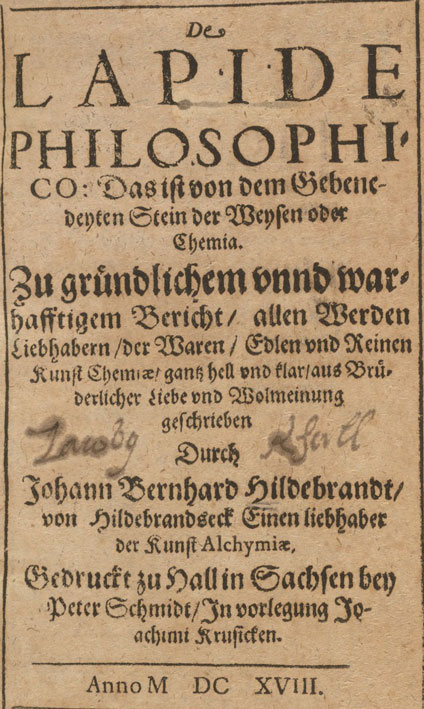
On the Philosophers’ Stone, that is, concerning the Blessed Stone of the Wise, or Chymia
Listen Audio Book Study the Art with Us Buy me CoffeeOn the
PHILOSOPHERS’ STONE.
That is, On the hidden Stone of the Wise, or
of Chymia.
For a thorough and truthful report,
to all who are lovers of the true, noble, and pure
Art of Chymistry, set forth quite clearly and plainly,
out of brotherly love and well-meaning intention,
and written
Through
Johann Bernhard Hildebrandt,
of Hildebrandtseck, a lover of the Art of Alchymy.
Printed at Halle in Saxony,
by Peter Schmid, at the expense of Joachim Kruschen.
In the Year 1618.
A Poem to the Author
In time, roofs fall, and in time the palaces fall,
in time even the mountains fall.
In time strength is weakened.
Now indeed time passes away; but this thy bright virtue,
alone, unto the farthest ages, remains steadfast.
No ages shall erase the name of the Author;
it shall spring forth, and bear thy flourishing locks.
In time thou shalt be able, in song, to surpass Phoebus;
Jupiter shall send thee across the fields unto the Elysian realms,
while the stars in heaven love the streams, while the fish love the seas.
Praise shall be among great things, and thy deeds shall endure.
Happy art thou; I pray for happy things in the season of life:
may the fates grant thee to draw out a long day.
He sang, he spoke.
Claudius Quineas.
Art has no enemy, except to the ignorant.
Preface to the Reader.
Translated to English from the book:
De lapide philosophico, das ist, Von dem Gebenedeyten Stein der Weysen oder Chemia : zu gründlichem vnnd warhafftigem Bericht, allen Werden Liebhabern, der Waren, Edlen und reinen Kunst Chemiae, gantz hell vnd klar, aus brüderlicher Liebe und Wolmeinung geschrieben / durch Johann Bernhard Hildebrandt, von Hildebrandseckt einen Liebhaber der Kunst alchymiae
Kind, dear Reader, I cannot withhold from you, in good intent, that a short while ago an honorable gentleman of noble birth presented me with several printed chymical books, among which there was also the little booklet written here at present, which previously had not come into print, but, because of the author’s unforeseen death, had remained behind. Now since the whole ground and foundation of the chymical art is contained therein, and since it is set forth for the benefit of those who are unskilled in the Latin tongue, I do not doubt, whoever shall read this little book with understanding, and thereafter direct his thoughts and labor accordingly, and first of all shall earnestly call upon God Almighty for grace, blessing, and wisdom that the same will open his eyes to him, so that he will see that the magnetic property, which the philosophers call prima materia, and which they also everywhere write of plainly and expressly, and say it lies before the eyes of the whole world, is nevertheless despised by everyone and held in low esteem, and that no one has any thoughts directed toward it, so that he might recognize and comprehend it.
Therefore, for the best of all lovers of this noble art, I have caused this little treatise to be brought into print to promote (it) and not to pass it by, I earnestly entreat you to take note of and receive kindly this work well-meant by me and regarded as useful for you.
May the eternal, merciful God, and Creator of all things, grant that whoever in true love and fear prays to Him for this, He will fatherly enlighten his understanding, lead him onto the right path, and graciously grant to me and you our petition, for the sake of His only-begotten Son, our Redeemer and Savior, Jesus Christ. Amen.
Martin Reiß, citizen of Lohr on the Main.
To Martin Reitz, a singular (most special) friend
While you unfold to our age the teachings of chymistry,
and bring into the light what it would be wrong to have remained hidden,
you may think you have done very much; for writings such as these
win back life both for you and for the author.
And grateful posterity will sing of your honors,
so long as heaven keeps the stars, and the sea its waters.
A poem in praise of the Matter from which the Philosophers’ Stone is made
which matter is called Mercury.
Who now will suggest to me, O Mercury, ample thoughts,
that I might raise your power up to the stars?
Neither my tongue amid dangers nor my mind, wholly Solomon’s,
nor a Socratic breast, nor Pindaric song,
is sufficient: let men praise you in another poem;
for you are wont to be worthy of many praises.
You are worthy of silver, and of yellow (golden) metal too; yet more worthy than gold.
For from you the common crowd will have various riches.
It is indeed a wonder, for we all behold you;
the sight has helped many in nothing; yet
O Mercury may your power be made known to me:
besides Mercury, I will sing no poems.
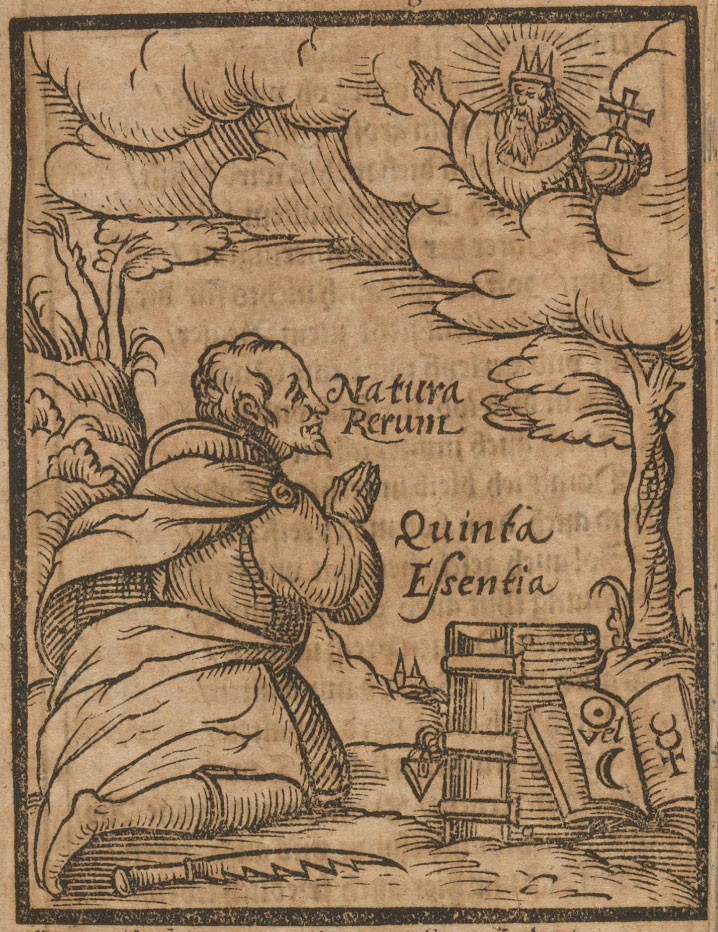
Nature of Things
The Fifth Essence (Quintessence)
The Book of Magnesia
Jesus, Son of the Most High,
O Holy Spirit upon your throne,
Help, counsel, and also grant me wisdom,
so that I may not displease you.
Nothing else do I so earnestly desire
than to praise your praise and honor,
and also to acknowledge your great goodness;
for without you nothing can be protected.
Preserve me, O Lord, from all suffering;
a vessel of mercy
riches, pride, count for nothing before you.
To you alone is my desire directed;
help and grant me your grace.
You alone I praise early and late,
and I also call upon you at all times,
so that I may remain in the right path
and may also praise your praise here.
So may it come to pass, late and early;
hope too preserves me.
In all things I praise you;
let your Word also rule over me.
Through you all is preserved,
and filled with fruitful dew
trees, fruit, herbs, and green meadow,
riches you also give to us,
so that we may also live here in peace.
According to your will and command,
you preserve me, O Most High God.
First, consider the true God,
who is one and has made,
through his great almightiness,
heaven and earth as well
all that one sees before one’s eyes,
whatever one may behold.
From nothing, and ever since,
he has created it through his Word.
He still preserves everything upon the earth;
yes, whatever exists without all complaint.
He is infinitely, ever good;
from him nothing evil proceeds.
Upon this God you should often think,
and also give yourself to him.
Give this one honor, fear, praise, and glory,
and pray to him likewise,
in the morning when the sun rises,
also at midday and late in the evening.
For the highest virtue and wisdom
is to know God at all times.
Love the same (God) in his throne,
fear him, and worship him at once;
this virtue (is) altogether glorious.
All others are truly nothing;
this alone is perfect.
Therefore at every time
worship God from the ground of your heart
to whom all men’s doing is known.
Since the mind has its teacher,
who endows it with wise counsel,
and ready at hand with it are given
wisdom and understanding
in all good arts and skills,
which you desire to learn the better
if your longing for it is so,
then call upon God at every time;
and also study besides.
So will God give you his blessing,
so that you understand their writings,
and will go the way of truth.
Thus also have in God peace and rest;
the same will bless you thereto.
Should one consume the noble time in shame
with such trifles.
Or should one learn, in addition,
something that is truly useful:
Although indeed all the arts
are praised with loud acclaim,
yet they are counted among the best,
and preferred above all others,
which learn from Nature,
and from the course of heaven so pure.
In this a wise man should,
by day and by night evermore,
practice wisdom and piety;
they adorn a man wonderfully.
Of this all books are full,
as the learned well know;
yet very little, at this time,
is found truly, and wisely,
which describes earnest matters,
and also carries things on usefully.
Few, through true wisdom pure,
search out the secrets of Nature;
it is children’s work and trifling
for everyone, to be sure,
but the truly right matters
are held to be foolish and of small account.
Books are easily and quickly
filled with new and old fables;
no one writes naturally,
nor remains on the path of truth.
Yet one has appeared before us,
whose writings I have read much:
his name is Theophrastus.
He has brought the secrets of Nature,
and also divine matters, onto the path,
and has shown them forth.
Yet even he, in the right way,
could still in another manner
have let himself be led astray
from the way and the right road,
so that he completely missed
what the whole world has in itself,
and how it must be divided,
so that what is pure comes from the earth.
Thus you must remain, Theophrastus,
and no one will drive you away;
your praise shall endure without end,
for eternal time, year and day.
Good reader, note my account
what is in here, and what still belongs to it.
In it also your mind, so wise,
will find nourishment, pasture, and food
what the highest good is for this,
and what one ought to seek.
This present book teaches you that.
Seek wisdom and understanding in it;
thereby you will become pleasing to God.
(You will find) the secrets of Nature fitted (for you);
it discloses them in a short summary.
It makes you also wholly wise and devout,
though it does not have many pages.
Even if many do not understand it:
Magnesia that is its name.
In it praiseworthy light shall appear:
the Microcosm shall be,
just as the bright sun shines,
so it too will shine brightly.
Just as the sun hastens and swiftly
runs through and gives light
gloriously to the great world so well
so also to the lesser world.
This little book likewise teaches more:
it also enlightens the human mind,
so that he becomes understanding thereafter,
And it speaks with the mouth of the wise:
this is evil, and this is good;
therefore wisdom at all times
can never be praised enough.
O Wisdom, noble crown,
a true adornment of every virtue!
Now you are known no more
for mere trifling governs you,
sophists and false poetry,
which yet serves nothing for good,
since through their falsity and cunning,
in which indeed there is no end,
they can bring many an honest man to it
so that he can no longer return.
And here they do not cease,
until one soon carries him to the grave.
Therefore, dear all, take heed:
nothing is clearer than wisdom.
Whoever now desires God for himself,
and truly lives in the truth,
let him read this little book with diligence;
so may he be healed here and there.
FINIS.
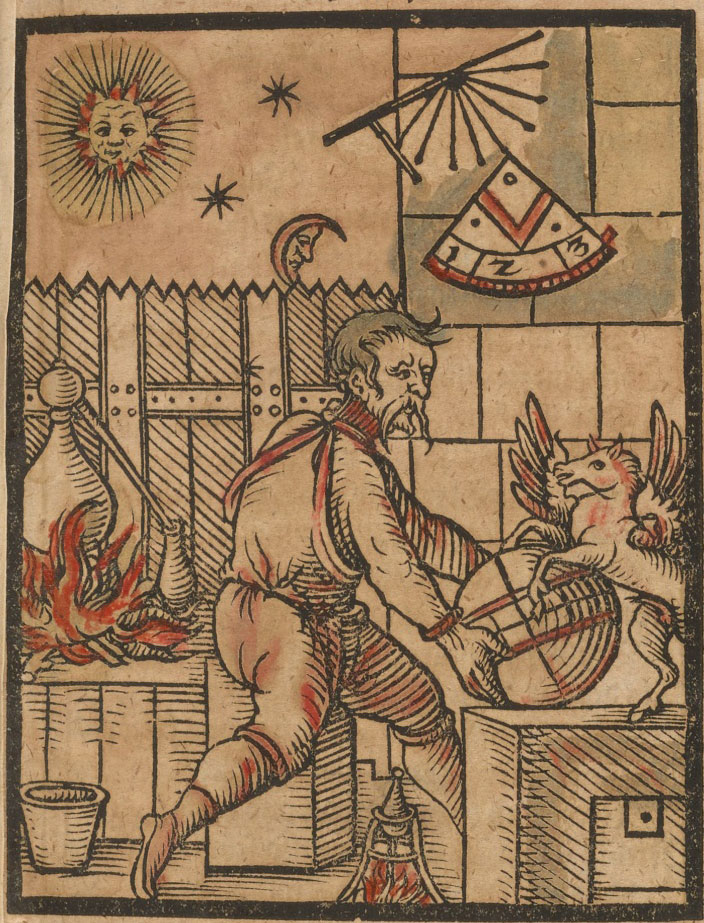
This thing now speaks truly a wonder
what moves me to write,
in such a form and pure whiteness,
that I apply so much diligence to it
Yet the poets’ poem
it is all lies and will be destroyed,
because they write mere lies
and do not remain with the truth.
So I cannot praise them, indeed,
since they lie altogether;
yet their not taking pains
will also not be in vain,
from which they do not at all refrain.
But they are so hard blinded
that none of them finds the truth.
Therefore there clings to them
great deception and false delusion,
which will never depart from them.
Therefore they lie so much;
they cannot stop from it,
until they have a cool grave.
Thus their writing comes to an end;
yet their writings remain among us,
which, falsely also at hand,
deceive many people and lands.
Nothing so greatly amazes me as this:
that you poets write only more,
and are glad in your rhymes,
and thresh only out empty straw.
That is the true blessedness of God:
by it one spreads God’s praise.
Yet what do flesh and blood dare
to devise out of insolent boldness,
so that man has cause enough
to accuse him with reason?
Such writings are full of error
and surely need correcting.
You poets, I speak with you:
since you lie without all shame
and strike hard against the truth,
therefore it shall not be spared you
by me I beg, do set me right
what helps you, you liars?
You have great labor day and night,
yet you cannot bring it far.
But I will leave you so,
and will write only the truth,
and will bring the secret to light,
so far as it may be permitted.
Therefore I will write and defend,
and stand firm in my duty:
what I write at this time
all of it is truthful,
And you must also confess the truth,
even though it should (seem to) go to the ground.
For whoever shows the truth,
everyone ought also to believe him
although in our time
little faith is given to the truth.
For the world is hardened and blind;
it does not perceive the true light.
Through God alone I also exhort you:
take up wisdom,
therein you will become pleasing to God,
and thereby also suited to Nature.
Turn yourselves away from evil writing.
These books I almost highly praise
they are so lovely and well made,
and are rightly esteemed by Nature;
namely, from Nature,
and from the course of heaven so pure.
In these you should always exercise yourselves,
and let yourselves remain with them,
drawing from them the sap of virtue
and the strength of all good arts.
They show us in every measure
what we should do or leave undone.
Such books are not to be despised,
for they are directed toward the truth,
and also furnished with good teachings.
You should hold them in high honor
they are not mixed with poison,
but in them, in common,
much art, and also true wisdom,
is covered and hidden,
to those for they are useful
I will indeed show such to you:
those which may be read without harm
and thus be well used.
You may also yourselves consider
what serves more for your blessing,
what is counted higher,
and chosen by the wise:
namely, piety or art,
to whom love’s burning drives
whether it be better learning,
or to live piously here on earth.
That I will now point out:
one can well understand it.
The teaching is godly and very good,
for all who live in humility
Those (people) indeed esteem it very highly,
but whoever strives after great pride
and clings only to his own desire,
is caught in sleep and laziness;
from all these it flees far away.
It is attained only through much labor,
and brought to the way over long years,
as one pursues it day and night.
It rules the cities in peace;
it brings war to an end in due measure,
and can quiet it again.
Likewise it can investigate and describe
the course of heaven;
it drives away diseases;
it devises skillful figures;
number gives it good report.
It also teaches us song
and the sound of all instruments.
It causes itself to soar up to heaven,
bringing forth many mysteries.
No one is rich without this teaching;
it makes us like the angels;
it distinguishes us take note
from other wild beasts’ fury.
Yet all teaching and art,
Is vain, empty, and to no purpose;
Its beauty is wholly stained,
When it is covered with sins;
It loses its ornament and shine,
Just as when a precious stone
Lies deep, buried in the mire;
Or when the sun, so red,
Is drawn over by clouds,
Or darkened by the moon.
Nor is it only that learning
Is greatly destroyed by sin and shame;
But it is also shamefully given over to
Evil, that uses it unfitly,
Just as it is rashness
To use the sword to one’s harm
When it is kindled in blood,
Raging and raging against all others.
So whoever is wicked and learned,
By him everything is turned upside-down.
But whoever is devout and upright
Applies himself as virtue’s servant,
To live before God and all the world
As befits him well and seemly.
He who has no evil men about him,
And ever stands by the pious;
Who cuts off no man’s honor
With his false tongue,
Whom no one desires to revile,
But rather to delight with kindness
And what is yet far greater:
He who at every time
Conducts himself kindly,
And, modestly,
Shows himself in word and deed
Him people hold for truly blessed.
Yet still more blessed indeed
Is he whom God endows with both,
So that he may have together
Virtue and the art of wisdom;
Such a one rightly has great favor,
Is worthy of a golden crown,
He surpasses all others.
And as gold is far nobler
Than brass, without measure,
And as the precious stone, moreover,
Is far better than all glass,
So such a man on earth
Is worthy to be held up for others.
I have told enough of these things;
I will also speak of deceit.
All matters I will now, in general,
Let pass, and speak only
Of the deceivers whom I now report,
Who run about in the world,
Who call themselves alchemists,
Yet do not know alchemy.
Such fellows have the way of it,
That they gain little honor;
Wherever they come, at once
They cheat people and land.
For all that their voice reaches,
Is deceived and beguiled.
They also want to make others rich,
Though they themselves, in every way at once,
Have no money much less faith and truth
And yet they speak without shame
How they can so quickly
Make gold and silver in manyfold.
Is that not deceit and false delusion
To make gold, and yet have none oneself?
I must soon laugh at you yourselves,
That you would make great lords richer.
And yet you yourselves do nothing,
You would almost have to go begging in the land.
I mean, had I first believed you,
You would have thoroughly dusted me off.
What use to you, then, is the great deceit,
Since the lords already have enough beforehand?
First make yourselves like them,
Before you would make them rich;
Otherwise it is a mockery before everyone
Who hears such a thing said of you.
Even if you put on a fair show in advance,
So that one may not notice the deceit
How you cannot accomplish it,
Nor bring it about because of poverty:
The work is hard; much belongs to it
Before one can attain it.
Ah, what do I hear within, then,
For an unheard-of wonder,
That one must spend so much upon it?
That almost makes me somewhat astonished.
Yet I perceive well and plainly:
The art is given to the rich,
And no poor man may attain it,
Because he is encompassed by poverty.
Oh, what a fine consequence is that!
Better go away and learn it properly.
Why should God not have compassion
On the poor, and show mercy,
More than on the rich,
Who so often would compare himself to Him?
Why is such a work called above all
A secret and a gift of God?
Because such a thing, from God’s hand,
Is attained through understanding.
For to whomever God gives wisdom,
He may indeed attain it.
Therefore in this world,
Wisdom and not money
Is such a gift; and with delight
One may attain it in abundance.
Therefore it seems to me
You have not read much:
How Nature, for good pleasure,
Takes what is lowly for good;
Since you have no knowledge of this,
Where Nature has her seat,
What she is whatever one may call her
Such a thing is not understood by you.
With the deceit of such people
You make the art a wicked byword;
Yet among those I see at once
Who have no understanding of such things,
Like the common fool, all together:
They love neither art, nor virtue, nor shame,
But only evil company,
And they mock, early and late,
At wisdom, art, right, and judgment,
Because they have no love of wisdom.
And just as a blind man
Stumbles against stones and cliffs,
Or like one in the night,
Before the moon has risen,
In darkness and gloom,
Soon injures his foot
So likewise are the people, all of them,
Who are blind and empty of wisdom:
In every vice they run shamelessly,
Heaping sin upon sin.
If they were not here on earth
Terrified by the worldly sword,
Then with them everything is perverted, not
That which wisdom is directed toward.
Yet note what Nature itself teaches:
Often to many a one it is given as a teacher.
Out of a mother’s womb comes understanding,
And what is not bestowed on someone
By the school of arts and wisdom,
That can be given by the school of God.
Who would then refuse such a one,
That they might not here consume
Their life in discipline and piety,
By which their praise is spread abroad?
Therefore, with all diligence,
He should rightly gain honor and praise
Who pours out such books,
From which both parts flow forth
Namely virtue and the art
The teaching of which is not in vain.
O true God and Wisdom,
Who are ever honored by me,
And to whom above all
I have wholly pledged my time:
When a little is granted,
To ask likewise for great things,
So I desire, humbly,
Of you: you would bestow on me.
May my poem also be so:
Adorned with art and free of virtue,
So that one not only becomes learned from it,
But also becomes more devout.
Preserve my work for me long,
That it may not perish in the fire.
Enough, then, of this:
Now I begin the proper book;
You shall soon hear it
What it brings you, and what you are to make of it.
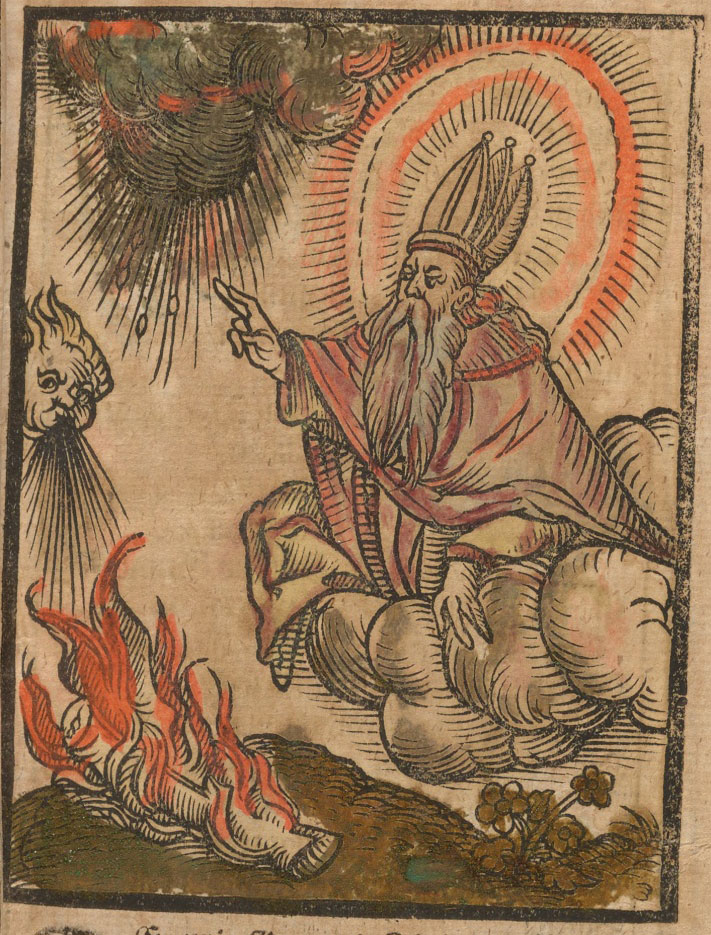
Eternal God and King most worthy,
Who rules heaven and earth,
He has, through his divine power,
In his wisdom well provided
That upon the earth the animals so fresh,
In the water likewise the fish,
And in the air the birds,
Should dwell therein together,
So that this element
Would not be called vain and empty.
But besides all this,
He has endowed man with understanding
And has been willing to bestow wisdom on him,
Has also granted him speech for that purpose.
Yet the other beasts, in their nature,
Are mute, and turn themselves among themselves,
With their face toward the earth.
This rational man, so wise,
Has by his skill brought under him
The tigers, the beasts, and the grim lions;
These are subjected to him,
And must also be obedient to him.
Even the serpents full of impure poison,
And the whale, that wild sea-beast,
Yield themselves also gently to man.
The earth stands in his power;
Otherwise it would soon be utterly ruined.
It is full of thistles and thorns,
In which all fruit would be lost
If man did not plant it.
Then he governs land, people, and city;
He establishes law and order well.
He builds the temples
To God’s praise, honor, and glory.
He has thus found out well,
And day by day brought forth much of the arts:
Also the subtle barrel of guns
From it the bullet flies swiftly,
Just as if it were a lightning flash from heaven;
It tears apart the towers and the walls,
So that the poor folk mourn;
They lament when they hear such a sound:
It is a great crash of thunder.
Ships have been devised by men
And at first brought forth for this:
In them, as at once one sees,
One sails strange, wondrous, and unheard-of.
From the rising up to the Occident,
When the sun wholly turns away from us;
From midnight, I go further,
Even to the land of midday
There too people live among us
And lift up their feet against us.
But though man is splendid,
Far surpassing every other beast,
Having reason and understanding together,
All coming from divine seed
Yet he knows nothing, and wants to know nothing,
Nor is he intent in these matters.
That is truly to be lamented:
How he ought to live in wisdom,
That he might remain on the right path,
What is for him to do and to leave undone.
O how is the human heart so blind,
In darkness wholly senseless,
Sunken deep in gloom,
Miserably drowned in folly!
People go upon an erring way
And stray from the right track.
On earth few people are found
Who know where the road leads,
By which one may attain the highest good
In this world.
Neither the law rightly teaches this,
Nor does the art of medicine say
What the best good on earth is;
To this end the seven liberal arts,
Do not bring it to light.
Wisdom alone is able
To instruct people thoroughly in it;
Therefore one rightly praises it.
If God would grant it to me,
And if I should not soon die,
And if my folly, to my harm,
Does not cut off the thread of life
Then I show it to you with desire:
What the very best good is,
And how the pious here on earth
Might also obtain such a good,
Although it is not base and small
To speak much of this thing.
How blessed is he who has counsel,
Who has his understanding perfectly:
Then he is freed from all sorrow,
And loves also what is seemly.
Likewise, with wise courage,
He will separate evil and good,
Yes, from one another altogether,
With very great experience.
Just as one also speaks of it
He gives us also his report:
“Loathsome and unclean are those
Whose festering limbs, indeed,
Would be penetrated most of all
As by a subtle spirit
That comes forth from our body
And exists in its order.”
Therefore I say without any guile:
He who is wise and prudent
Will know how to distinguish,
And his understanding will also be ready.
Moreover, I will freely say
What else is necessary herein.
Then first you must have knowledge,
And understand this matter very well:
What indeed the three principia are,
Or the prima materia
What it is rightly called, and what it is.
Only then can you freely say
That you have knowledge of the thing,
Which contains in itself only the beginning,
The science of the pure root,
Or the beginning of our Stone.
Indeed it may be noticed
What sort of thing it truly is,
For such a thing, at every time,
Is not so very hard concealed.
If you are instructed in the beginning,
Then it does not at all trouble me to doubt:
There will be known to you the hour and time
Which gives us great change,
In this time, as said above.
This seed must be set
And must be kept pure:
It is the beginning of our Stone.
But if you are uninstructed,
Time will not suit you at all.
So I cannot truly help you,
Nor show you such things plainly,
Since I cannot, in rhymes, by time and day,
Bring it forth this is my complaint.
Yet I will give you instruction
Where such a thing would be dealt with,
So that I may not be found out
As timid, like a wild horse;
So that you also do not cease
Until you have knowledge of the thing.
So I show you in truth:
I then have compassion with you.
First you must take in hand,
And often read through with understanding,
The books that, of Nature
And of the course of heaven so pure,
Treat and discourse freely.
When such time is at hand,
Then you will well perceive
When you thirst otherwise after wisdom,
How it stands with all such matters,
How it will have instructed you.
Therefore take note and consider well,
So that you keep the matter well in mind.
As I have shown you plainly,
You must always be inclined
To pay heed and also take note
How the planets complete their course
In their proper time;
Seven as many as eight are required,
If you would know alchemy.
Just as I teach astronomy,
So you will come to understand well from it:
When all your work has reached its end,
And you have the grain, as I have said,
Which is sown in its season,
So you must keep it well,
Until the seed begins to grow.
When the seed, in such time,
Will come and is at hand,
Then also take care, in good keeping,
That the field as well good and sound
Is prepared and well ploughed.
Then, when the grain is cast into it,
You will soon see all the colors
Appear in manifold fashion.
Yet the field must be chosen
From which everything is born.
The same grain must have its mother,
From which you can begin to perceive
That they are always both at once
Closely related to each other.
Yet the field must be like the grave,
In its crookedness, moreover,
So that it may gladly, fresh and in good cheer,
Receive the grain from you,
Which it holds under itself,
Until the harvest begins to come.
This I must show plainly:
The wise will understand it well
In what praise, at this time,
The work is chiefly placed.
Therefore I say without reservation
That this work can be improved by nothing
Except only the fire, clean and pure,
Which has no nature above it.
For where the art of the fire
Is not rightly kindled, it is in vain
In cost, in labor, and in toil,
Whatever one spends on it late and early.
Therefore consider this fire well,
For it is the thing that makes all things live.
Without this fire nothing is accomplished,
As many a one sees before his eyes.
Therefore weigh the coals well,
And fill the oven all over;
And though it does not look glowing-bright to you,
But rather shines like a red rose,
So stir the coals and tend to it,
So that it may burn freely, awake.
Then you must have this fire,
As was first shown;
Then, if your fire is natural,
Your work may be kindled.
But where such is not,
As nature makes plain,
Then your work can have no progress,
And must therefore come to nothing.
Consider all this well
Before you put your hand to the work:
How you must govern your fire
Observe it well.
For doing otherwise, before and without reflection,
Has brought many into great harm.
Now I have plainly declared
What the fire truly has in it.
How such must be governed,
And how the field bears fruit,
And what properly belongs to it:
That the field and the little grain be,
And that the seed must be sown
All this I plainly declare.
I will not keep it hidden;
As far as the weight is concerned,
You must also know it well,
Otherwise it cannot succeed,
Since too little and too much
Spoil the whole game.
Therefore now, as is fitting:
One to two, and three to four,
Is the Theophrastus number,
As far as the weight is concerned.
So it cannot fail at all,
Since you have the right weight:
The form, or the seed at this time,
Is not greater than the field.
The field must indeed be greater,
So that what one puts into it may be seen.
Thus the seed, pure and subtle,
Is greatly compared with the field.
Yet I have also reported here
That, in the lesser work, its weight
Nature cannot have,
Since only one is at hand
Where there are not truly two things.
Then indeed one must not weigh anything.
When now autumn is at hand,
And you have reaped the fruit,
And the tincture rises no higher,
Then it has its appointed degree.
So you must test it soon,
Whether it also keeps the color ripe.
If it indeed gives off a smoke,
Then it is not wholly perfect.
If you want it more distinct,
Set it in its moisture,
Yet encompassed with the true heat;
Otherwise you will by no means attain it.
Therefore hold this well in mind:
What makes an increase for your work.
If you would rightly understand the truth,
Then you must be endowed already
With the fruit of the highest wisdom
Then you have all riches.
Which cannot be paid for
With any money here on earth.
He who has it, in rest and stillness,
May dwell securely where he will:
No misfortune nor ill-luck assails him;
No thief nor robber does he fear.
Yet to few, at this hour,
Is the gift granted in the world.
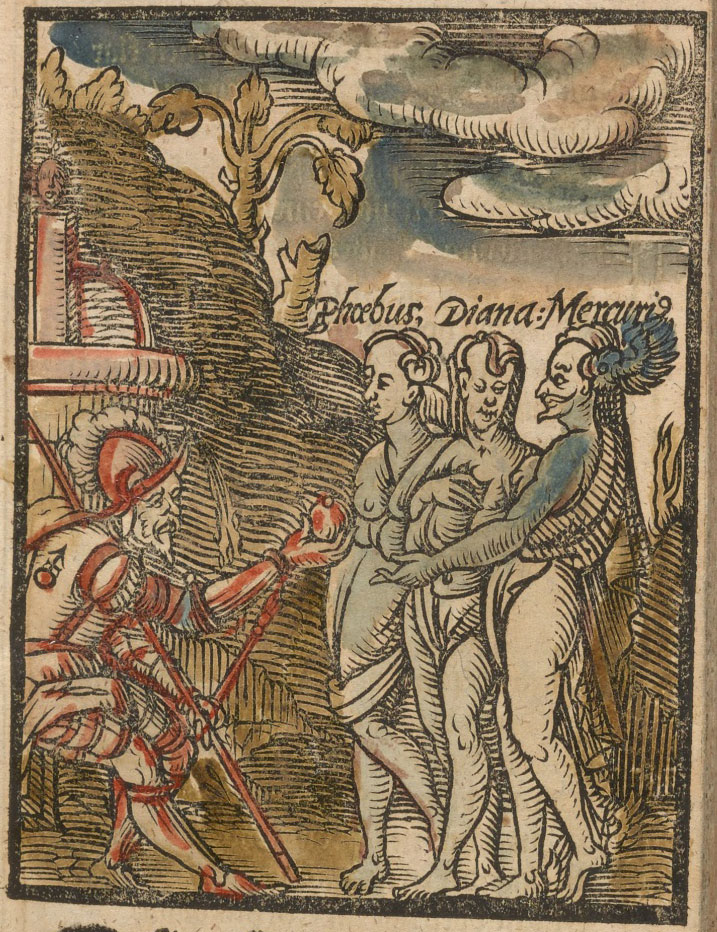
The great love for Nature,
And all secrecy so pure,
Draws me on to drink deeply,
Out of the fountain of clear wisdom,
And then, upon the mountain again,
To sit down in the shade.
Therefore, O Wisdom, do not delay long:
Let your sound be heard by me;
Grant me understanding and prudence,
Make me rich in learning and arts,
For it must indeed be necessary.
My labor is very weighty:
I must, with wonder,
Look upon Nature and the world in particular,
And bring her hiddenness to light,
As far as it may be suffered.
Everything that is on earth,
What yet shall be and shall come to pass,
That is a thing which the name
Comprised within itself all together.
Yet if one considers the thing well,
Made by God’s wisdom,
Then all things are one and free:
They do separate, and yet are three,
Together in one substance,
And yet are only one body entire.
Each thing must have three in it,
If it is to endure otherwise.
Likewise all minerals
Have three principia:
Mercury, sulphur, and salt.
These are the first three;
In everything they are perceived,
As one can also well judge,
As he also says:
As you may also inquire of him
We will give you an example here.
All wise men, and also Hermes,
Hold it thus in all “woods” (materials),
Whether they be great or small:
Likewise three moistures
Are in every wood altogether.
I will let that stand for now,
But later show it more clearly,
Now I will go on to the practice;
The wise will understand it well.
Of the Father - De Patre.
O son, you Father of all things,
A fair ornament of the circuit of heaven,
Which goes there with swift course,
The world down below and up above,
The prince of all stars with joy,
Also a wellspring of eternal light.
A broad way is prepared for you,
Which you complete in eternity.
Through you all is brought to light
That lay hidden in darkness.
Men call you the eye of the world,
To separate the darkness.
And as you direct your course,
Through the great signs in common,
So you divide the whole year
Into four certain seasons indeed.
Of the Mother - De Matre.
Moon, a mother wholly,
From the heart we all praise you.
Look upon us, rich in grace;
Grant us also a blessed night.
Drive the clouds from heaven;
Give us a fair morning today.
Be greeted, you heavenly protector;
You give what is good and useful to us.
Fulfill it with divine blessing,
The wise man’s mind in every way.
Yes, you also do to us humans
Give a true form and likeness.
In the mother’s womb you have power
To shape the human being quickly.
Also, as water, I truly say,
You rule always.
On the Bearer - De Latore.
Air also an element
To which the wise recognize you,
And learn your way to know well:
You are full of many mysteries
Which God and Nature, very wisely,
Have hidden in you with all diligence.
You are full of wisdom and art;
Without you all things are in vain.
For everything that has life,
Or that grows upon the earth,
The same desires you
And makes use of you.
In all things you make life;
You give to each power and strength.
Since nothing can be made without you,
Nor can it stand a day, etc.
On the Nourisher - De Nutrice.
Earth: a nurse of all things,
And also a nourisher
Of all metals and minerals,
Those that lie quite openly there,
And also those that are hidden
And are not in the sunshine.
Yet, according to the opinion of the wise,
I will always praise this:
Those that are in the clear day,
Which I truly cannot dig up,
Yet we have above the earth
From which gold can be made.
Such we see well in gold-ore,
That the earth is full of riches;
For all that we must have,
Must come out of the earth.
We see that in all things,
How they spring forth from the earth
So richly, in abundance,
As if it were a pouring of water.
Then God will have it so,
They are only divine gifts,
He who is the Father of us all,
And gives to each what he lacks.
But what do I accomplish in the matter,
With all the words I now make?
My labor is in vain: the blind
Will not find the light through me.
The world takes little liking to my teaching,
Because it holds little of Heaven,
Which nevertheless governs all this,
And also guides the planets:
Each day has its working.
Therefore this also brings very much harm,
If you will not regard such things,
Nor well consider the twelve signs.
A wonder above all wonders
Is this divine work in particular.
Who would not be ashamed,
If he would rightly think upon it:
That so great a burden
In so short a time, so strongly and so swiftly,
Must run and make so long a journey,
Accomplishing it according to God’s command.
Now turn back again, swiftly,
and now rest at the end;
but labour early and late,
yet become not weary nor faint,
and stay diligently in this opinion:
that the planets drive about
and set the Great Work in motion.
Therefore note each circle,
to assign it, in particular,
its mover, already.
For I tell thee without concealment:
only one thing may improve thy work;
yet be mindful that thou also
know how to work thereafter.
For the first and also the second
must both be together;
after that the third also cometh thereto.
It is an operation; this shalt thou
recognize as a yearly power,
which hath heavenly properties
something strange also belonging thereto
as I will further teach thee.
But many do not regard such a thing;
therefore they do not succeed in it either.
Since he, for all that,
despises the highest good,
Out of ignorance,
Therefore take note, and consider well:
That God, who has made all things,
Has divided into only two things
What exists in Heaven and Earth;
Namely: into free motion,
And, alongside it, continual rest.
But the rest is in the centre,
And in the earth likewise, in the same manner;
The other, therefore, moves itself.
The waters flow continually;
The fire, and the air with it,
Have neither day nor night any rest.
Yet the property of motion
Is in Heaven with full power:
The higher a sphere is set (and adorned),
The stronger its motion becomes,
And it runs the faster around the world.
Therefore the highest sphere (aforementioned)
Has the greatest motion indeed,
Since it must traverse an immeasurable space
In a short time
Yes, as it were, in a single moment.
Would it run swiftly around the earth,
Even if not the lower heavens
Which it alone encloses within itself,
Went in common the opposite way,
And held back the speedy course further,
Kept it in check without ceasing
So that the whole earth’s surface
Would not be dragged around with it;
For then neither man nor beast
Could preserve themselves therein.
What need is there of much proof,
That to each his goal is set,
And that he cannot step beyond it?
This we see every day;
For each day has its working,
Until late in the evening;
Then in all things hour and time
Truly bring us great change.
It grieves me almost, and it grieves me greatly,
That I have undertaken hardly
This toilsome work and this little book of mine,
Since I see the false seeming
That rules among all the world:
No loyalty nor faith is felt any more.
Everyone is now so schooled,
That he despises the true Light,
Which is called Wisdom,
And is no longer recognized by anyone;
For all their judgment and their cause
Is wholly weary, powerless, and weak,
Because to them everything is unproven
What true Wisdom is;
For it is bestowed on us by God,
To whom it also returns again.
Yet I have no doubt of this:
That one still finds some
Who love Wisdom (men
With whole heart, sense, and courage),
And apply themselves to it,
As much as they can obtain;
To such it is for honor and praise,
That they do such things with great diligence
Who always exercise themselves in the arts,
And love Wisdom for a long time.
Though a man be pious and learned,
And also sound in his understanding,
Yet though he truly loves Wisdom here,
He is nevertheless despised entirely.
Since Wisdom is despised,
By all fools is she despised;
For the world is so quite bewitched,
When it hears Wisdom named,
Then its evil temper turns about,
And all its blood is thrown into disorder,
With vain wrath and great folly;
So naked Wisdom is not recognized
She who is like a tender virgin,
Naked and bare, of noble kind:
Her body is white, like snow;
Her throat so sweet, like clover;
Her eyes black, her mouth wholly red
Not granted for many to look upon.
Although this not every man
Among the common rabble can grasp,
Therefore one should not set out the clear pearls
Before swine at all.
This I will show to you,
If only you will understand me rightly:
Concerning the prima materia
Whether it also be a mineral.
Or a metallic being
of which I have read very much
I will show you in brief:
you find it written in many books,
that it is a mother of the metals,
and that it also dissolves them all
into a liquor or a juice,
through its heavenly property.
All books are full of this,
as the learned know well;
yet not so clearly or plainly
is it written of at this time.
Especially those who have no understanding
will not so easily comprehend it.
For our gold is not common,
which we have for our Stone;
yet I tell you at this moment,
that it is the fine “shimmer” (sheen) of gold.
The same is sublimed
to the highest just as also the mountain (does).
Then our gold is pure and raw,
whose mother thus brings it forth;
from this, too, four can become one
in our masterly Stone.
Yet mark this only consider it well:
From what the Stone is made.
Therefore you must have no rest
Until you know what one must have for it
As an Elixir.
Therefore you must believe me:
That nothing else is to be sought
Except only in our lead.
In our lead there is enough of everything,
Which we have, with good reason,
In abundance as God gives it,
According to His will, as it pleases Him.
I say this cannot be denied:
That all the secret lies in lead,
Likewise in Mercury
The “White” (that is what it is called).
Therefore mark what I now say;
Keep the same hidden with you.
Of the Philosophical Mercury.
Mercury, godlike is your form;
For your nature is warm, often cold;
And you too, according to your nature,
Take on for yourself many a figure,
So that no one can know for certain
Whether you are woman or man
Especially in the joining together,
Before the separation has occurred.
For you take on every form,
Like wax, which one can press into,
In a hurry swiftly and soon
The shape of a woman or a man;
And yet you are also sociable besides,
Giving to each strength and power.
For there is nothing that must not have you
If it would otherwise endure long;
And every one also wishes for you,
So that it may preserve itself.
Yes, you also give to us humans
Health, and also long life.
Also, immeasurable riches in abundance
For your goodness has no end.
Whoever truly comes to know you rightly,
To him you are a faithful servant;
You serve him without ceasing,
Great in weakness and in poverty.
No one can praise you enough,
Since you serve everyone.
You are full of wisdom and art;
Without you, everything is unskilled artlessness.
For all that has life
Makes use of you, early and late.
Mark, wise reader, my account:
Why this thus comes to pass.
It happens through one who has considered it
As Hermes Trismegistus says,
In his Tablet, so clearly
Which long ago has been made manifest
For herewith he wishes to show,
And also to make us understand,
That through eternal wisdom,
And through God’s providence,
Thus his working must be fulfilled
Which then also greatly befits him.
Obedient to its Creator
Who indeed created it pure
Heavenly is its origin at once;
It yields itself according to resistance;
Then earthly are the members of the body
Not contrary to the elements.
Therefore, in doubtful matters,
I will here bring forth the truth:
Thus it flows from wise understanding;
We too ought to believe it at once.
And whoever also points out the truth
Him should everyone indeed believe.
For God the Creator has chosen (it),
By whom all is eternally reckoned;
Also Nature how it subsists
Out of nothing, through the divine counsel.
For this cannot be otherwise
Than as God created it pure
In the very first beginning at once:
Thus the water, wet and soft;
The earth also steadfast;
The fire burning at every time;
The air movable, of even measure;
The heaven strict, without ceasing.
Is driven about early and late;
Each little herb has its power;
The trees and all animals as well
Which are good, without change
The order of Nature stands firm;
The will of God does not go to ruin.
Now as to the course of heaven, mark me:
Truly, thus it is natural;
And just as what is heavy and light,
Each has its special motion.
What is now Nature’s own
Takes to itself, at its time;
But where another comes to it,
It will move with its power
And wish to improve Nature.
It cannot be otherwise
Than carried on within its own nature.
For a great wonder is perceived,
When I tell you plainly:
That this work can improve nothing
Except only its own nature
A root according to its form;
Or it may happen in its blood:
For then the Good will appear.
Yet it must first be made to rot;
The burck must also come from the earth,
Just as Christ Himself says:
That you should consider rotting
The little grain of wheat in the earth;
So that from it there may be born
A hundredfold fruit, with wisdom,
According to the kind the seed is.
Therefore rotting is the first degree;
In this lies everything
That shall grow and be born.
We see this in all grain:
It must indeed rot in the earth;
Only then can it also be born,
A fruit according to what the seed is.
For nothing does it lack or go amiss:
The pure and good grows upward;
What is evil and coarse remains at the bottom.
Therefore I will tell you this:
What I tell you believe me
That putrefaction alone is the best,
In which there is firmly bound together
Spirit, body, and soul with the substance,
Which also gives a whole and complete body.
The last kind and property
Is great and has the greatest power;
The first part must be one,
Also subtle, pure, clear, and clean.
Having well considered Nature,
It has brought us understanding with profit;
For eternal Wisdom, pure,
Has granted this alone.
It is reckoned as mere human trifles;
This flows from great opposition
So that, all his days,
One now hears it spoken of thus;
As also certain fools do,
Who would have it understood,
And openly also say freely,
That there is no secret in it;
As I myself, in my days,
Have heard much said out of contradiction.
Those who give true faith to God the Lord
That God indeed created,
In the beginning, all manner of seeds,
However they may be named,
And also still preserves the same,
So long as it also pleases Him.
Everyone, out of wise reason,
May well consider this for himself:
That no little herb stands upon the earth
Which does not have its seed;
Rather, in general one should believe
That everything does have its seed
Gold as well, and also noble stones.
Of all these I speak in common:
That the seed is planted.
Speak of such things freely, without deceit:
For the seed is once set,
And Nature also still preserves it,
And will indeed be preserved,
Surely until the end of the world.
If each thing did not beget itself,
And did not bring forth its like,
Then God would have to bear care forever;
But that we should not say
That a standstill would come upon Him.
If each did not produce its own,
And whoever must be concerned about it,
God would have to be ashamed anew.
But what need there is of such a must
Of that I shall tell you here.
Since everything bears its seed,
So it remains standing and is sown,
And also casts out the same itself,
So that from it a little herb springs forth;
Or else whatever kind the seed is
It makes something grow from it at every season.
Therefore some speak like fools,
Saying freely it is not born
So that from it a tincture might be made
That it is not to be found upon earth
From which a benefit might result.
Yet they are to be instructed in this matter,
In good books, as they are found
Which one still finds everywhere.
They read this and do not consider it,
And even then still despise it.
All books, in foreign words,
Set it forth as I have heard
And I myself have also helped in this,
As I have found it out and seen
In all lands, far and wide.
I have also, with modesty,
Read through them all;
With thought and with understanding.
Thus often, until it has succeeded
A good lesson at every time:
Not a mere devourer of all books
Have I been in this matter.
If a book has been good,
I have often read it through;
So long and so much have I done it,
Until I had the content firmly from it,
Which can also still be found well.
Thus in all doubt that you are in:
If you are God-fearing and pleasing to God,
Then Nature will be accommodating to you;
And if you recognize it rightly,
You will say yourself it is not bad,
Nor so small as people esteem it.
And the unlearned also say of it
That all such things are mere trifles;
But that comes from opposition,
Since they know nothing at all
Of subtle Wisdom clearly,
Yet would still, under a show,
Be all-wise.
But they cannot point such things out,
Nor give me to understand them either.
Through your sharp-wittedness and light
Which indeed is the best on earth,
Or in heaven, as I say
There is nothing better than the day,
When the sun shines brightly for us.
It also runs hastily and quickly,
Ever, always, and so long
From rising up until going down.
Yet do not despise the night either;
Rather, consider it very well,
For it is indeed useful to you
For your work at every time:
Namely, that you can sleep,
And can have your rest;
For what labors in the day
Gladly rests at night,
And takes its rest to itself,
And lets all its work stand still,
So that it can soon, in the morning,
Drive on its work manifold.
The moon by night, too, does not rest
How strange it appears before the eyes
When it pierces through the night;
All the vault of heaven (is) good.
And it also does other work besides,
Which would be too long to recount here.
But what concern is that of mine?
Far rather will I let it stand.
And with this I agree he who says:
“It happened in a night.”
What has the night to do with troubling me?
This too I will indeed let stand.
For everyone is well aware
That it is no friend of humankind.
This is evermore the cause
That the Art is so greatly despised,
And that the world is so blind:
Nothing makes them so, but our sin.
For our sinful life, indeed,
So utterly ruins us,
That darkness and the light
We do not know one before the other.
Yet there is still many a ingenium (natural talent),
Endowed by God, so devout,
Which in this case
Surpasses all the others.
Just as the stars at every time,
One is brighter than the other,
Therefore it greatly amazes me
That many a one no longer desires
To learn in his youth
Something that may benefit him
So that tomorrow or today
He might also be compared with other people.
For splendid Wisdom, clear,
Adorns many a one wondrously;
Therefore pure Wisdom, clean,
Comes only from God alone.
Therefore I say this to you in advance:
Even if you have already read all the books,
Read them all together, in general,
Which indeed bear witness of the Stone
If you do not pray to God for His grace,
Pray always, early and late,
That God may give you grace and rest,
And also grant His blessing thereto
Then all work and toil,
However one applies it, late and early,
Is in vain every matter;
Therefore I make it known to you.
Although the godless man, with force,
Attempts everything by might,
Yet it must come to ruin,
And also not stand with the good.
For what is dealt with here without understanding,
I tell you plainly,
That is unfortunate and accursed,
And will bring forth no good fruit,
Since they do not know at all
What Wisdom, in such a case,
Has to give and also to name
Whence it is, and to what it can come.
Therefore at this hour
I will make known to you such a thing:
Why the noble Art, so free,
Is nevertheless so hard hidden
Which I have often seen:
That it has happened to many a one,
That he, through it, has fallen into misfortune,
And has squandered all his goods
Most uselessly away
As one still sees to this very day,
When many a prince spends much money and wealth
On it, out of ignorance.
Also, oftentimes, people and country
Do nothing more than their misunderstanding,
Since they are all unaware
What the true root is.
I will also pass over other things,
Which they esteem quite small
Namely, the “term” and the time,
Which gives us great hindrance;
Also many other matters besides,
Which would be too long to recount here,
And which are still the foremost thing.
If they are godless at every time,
They also do not at all consider
That such a gift would be given by God
For the fear of God at every time
Is the beginning of all wisdom.
For all wisdom comes from God;
Therefore I say to you without mockery:
Give honor to God alone,
And otherwise to no one on earth;
For He alone is eternally good;
From Him nothing evil can come;
For all gifts in general
Do come from God alone.
Therefore I say at every time:
That God, the faithful, is a Father.
Now I will speak thoroughly,
And also show you further,
That I have read of one
Who has been a magus,
And a foremost man in the Art;
For he does not write in vain.
Dear reader, mark this well:
The pious layman, for your work,
Should take (it) at the proper time
Which experience also gives you.
Thus strangely does he name it;
Very few are those who recognize it.
He says that it is also called
“Blacker than black” well for him who (does so).
For blessed is he, with counsel (and sense),
Who has his understanding complete:
Neither fear nor torment oppresses him;
He also bears his poverty everywhere,
For he can almost have (what he needs) for nothing,
Through his skill and art
Everything, at the proper time,
That is wholly necessary for him.
He also lacks nothing of money,
So long as he lives in the world;
So long as he lives in this vale of tears,
Nothing is lacking to him anywhere.
Even if he should live a thousand years,
Truly nothing will be lacking to him;
And all his days he will also have
Whatever it is that he may wish.
For he is already prepared
Against all adversity,
And will also walk in the Light;
No poverty nor weakness (can) touch him
Until the last little hour comes near;
For of that no one is free,
Since upon earth, in this time,
No herb has grown against death.
Yet let it be a wonder to me,
That all weakness, great and small,
Through this medicine upon earth,
May thereby be healed;
For God wills it to be so
These too are further divine gifts.
If such a gift is then from God,
So I say to you without mockery:
Let no one use such a gift any more
Than to God’s honor,
And also to his neighbor’s benefit
To do much good to the poor.
So will he, in heaven,
Gather also a greater treasure,
In which nothing is lacking nor failing,
For this treasure is eternal.
Therefore seek first of all, straightway,
In earnest, the Kingdom of God;
Then the other also will soon
Fall to you likewise, manifold.
For God’s Word stands forever,
And His goodness has no end.
He who trusts in God alone,
He has well built indeed,
And may also here upon this earth
Nevermore be put to shame,
Even though there were against him
The whole world with its host.
So they may indeed all together
Not bring him to a fall;
Therefore God, at every time,
Is his faithful protection and helper.
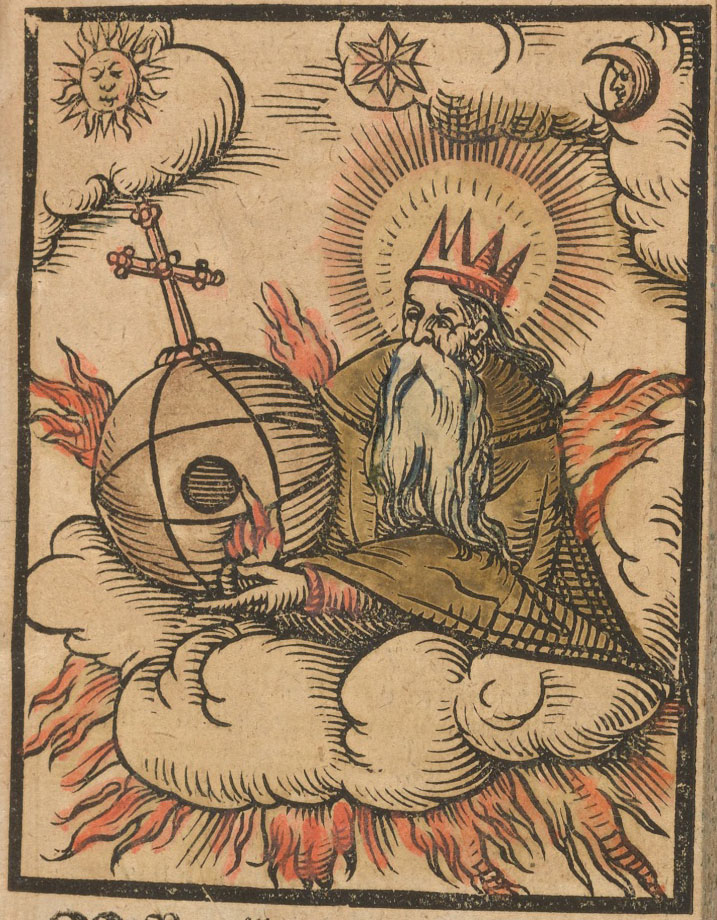
Now we are ready to speak,
Indeed, of Divine Wisdom
How it is, indeed, that the world is governed
Through an order, fair and well-adorned;
Through the law of eternal choice,
All things have their measure and number,
And also a certain free order,
Until at last the end comes near.
Therefore the mingling of all things
Is glorious as well, and not small.
Now we would fully consider it,
And expound it most thoroughly.
First we set forth openly
That without a cause nothing can be;
Yet it has a distinction from that
Which suitably follows from it:
Nothing is that begets itself;
Nothing comes forth from itself;
Nothing can be its own cause.
From one thing, in general, all comes:
The origins are innumerable,
And cannot at all come to an end
No, rather it is a beginning,
From which the ordered chain of causes, long,
Flows forth from the highest indeed,
Down to the lowest altogether.
This just-mentioned order already
Is divine providence
Yes, God’s choice, will, or word,
Which He has spoken forth:
That it shall happen and proceed;
This cannot depart from eternity.
Yet the nearer a cause is
To the highest (cause) at this time,
The more it would be esteemed;
The others also, all together,
Are well subjected to it.
The first thing is a cause,
And its work the last thing:
Not a cause, but a small work.
But what stands in the middle
This has taken on names:
Now, when the cause of all things
Is no order, nor strong bond,
If one does not depend on another,
And were not bound to hang
As if a chain from heaven
Hung down into hell
That has no appearance of belief:
There must be more than a beginning.
If there were also many first causes,
It would be for them a strange game
To begin with discord;
Then there would be war, discord, and strife.
The highest rank and great power,
Would have manifold sorrow to contend with;
So the world would not be united,
Nor would it have its beauty any longer
For order in all things
Makes every work more fair.
But if one says, without compulsion:
“There come, from one beginning,
Many causes, differing
As the sun spreads out from itself
Many rays, each one good,
Which do not touch the other,
But flow from one sun,
As from the heavenly spring
Yet therefore it is not necessary
That there be quarrel and strife between them,
Since they have not one single road (path).”
This saying is not beyond measure
Perhaps not far from the truth.
But we, for our part, are ready (to proceed)
To consider it more thoroughly,
And to lay aside all darkness
For the human mind, henceforth,
Cannot quickly see the truth,
But is stuck quite deep in error;
From this arise so many sects:
This one says yes, the other no;
Delusion is common to us alone.
But to the wise, I tell you at once,
To them understanding is given.
Now if there are more causes,
Intermediate ones, proceeding from the first,
Then I ask whether each one is free,
Without defect, and perfect.
For then its order would be wholly
If it were mixed without danger
Where it has neither beginning, middle, nor end;
It would do so, and the order would be torn,
In which, indeed, nothing can happen
Except that it goes to the ground.
But if each cause is
Not wholly perfect, but weak,
Then God will create, in due time,
Something in which there is no defect.
It is hard to speak of God,
Of man I would sooner believe it.
Therefore the work of the first Origin
Has its mighty power and strength,
And is moreover perfect.
The others the more one
Turns away from the first,
The less good is their working,
Like a rotten tree in its days,
That by no means can bear good fruit.
More evil than good here on earth
Is always found.
More ignorance indeed there is by far
Than knowledge here in this vale of misery.
Yet the more, in general,
A thing is truly strong here,
The more power is given to it,
The more it has a true life,
The more it is wholly simple,
And moreover a pure substance.
But the more each cause
Is base, slight, and weak,
The less working and understanding
Is allotted to it at hand
But it has much of chance-fortune;
It is divided from the Essence wide,
As one clearly sees on earth:
Since everything quickly breaks to pieces
Which is not pure, but rather together
Is set from many seeds.
All things are here so mingled that one
Cannot at all behold their substance.
It is hidden despised
Because outwardly it keeps a show of splendor;
Therefore the unwise at once
Do not grant that the good should be seen,
For it is wholly a pure substance.
Therefore it is utterly despised;
Here it goes forth in misery.
I know where its true house is,
Where its companions are
Namely the form of the pure Essence;
From such causes adorned,
The whole world is preserved
Must also stand until its passing-away.
And this chain, strong and long,
May in no time be dissolved:
All that on earth occurs
What has happened, or may yet happen
Therefore this arises, without complaint
God also gives thereto His power
All according to His own nature
In its certain end it stands
All hath its time and order
But one must also know this
That oft many causes, moreover
Come together, well considered
Else nothing would be brought to pass
And such a mingling indeed
Happens by no means without danger
But upon earth everywhere
All goes according to God’s choice
For the eternal, subtle Wisdom
Hath set for every thing its goal
And thereto a measure appointed henceforth
That it cannot overstep
Therefore it is not as some
Unseemly say
That there is no order here upon earth
That all things here come to be without hazards
That God takes no heed of such matters
That opinion is soon to be laughed at
It is erring and exceedingly rash,
For nothing in it is a fitting case;
It is only a deceitful notion
That already resembles a dream.
Even if Aristotle himself
Put forth something else concerning it,
And many philosophers besides,
That does not trouble me at all.
For they depart from the truth.
Great men, widely renowned,
Are often found to err greatly,
And they also lead others astray,
Through their example and reputation.
Thus one often falls into error.
Therefore one must not follow them blindly.
I wish to be bound to no one.
No authority moves me,
Unless the proof stands firm in me myself.
True understanding and wise knowledge
Ought rightly to have the precedence.
And a lover of the truth
Should be ready to follow it fully.
But mere sudden chance
Is nothing on earth at all, anywhere.
Reason testifies it so clearly,
And true wisdom openly,
That everything has its order,
From divine purpose and counsel,
So that the world may be complete,
And besides, free from every lack.
What then shall we henceforth
Give to “chance” as a place and station,
Which is wholly doubtful,
And uncertain at all times?
Just as nature can suffer nothing empty,
So it avoids chance.
If you understand the things, as I have set them forth,
How they come to pass in this world,
Purely and truly,
Then you have a shrine of wisdom.
For I have not, in vain,
Shown you this clearly;
Rather I have set it before you
Make of it as it pleases you.
On earth nothing exists that is foreign:
From His order all things proceed
God, nature, the pure heaven,
And all the elements entirely.
Whatever also grows forth from it
Has its firm being and good order;
For everything that we have here
Must take its beginning from this,
Which no wise man can deny,
If he looks upon the beginning
How clear and fresh it is,
And mingled with so many colours
That no one can rightly count them.
And though he should count year and day,
Yet I indeed fear
The number will not be disclosed to him.
Therefore my counsel to you is this:
Let the colours and their adornment
Remain as they are in their true worth;
For there are secrets upon earth
Which, I truly think, are not for everyone,
Nor would they so easily be made plain.
But now God so I say at once
Gives you understanding of things,
So that you can know secrets,
And be diligent in such matters;
You must be watchful and alert,
With clear wisdom and pure virtue.
This cannot be attained by sleeping;
No splendid work is done in bed.
Therefore set sleep aside;
Lay idleness away.
For too much sleeping, I say at once,
Is like poison, and unhealthy.
Therefore take notice and be on guard,
And consider this matter very well:
For the mingling of all things
Is not bad, nor so small a matter.
Therefore take counsel with yourself,
If you would walk rightly on the path,
And avoid every false appearance.
For this work must be well considered,
So that you do not, in this way,
Fall into manifold harm;
For those who begin unthinkingly
Will hardly bring it well to pass.
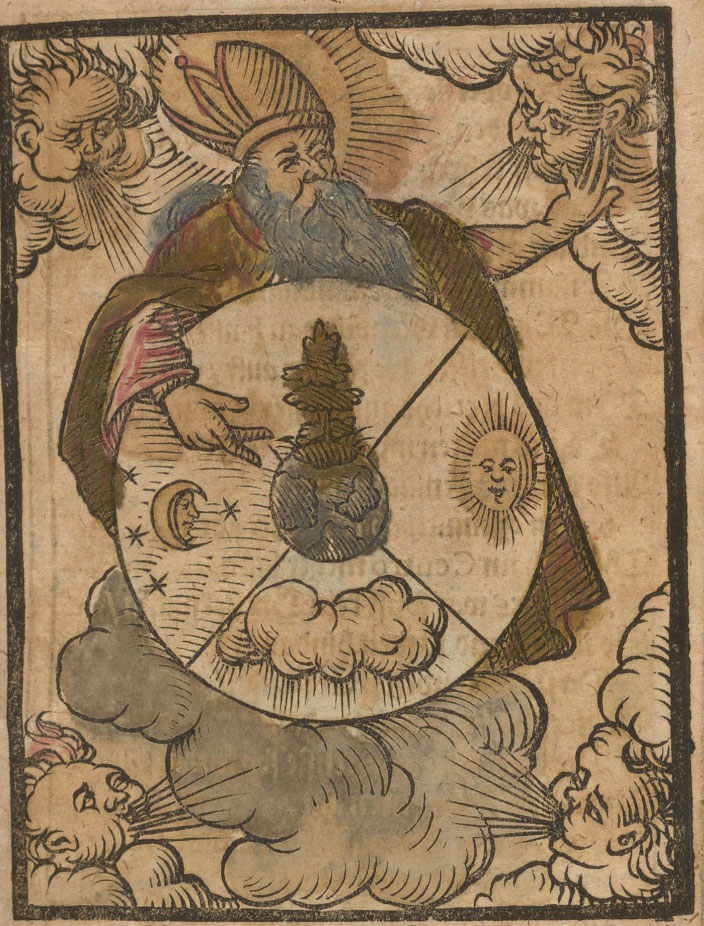
And the highest work, confounded,
Has quickly called them Earth and Wind,
To sweep up everything in due time
That had remained left over;
And the least matter, soon,
To draw together manifold.
The winds, all four, wisely together,
Diligently turned up the fields,
Wove the realm together,
So that the middle must remain still.
Thus was the earth made,
Wholly separated from Heaven;
It let itself down into the Center,
For otherwise there was no place at all
So low and so far away
Where it might thereafter stand.
Further I go on to prove that
The Earth is henceforth the weakest
Among the good elements:
It swells up before heat,
Or else is very much split apart;
It will not run together any more.
But the Water, very swiftly,
Divides and runs back to itself again.
It becomes again whole as before;
Thus the Air and the Fire’s brightness
Go back into themselves at that hour,
So that one perceives no separation.
This happens for the reason
That they are able, and not weak;
They have a perfect property,
And move themselves by their own power.
Yet the Earth, very fair,
Stands firm in its heaviness,
And thereby gives another cause,
That they cannot move freely;
For where there is much earth,
There heaviness is found as well.
The first number is full of strength,
From which all work proceeds;
This same, I tell you, is at hand,
And is well known to the Creator.
So its virtue, indeed,
Will without doubt be made clear to you.
This number is a great understanding
Pure and single, without choice;
But what comes from it, in name,
Is manifold, set together.
Yet no one can mix what
He has not first found,
Whereby the mixing comes to pass;
Of this you must beforehand be informed:
That what is single must lie in the daylight
Before it can become manifold.
Therefore a first beginning is
Pure single, without any attachment.
And whoever does not firmly believe
That it is so, is in error.
Would this indeed not be from that
From which wisdom flows forth pleasantly?
Truly it is so: it is white and light,
Whoever knows this with good reason.
Such a fair and glorious thing made ready
He is beyond all danger.
He must with heart and courage therein
Confess that it is good as well.
For how should this not be good,
From which so much springs forth?
Can even a sweet, lovely spring
Give bitter water from itself?
Either nothing is good in sum,
Or this alone is good (upright).
He who has created the world pure,
And is the origin of all things,
Has many names, without mockery;
The Latins call him God.
Since he is the first Being,
Through him all other things are preserved (made whole),
So he has life from himself;
He is wise, understanding, good besides.
What he has, he takes from no one;
But what other men’s hands
Receive, they receive only through him.
Therefore they may thereafter
Lose it, where God does not increase it,
And does not grant them more thereto.
The air is a convenient thing;
It is not to be held poorly nor easily.
Therefore the err wholly,
Who think it is no substance,
Unless it has its coarse thickness
That one may see it at every moment,
Or perceive it through the senses.
What is so very subtle and thin
As the gentle air? what on earth
Can be felt less?
Therefore many have thought up to now
That it is a thing vain and empty.
It is very delicate yet truly
It also has its body and its being entire,
And is a subtle element,
Much better than earth and water.
Therefore a higher place at once
Has been granted to it by God.
What hovers near to Heaven
Is nobler and better mark this well.
Are not the winds so fine indeed
That one cannot see them at all?
Yet who would deny, nevertheless,
That they blow deep and high?
When they flee out of their hollow,
They can well shake the mountains,
Tear trees out by the roots,
And move the sea as well with terror;
They drive the clouds together,
And again drive them apart;
From this come thunder, lightning, and flash,
Since they altogether have
This power, they must indeed
Without doubt also be substances.
Though it is not seen with the eyes,
Nor grasped with the hands,
Yet the senses truly judge falsely;
The eyes too deceive entirely.
Put deep down into water
A strong and straight rod,
And it will seem crooked therein.
When a little ship runs along the shore,
You think the water is moving on,
And the little ship remains in one place.
Therefore the senses are very weak,
And by many a cause
Are corrupted through age and sickness.
Much deficiency have we inherited;
For the senses are not alike in this
Among men, late and early:
What pleases this one as quite fair,
That same another holds for shameful.
The sweet is often called sour by one;
For one is freezing, another would have the heat burn.
Thus, according to the body’s condition,
The senses are dull and defective;
At times they also follow after
That part through which they work as well.
Just as a madman, in a bright light,
Stares into two burning candles,
And thinks the house is moving
His eyes are dim, mark me:
By that his sight is blinded,
So that he does not recognize the truth.
You men are mortal and weak:
Look once into this matter,
And lay aside the darkness.
Lift up your eyes already
Toward Heaven high above you,
And do not follow, unwillingly,
Your fleshly will here;
But consider among yourselves how
Your God, almost in sense and understanding,
Has found out all things in equal measure.
Let right reason govern you;
Let no error lead you astray.
Consider the beginning of all things
So everything will soon become clear to you.
Then, when the beginning, as said,
Is known to you the great world
What you may then indeed also know,
About man likewise, follows from it.
Which is called the little world
So, then, do not neglect the great one.
First, rightly consider the beginning:
When God made Heaven and Earth,
And likewise created all things,
And gave to each also its life
Then man was created, indeed,
When all things had been made.
Then God formed him mildly out of earth,
After his form and likeness;
At that moment he gave him life
Out of his holy, divine mouth.
This life, as it is now called,
Still preserves the great world.
Then such was imparted to you
By God, as it also still remains.
Of this life I say at once
That it is called a balsam;
Of it many books are full,
As the learned know well,
Even if they write, as is said,
That the balsam preserves the great world
Without any compulsion,
So that all things may long endure.
Thus it is indeed by them
Not named, nor openly,
Since at times it is a secret.
So I say also at this time
That it is right that such remain concealed,
So that one does not drive mockery out of it;
Or that one should not, in common,
Take the bread away from the little children
And then indeed throw the same
Before the foolish dogs.
Therefore the clear pearl
One should not cast before swine.
Thus one ought also always
Keep such a gift, at every time,
Well from everyone
Who has no desire for the fear of God,
So that here upon this earth
Such secrets may not be made known.
Therefore I also wish to keep silent,
And stop short at the form;
Yet, as far as it may be possible for me,
I will nevertheless name the “arcana,”
Describe them and point them out,
Why they have such power.
When one would use it rightly, indeed,
It is revealed to few.
First consider, as has been shown,
That the balsam is only inclined (disposed)
To preserve all things in strength,
So that nothing falls to ruin.
How then could it be possible,
Since the great world is thus,
That it should not have a balsam
Which it ever bears?
Therefore I say at this time:
Since man is created
Out of earth from the great world
And is maintained by the same,
They must therefore, at once,
Be wholly near and akin to one another.
Therefore do not let it seem strange to you
What I have shown here;
Therefore you must well consider this:
That we are made of earth,
And, as said before, must
Make use of the great world.
Thus then man becomes sick, and
So to speak, in discomfort (weak)
How would you show him greater help
Than when you feed him with balsam?
For the balsam, as was said before,
Preserves the whole world.
Now this balsam, which I mean
Its virtue is truly not small.
Truly I say at this moment:
In medicines there is no higher ground,
For any man here upon earth,
By which this work may be attained.
If a child should lack something
Be it clothing, money, or goods
Who would grant him such things,
More willingly than the father gives?
Therefore, if the microcosm is weak
And the matter stands ill with him,
Then his food must be mixed
With a thing that many desire,
Shown (commended) by Nature,
As I have shown you;
So you will rightly understand the things,
You will go the way of truth.
Therefore, by this free means,
One can (prepare) a single medicine.
Against all weakness and discomfort,
To go forth and pleasant to everyone
So that the weakness, at once, may yield,
And the sick man again become well.
Let this, beforehand, be for you
A secret and a divine gift:
From a fountain it flows forth straightway;
It is called Sapientia (Wisdom).
To no man is it given
Here in this temporal life
Who, here at this time,
Is shameful, wicked, and godless;
For such a man this is not without cause
Must have no semblance of wisdom.
He only ends his life here
Like an unreasoning beast,
Which, in its life here,
Is given over only to the belly.
So it is also as has been shown
With those people who are inclined
To all such coarse vices:
With them wisdom has little praise,
For they cannot attain it,
Because they are encompassed by vices.
Therefore they also do not write of it gloriously,
But rather drive others into mockery:
Though they have understood nothing at all,
Yet they want to know the most.
But what should one do with such?
Indeed, one must let them be;
Their shame will yet well become new:
Then the “new” will come upon them of itself,
When they themselves think far otherwise;
Then their nature will be recognized.
Therefore we have, in youth,
Also learned the virtue of wisdom,
So that we might many times
Also know our dwelling-place.
But since man, at this time,
Between God and the beasts,
Is a middle thing so is he:
In him both are in common.
The soul comes from divine life;
The body is also given to the beast.
The one part dies, the other remains;
Death does not drive out everything:
The mind is, in a way,
Struck by the deadly arrow.
But now I would ask plainly
How one rightly plants the virtue,
What the mind’s preservation is:
It is the true wisdom, free,
Which continually considers virtue
And makes us into pious people;
Which, in like measure,
Leads men to life on the right path
So that they walk according to righteousness,
And also rightly deal in all vices.
This is wisdom true and good
Which one must study rightly.
Therefore they always lie (in wait)
And seek the hidden things
Also nature’s great secret,
Also the first bare matter.
When the mind recognizes such,
Only then is it also called wise.
Yet the science is not this;
Its teaching is wholly otherwise.
He who may study it can be learned,
But does not have pure wisdom.
Far apart are the two;
Their work is also not the same.
Wisdom’s fruit brings great profit;
Learning (mere scholarship) is only an ornament.
The former considers, in its own fair way,
What the world truly has within itself;
The latter teaches poorly by rote,
And makes no one honest and upright.
From the former one becomes devout and good;
The latter only makes one clever,
And well-spoken with lofty show
But it does not make them any better.
Therefore wisdom is pure:
The planting of the mind alone,
Which points to true virtue,
Tears vices out of the heart,
And ever illumines it with good,
So that the same flees all vice.
O noble light, the best part;
O comfort and portion, and true healing;
O rule toward wealth freely;
For the mind you are a medicine;
Service, refuge without compulsion;
You are better than heaven’s drink.
Who loves you more upon earth?
Where is your worth your praise and fame and honour.
In former times, in the pure temple,
There you stood, dwelling in common;
Also in Egypt openly
You truly had, for a time, great renown.
No one now knows you any more;
For you, every vain land rules,
And the poets’ false poems,
Which yet serve nothing good.
This being, with lofty mind,
Give witness to me, through God’s goodness:
That not only in Heaven alone
Is pure and also spotless life;
For it is in the region
Through which the air also goes.
Therefore this life is chosen:
In harm it has neither comfort nor counsel,
And also, unto everlasting time henceforth,
It will not cease in such a place
Which is given to it
From the pure divine wisdom;
There its power and glory,
Ever further, are spread abroad.
Such a secret may God, in his time,
Yes grant to this corrupted world.
That is the praiseworthy virtue
Namely godliness with name,
Righteousness in every case,
Also pure wisdom wholly,
Which far surpasses
All other things in this time.
Now whoever has this piece without mockery,
He is a true man before God,
And a true man upon earth,
Who after death may become blessed.
But whoever does not have this thing,
Rather, in sins early and late,
Wallows himself about like a swine,
Must suffer eternal pain,
Perish shamefully in darkness,
And can win no grace.
These are indeed no idle fables,
Still less dreams or poems;
For the things are certainly true.
So I now believe the human host
Is not so utterly mad and blind,
You perverse child of Adam,
That you despise wisdom
Yes, God himself at Heaven’s gate.
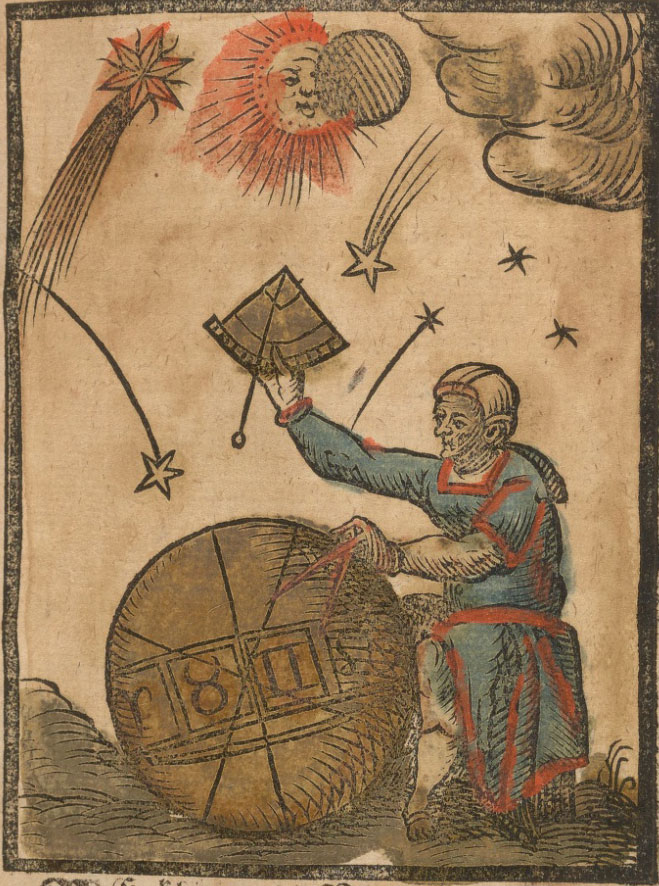
Man is indeed reason as well;
It is a clear, free light,
And the sole power of the mind,
Through which we truly discern.
Evil is ever ready beside the good,
And shame and discipline stand against wantonness;
Therefore free will is governed
By right reason;
And he is wise at every hour
Who is not overcome
By a sudden evil passion,
But sets himself against the strong wind
And quickly braces himself,
So that sin does not multiply
And wholly take him in,
So that he does not, indeed, perish.
Therefore some rightly say:
Only a wise man is truly free,
When, out of very high understanding,
He lays a bond upon his desires,
And rightly bridles insolent boldness,
Which stirs up nothing good.
Whoever considers this rightly and well,
That one should be held wise.
Yet the highest science
That which concerns the power of Heaven
Has not yet been shown clearly enough;
But I will, fittingly, also
I will take this into hand,
Which proceeds from the understanding,
And indeed report it to you
What will follow thereafter:
Namely, how Heaven, well,
Divides the year into four parts.
Further, I will show
That this is no false notion,
As wondrous “monstrosities” often, indeed,
Come from Heaven marvelous
Which happen many times,
And are also seen by many;
What they signify in their form
That I will soon show you.
Heaven has its old course:
The stars go down and up;
The seeds grow manifold;
The elements have their form.
The year has its parts in full:
After the length comes also the spring;
Then comes pleasant summer;
Thereafter follows convenient autumn;
Then much fruit grows, and good wine;
Winter brings the cold in common.
Then all water becomes hard-frozen;
The earth, too, hard, like horn.
The herbs keep their power,
And likewise the metals their properties.
One should also, indeed, not imagine
When a wonder-birth happens
That it comes about by chance,
Because it springs forth and arises
Not from causes ungrounded,
But rather that it proclaims to the world
Some special sorrow.
Therefore it is a sign and a wonder.
Nature does it itself, by itself,
And perhaps not in vain;
Such a like birth, besides,
Drives its manner and pastime likewise
Just as when a painter, well regarded,
Makes a monstrous image,
With a nose great and broad,
And with a mouth wholly wide:
Though he is a good master,
He nevertheless does this by intent,
So that the common folk, above all,
May have something to delight in.
Since now everything here exists
By God’s mighty power,
No accidental chance
Can happen on earth anywhere.
For divine wisdom governs,
And tames and rules the same;
This becomes clear to everyone,
When he considers the matter:
How everything has its goal and measure,
And its orderly path thereto;
How also the whole world besides
Is so purely created by God;
And how upon earth all beasts
Have their strength, power, and life
How all their limbs, with names,
Are so orderly set together.
How God and Nature thus work:
Nothing is done on earth in vain.
Whoever rightly considers these things
Can well perceive in them himself
That everything, by God’s command,
Happens in an orderly way.
So that you may find it better,
Mark the matter also at once:
Every work is undertaken
So that its end may be reflected on.
Now I come to my opinion,
On which I have proceeded:
God is the highest and best good,
As one rightly ought to name him.
But who can attain the same?
For whatever anyone has received,
That is less than he;
Also the lesser is far more
Than what he can possess at all.
A little spark, indeed, might sooner
Swallow up the whole sea,
Than that a man should understand
And grasp so great a Lord.
For we are small and bare
A rod that one breaks quickly,
A light that one carries on the wind.
Yet God alone is all in himself;
He alone has it mark me!
Therefore, at every time,
He alone is perfectly blessed,
The highest good after God henceforth,
Which every creature can have.
It is not bound, but free,
Mixed also with manifold things.
Therefore you should note this well:
That this gives to every thing its life,
And also brings the dead back again.
All that lives, in sum,
And all that makes life be,
Must only be mindful of death,
To which it also at last inclines,
Since it is fashioned toward the end.
For whatever here has long lived
Has nevertheless always resisted death;
Yet before death yes nothing at hand
Is freed from his bond.
For everything that has life
Must change its state.
Life is the body’s adornment,
Given from Heaven;
Therefore it cannot remain here
It must go back again to the Creator.
Since on earth nothing endures,
Everything perishes from day to day,
Therefore the appearance of life
Cannot remain longer here on earth.
Enough now about life so far;
Now I will tell you still more.
First you must, with wise courage,
Well distinguish good and evil
For that is the beginning of wisdom.
Whatever exists and lasts long:
Some things are only good,
Which can never be evil,
Nor harmful to any man.
Some things are good mark me
With a distinction: while they
Benefit and bring luck and well-being,
At times they quickly do harm
As are the gifts of Heaven.
How one uses these:
According to that they are evil or good.
Can you withstand Heaven,
Then things must always go happily for you.
For what we have of evil and of good,
That comes from Heaven.
Therefore, while we here upon this earth
Are burdened with great sins,
And do not cease from sins,
So we certainly, from the outset,
Nothing to be awaited of that form,
Then poisons and punishments manifold:
Heaven is, as has been shown,
Since we are inclined to sins,
That it punishes us for our guilt,
When we lose divine favor,
And also will not leave off sin.
Then Heaven must step in
With its punishment, which at once
Appears in many a land:
There is war and war’s outcry;
There are many kinds of weakness,
All of which Heaven sends,
When it pours out its poison
Into the chief element,
Which by us is called air.
For the air is delicate and mild,
Is carried hither and thither swiftly,
From one place into another soon;
Therefore the poison also multiplies,
Doing great harm to people and beasts
As I have shown here:
That Heaven punishes our sin
May God forgive it all to him!
Therefore this is already provided for,
Through divine providence.
Now I will teach you
What the Heaven is eternally:
Whether it is also strong and hard,
Or subtle, thin, weak, and tender,
Like the air, which indeed one can
Divide without any effort.
And when you are informed of this,
It will not turn out to be without use.
There are two primordial things
Of Nature, not at all small:
Matter and Form.
From these the manifold bodies
Are properly created;
From this therefore come the earth,
Water, air, fire, and the heavenly sphere.
Therefore some still err
Those who hold and believe beforehand
That the heavenly has no bodies,
No matter at all, as they say.
The contrary would come to pass
For them: they would be stirred up,
Destroyed by one another themselves.
This argument is not admitted,
For matter has no “guilt”:
Although long time
Dissolves the bodies already,
Still none destroys the other
That is set against it;
Since they have equal strength
Unless one, note, is more vigorous
Neither can drive the other from its realm.
Otherwise the struggle is truly equal:
No one lies defeated in the war,
No one attains the victory.
Therefore the eternal God considered,
When he made the noble heaven,
And chose beforehand
The purest matter also with names,
And so also mixed it in such a way
That the one does not press the other,
Nor can it injure it at all.
Peace is with them night and day;
Heaven is eternal for this reason,
Not consumed by unrest:
The firmer a thing is at hand,
The longer it has its continuance.
Therefore the nature of the whole heaven,
Is like an adamant, so hard;
No fearful harm can be brought against it,
Be it air, water, or fire.
It is subject to the Lord alone,
Who made it and has it under Him.
Yet there is a further argument:
The first motion, the measure of all;
That is, the highest heaven is good,
And draws the others swiftly along with it,
From rising unto setting,
Through four-and-twenty hours.
Though they run against it,
It nevertheless moves them by force.
This would happen in its course,
If they were not stiff and hard.
Further, the moon is without slack,
Namely for half the day, I say,
Which the sun cannot shine upon;
It goes on wholly with the heaven.
Thus the stars, in the time of night,
Have the heaven’s colour ready;
But the moon also, and the stars pure,
Are hard, and cast a shadow,
As when a darkness comes to pass,
So the moon drives away the light
Of the sun, and its bright radiance;
The earth does not receive it wholly.
Why then would one, even of heaven,
Not also grant it glory?
Else it could not its stars
Keep fixed in one place;
They would wander about forever,
Up and down, straight and crooked.
Yet the great heaven, from afar,
Is not harmful like the stars,
Though on earth they may indeed
Be seen by us clearly;
Yet they are not all alike,
Their shine and virtue as well.
The stars have not only power;
Each one has its own property.
Therefore the heaven is but
The seat and place of the stars,
Not their matter and substance.
What power has the heaven’s gleam?
At night it is wholly in the stars;
They rule the world, in truth.
They bring much change with them.
That is the meaning, properly.
For every saying is false verse
Which one cannot clearly prove.
Nature has such a tendency,
Granted to all men, purely;
Yet few make use of it.
Therefore there arises, from the beginning,
So much error and great vice.
If everyone on earth, with praise,
Would let reason rule him,
Then one would not so quickly lose
All wisdom here upon this earth,
Which is worthy of great praise.
Then all art and the adornment of knowledge
Would be rewarded forevermore.
It is nothing but our own fault
That we lose the divine favor;
Therefore God turns away from us.
The divine power blinds us;
Then sight is easily deceived
And drawn away from the truth.
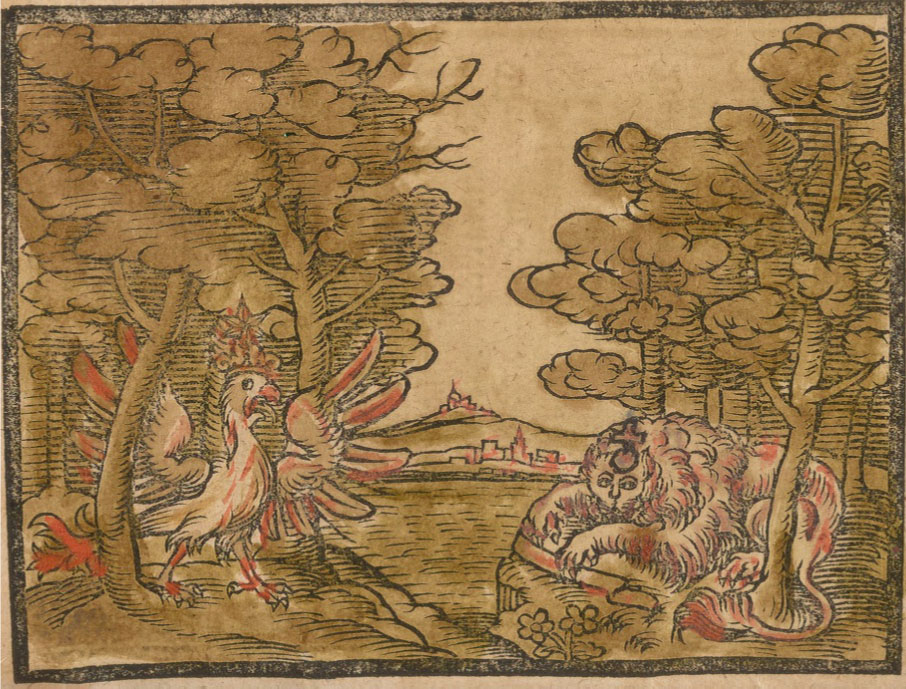
O Phoebe, do stay with me;
help me write a few more verses.
Paper and pen are ready.
So now I have not much work,
For all my sense and courage
Is fixed solely upon the practice,
Which I, though by a parable,
Would show quite openly,
So that the wise and the devout
Might also reflect on something good,
From which they might have praise and honor,
With money and goods in like manner,
So that they too may have a livelihood
And live rightly before everyone.
Take heed, keep these words,
Now and at every time hereafter:
After the morning-red already
Had come forth on a morning,
And the stars in the clear heaven
Had all vanished away,
And as the sun would come forth,
Standing half above and half below,
I marveled at that time
That from the water already
The fiery foam should rise up
And shine like clear gold.
Since the two things cannot together endure in its course,
namely fire and the tender water,
they cannot exist together.
The sun in water perishes,
therefore it will not be fiery;
or else something in common is lacking:
that the sun should rise out of the sea
and bring here its shining with delight.
Such a thing I was pondering
as I went walking in the wood.
There I saw an old graybeard,
clad in a very white garment,
leaning only upon a staff.
He had a gray beard, without shame,
was dry of body (as I tell you),
and had a very lean face.
Upon his head the old man, fittingly,
wore a little wreath of dry leaves.
And when we two came together,
then we greeted one another.
The old man asked who I was;
my name too he desired.
This at once I gave him quickly,
and asked him in the same manner.
As he was called, he spoke to me:
This I will gladly tell you:
For Snurutas am I named;
By many I am well known.
They dwell throughout the whole world,
Yet not everyone is pleased with what I do.
For when this one praises me greatly,
That other one reviles me all the more.
Therefore many kinds of mind on earth
Are found among men.
I addressed him, saying: “Old sir,
May God’s grace be with you, not far;
since all things are known to you,
and in you also is much wisdom:
I humbly beg of you
to teach me wisdom as well;
for you are indeed the nearest to God.
Share with me many good commandments/precepts
how wise teaching may instruct me.
Do you have nothing else to do?”
The old man said: “I have no business;
but since I put cares aside,
and likewise shun labour,
I take to myself good rest.”
Thus I often go to this place,
yet I have not moved my dwelling;
here, in this dark forest,
all is wholly misshapen.
For here no person at any time
is safe from wild beasts.
Therefore I do not refuse you,
since I bear great friendship toward you.
What you have desired is fitting;
to an old man it is also pleasant
to speak of things long past
and to bring forth long histories.
But so that no one presses us,
and that we may speak at length,
let us go out of this valley
and climb at once that mountain,
high up into the heights;
then you will greatly marvel,
when we, high upon the mountain,
look down here and there
upon the customs and comportment of men,
how they live here upon the earth,
even to the midst of the sea’s stream;
all this we shall see without hindrance.
I there beheld a lofty rock,
which rose up almost to heaven;
rough it was at the first ascent,
so that one could hardly climb it.
It was covered with many thorns,
and moreover stony, hard as horn;
yet halfway along its length
it was no longer so harsh and severe.
And the more it rose toward heaven,
the better it began to be.
And the rock was called Magnesia,
where God might be seen.
There the old man led me,
and when we had come up
to the very peak or summit,
gentleness and peace arose.
Then such delight came forth
that I cannot recount it.
I would need a whole day for it,
and also the night until early morning,
as I stood above in longing
and was embraced by great joy.
He spoke: O you virtuous youth,
Bow your knees with fear and shame;
Call upon God the Lord alone,
The pure King of all kings.
Without His divine grace and favor
All your labor will be in vain;
Without Him you will not long remain here,
Nor spend your time in joy.
All good things come from heaven;
They bring profit and benefit to man
When, in true humility,
He lifts his heart up to God
And in holiness of prayer
Perseveres, standing for help and grace.
When the old man thus addressed me,
I then fell upon my face,
Bent my knee, stretched out my hands,
And cried out to God at last:
Lord God, Father in eternity,
You who have all power always,
In heaven and also upon earth,
Nothing is greater than You,
Nothing higher can be conceived,
No fleshly body can encompass You.
You have indeed fashioned the body,
Which from the beginning exists and still
Daily tends again toward falling away.
Your power is great and ineffable;
Both old and young confess You
As without beginning or origin.
You are the embodiment of the Good,
You govern Nature in its order;
Your dominion extends exceedingly far,
Yet nothing can wholly contain You.
O You eternal Majesty,
You goodness and wise counsel,
You goal, order, light, and life,
You spiritual truth besides,
You pure virtue, You beginning,
You end and the source of all things,
Who dwell everywhere
And yet in no single place.
O You unmoving radiance,
Who give all motion
To everything that lives upon the earth,
From and within whom is the highest good,
To which also all things on earth
Shall finally be directed as one.
You who are also unchangeable,
Eternal now, without time or year.
You remain the cause of all things,
You continually set the course of heaven in motion.
Everything proceeds according to Your will
And exists as well in rightful order.
You, pure King of all kings,
You, common Lord of all lords.
And around the highest throne of all
Stand many hundreds of thousands of angels
Gloriously gathered in that world
And praising Your most holy Name.
In that world, I say with diligence
(Outside the earthly sphere
Which one calls Heaven and Earth),
There the eternal Light comes to be,
Burning forth from divine power,
In which all things also have their true being.
O gracious God,
I worship You without any mockery.
To You I render divine honor,
To You I now cry out with desire.
May You look upon me with grace
And not despise my poor prayer.
Send to me the radiance of Your light,
That I may wholly fathom the Truth.
Remove the darkness with its distress and struggle
From my poor soul,
Which hovers within the mortal body.
Show me besides the rightful path,
So that error and superstition
Do not rob me of my blessedness.
So that false delusion does not mislead me
And at last cast me into ruin.
Human understanding, wit, art, and cunning
(Be it in old age or in youth)
Can accomplish nothing at all without You.
When reason rises above itself
And man, apart from God’s Spirit,
Seeks heaven most of all,
Then he falls miserably downward
Like Icarus with his feathers.
Without You, the ground of Truth
Is hidden from him deeply at all times.
He does not know how he shall attain
Blessedness after this life.
You, great King of all kings,
In Your heavenly palace.
Graciously forgive me my sin,
Grant that I may come to know You.
Here in this valley of misery
Let me be pleasing to You as well.
Grant that I may examine myself thereby
And know from where I have come,
Why I strive upon the earth,
And how my life shall come to its end.
Whatever I should do or refrain from,
O Lord, make known to me the right paths,
So that when my goal at last arrives,
The body may rest within the grave,
And death bring me no harm,
But rather that my spirit may soar
High into the heavenly throne
And dwell there with You in joy.
When I had completed my prayer,
The Old Man answered me again:
Now you have truly reconciled God;
Your offering He has not despised.
Therefore, young man, be joyful,
For here upon this rock, in freedom,
You shall dwell to the praise of God
And partake of the heavenly nourishment.
As he spoke this, I was transformed,
Yet quickly the Old Man vanished before me.
And all around me it became completely still;
My heart, courage, and will were enraptured.
I perceived through certain inner knowledge
That strength, grace, and power flowed into me.
A bright light shone all about me,
And my sight was opened as well.
Before me everything was revealed,
And nothing at all was hidden.
Swiftly I was carried along
By a gentle and also silent wind,
Toward a beautiful green valley
The like of which I had never seen before.
In a very short span of time
I was thus transported far away.
When I came near to the ground,
I saw gates full of delight and adornment,
All glowing entirely of silver,
And also of fine gold, so clear.
With joy and bliss I entered in
And carefully surveyed everything therein.
There I found standing open at once
A beautiful, splendidly adorned hall.
It was adorned with noble stones,
The like of which cannot be found;
And standing in that hall there was
A noble Queen, radiant and clear.
She shone like the bright sun;
With her there was pure joy and bliss.
Then all the harmonies upon the earth,
Whatever they may be called,
Were gathered together there at once
And sounded sweetly in the hall.
For there was a splendid work,
Far more beautiful than Lady Venus’ mountain.
The Queen then opened her mouth;
When I had observed all things thoroughly,
She spoke: “I would gladly like to know
What you, young man, have to do here.
How did you come here without any danger,
Up the mountain? For I greatly desire this.”
I stepped forward and fell before her;
At once she raised me up again
And said: “You must not bow so deeply
And show such divine honor to me.
Humanity is pleasing to me;
Thus I am accommodating to all things.”
“Therefore do not show me the truth
What it is that you have to do in this place.”
I said, most gracious lady,
As I stood there and looked about me:
“I am ready to serve you
In all humility,
So that I may clearly
Perceive your wisdom openly.
For I can plainly perceive
That you are full of all wisdom.”
As soon as I had spoken these words,
She at once began to speak
And said: “Your future amazes me.”
She also asked me many particular things,
All of which I explained to her;
She allowed it all to please her.
She also said: “God has touched you
And led you, young man, to me,
So that today you may freely teach
What true wisdom truly is.
Ah God, how the world is altogether caught
Deep everywhere in darkness!
How it has sunk into folly
And is grievously drowned in blindness.”
We see many images of men,
Thousands upon thousands without aim;
But a true human being upon earth
Is found exceedingly rarely.
Thus this world may well
Be called, with great lament,
A pit and wood of folly,
Full of all sin, shame, and error.
Therefore turn your ear toward me
And quickly heed my words,
For I wish to prepare your mind
And drive away all darkness.
When she had now spoken further,
She firmly seized me on the spot
And led me into a great city,
The like of which the whole world does not possess.
Everything there was unknown to me:
The walls entirely of adamant,
And of pyrob, the shining stone,
Were built throughout.
Oh, how exceedingly splendid palaces
Have I seen, beautiful and strong!
How many temples and many halls,
How many gardens without number!
How many splendid chambers there were,
The floor also was paved
With gold and manifold little pearls,
With pure silver of the same fashion.
Many more beautiful things besides
Have I beheld in that place,
Which I cannot recount all;
Yet not everyone should know them.
Soon we came into a garden
In which was the highest adornment;
The walls there were golden,
Completely set with noble stones.
In the middle stood, with joy and delight,
A splendid, clear, beautiful fountain,
Which shone by its clarity
And also continually moistened the herbs,
Which there in great number
Were everywhere so beautiful;
The birds also, with their song,
Sang so that it sounded wholly lovely.
When they lifted up their voices,
The goddess spoke: “Hear my words.
Young man, go and wash at once
Your eyes in the cold fountain.”
Thereupon she gave me a little book,
Which I have kept very well.
As soon as there at that place
I had washed my eyes clear,
Then my dim sight was opened,
And nothing was hidden from me.
From this I received great joy,
All sorrow vanished from me.
The goddess spoke: “Willingly endure sorrow,
Until your spirit is dissolved.
God keep you; I now depart.”
At this I received great grief.
As I was about to answer her,
She so quickly left me,
And flew away like the wind,
Swiftly back into her palace.
Such things, however, with care
I pondered within myself earnestly,
And soon, near the inn,
I wished now to lay myself to rest,
And there my weary limbs
To refresh again well through sleep.
THE END
Up to this point, about Wisdom
Enough has been said, for this time,
So that the matter may become better known to you;
Mark it well, and find it out.
Every work is undertaken
So that its end may be attained;
If it is done wisely,
All one’s doing is directed toward the end.
If now the end is set aright,
The form delights the heart;
His will, his thoughts, and also his mind
In the whole work strive only for this:
That he may reach the end in blessedness;
And therefore he rejoices
No labor then seems bitter to him;
The cause is pleasure alone,
Namely peace and delight.
But that the truth also
May be understood by the unlearned man,
I will, with clear examples,
Prove what has been told above,
And teach you the grounded truth:
Why the farmer ploughs and digs
Lest his labor become bitter to him.
In summer he suffers great heat,
He labors so that he sweats from it.
In winter he endures the frost,
His work costs him great hardship.
Why does the sailor set out
Upon the grim and raging sea,
With rocks and whirlpools in danger,
And truly does not fear death?
He takes comfort in the ship and in his skill;
This, you see, does not happen for nothing.
Why does the soldier run to battle,
And rejoice at such a time,
When he hears the trumpets ring out,
And the horse’s bold, spirited cry?
Why does many a man also apply himself
So fiercely to the arts,
Through diligence to all the books besides,
And has neither day nor night his rest?
Namely because after long labor,
Honor, profit, and pleasure follow along.
If honor and rest do not move us,
Then art and virtue are laid aside.
From this discourse it is shown,
And each may understand it well.
That wisdom and all the arts
are praised with the highest acclaim,
these one should observe quite well,
and by no means despise them;
for such arts are here on earth
not worthy of slight praise,
since they adorn a man
with piety and with fair virtue,
in whom they truly take root
there, poverty can have no place,
for their reward is very great.
Of this I rejoice without ceasing.
What God first has made,
that you should indeed observe well;
and when you have knowledge of it,
then you must not despair;
for that is the first beginning,
pure, without any attachment,
taken from the things
which arise naturally.
After that, the mixed is added to it
let it be done with quiet composure;
for whoever rightly observes the beginning
has brought many a good benefit.
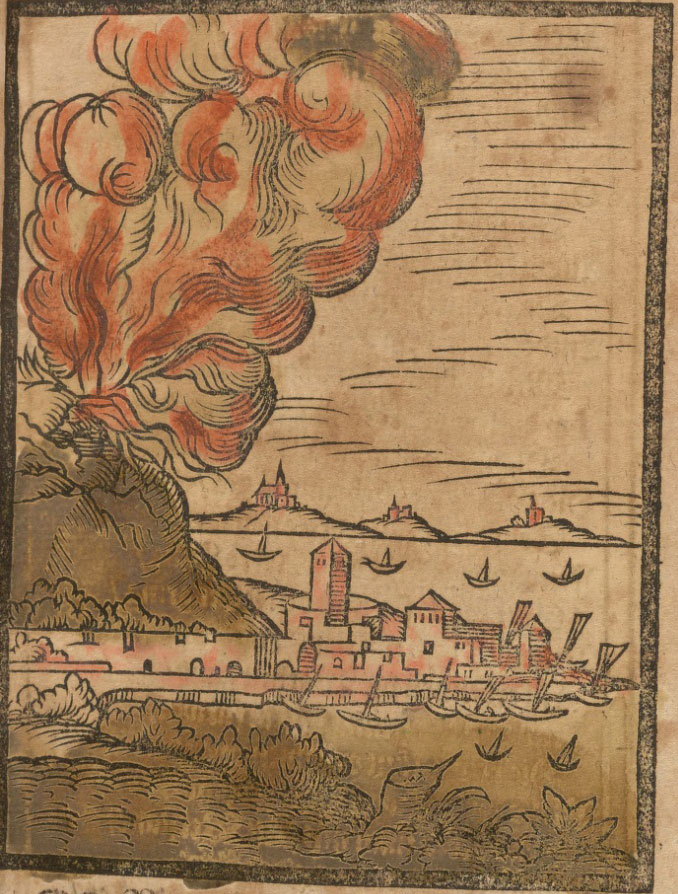
Now we shall take a new path;
yet first I must call upon (invoke)
Also Jupiter, the free planet,
that he may be gracious unto me,
and unlock for me his secrecy,
that I may pour forth the pure truth.
O Jupiter, planet indeed,
to thee is known and manifest
all hiddenness whatsoever;
thou dwellest in heaven’s hall.
Reveal to me thy secret counsel,
impart to me thy help, early and late,
until I well within myself consider
wisdom, pure in its power.
The divine mystery entire
is not made plain to every one;
no man understandeth the hard things
God maketh them unto him easy,
and shareth with him the radiance of His light,
to know the truth wholly.
For many secrets there are indeed
which none can know at all;
much less (I say forthwith)
are they fathomed with one’s understanding.
Therefore will I rightly report plainly
of a wondrous mystery
For it is indeed a great wonder,
and also a special work of God:
as at Pola by the sea,
a rock at times burns greatly.
And when I heard of this place
from trustworthy people,
I pondered the matter further;
after this mountain I was almost in pursuit.
And when I learned the thing aright,
I soon took a messenger to me,
and we then travelled on strongly,
until we came into Styria,
to Graz, indeed, the princely city.
My messenger begged leave of me;
he said: “I am indeed bound to you
be so kind, do not be angered
for I cannot conceal from you
that I would go back home again,
since my wife and child together
have no comfort from me anywhere.
Thus I have also guided you, all prepared,
already more than a hundred miles;
but as for the rest, it has yet no end for a long while
therefore I turn myself away from you.”
Although I would gladly have stayed,
yet he spoke the Wendish tongue;
and since today there lies before me
still the dear Windish land to come,
therefore I will not remain longer.
If you would write something to your parents,
then go on I will go home to my house;
so will I set it in order for you.
Therefore my guide’s intent was this:
he would not stay with me any longer;
yet I must let it be so,
for I cannot do otherwise with him.
Now hear how it went with me thereafter,
when I came through the Wendish land:
I arrived, without all escort,
in a city that lies by the sea,
which is called St. Veit on the Flaum,
well known among the Croats.
From there I came to Piran
listen how it went with me there:
The sea came right up to the market-place;
there lay two strong galleys;
the colonel who was in them
that was a Bisser, in truth.
He said whether I would serve him;
he wished to give me good pay.
I thought: let St. Veit keep you;
I do not wish to be your subject.
Moreover, I understood well
that you wished to deal with me dishonourably.
When I perceived his false manner,
I withdrew myself with all diligence,
and went from there, with great care,
into a little town called Mitterburg;
there I took up my lodging,
until I had investigated everything
how and what the nature of the rock there is,
which burns at Apollonia,
as I had been sufficiently informed.
I did not remain there even a single day
until I had fully examined
what this rock, as previously reported,
signifies and contains.
May everyone take such a thing to heart,
and consider it very carefully;
for these are secrets indeed
that are not revealed to everyone.
For this rock, as I attest,
is truly so of that I do not lie.
When at times it burns,
then it gives forth a very great heat;
likewise warm water, and slime,
together with natural “glue,”
spring forth from it very quickly,
just like a strong spring-well.
Where this “glue” settles itself,
there one soon digs up good metals;
and when the shafts and old mines
have been emptied of the metals,
then fresh “glue” is again
soon turned into the mines;
this same, in its time,
soon yields other metals,
which well proves to the inhabitants
that this “glue” is metallic;
since the “glue” bears metals
and also generates them,
it must have metallic power,
and a natural property thereto.
It must also be, I say at once,
that it has a sticky moisture
of which Gebhard writes very well
which yet is full of secrecy.
Besides, he shows (it) forth,
to which everyone should give good heed:
that this “glue,” with loud acclaim,
is a beginning of all metals.
If you would say much of it,
turn to the Cosmographia;
there you will find a good report,
which indeed cannot fail you,
in the one-thousand-and-two-hundredth leaf;
also on the one-thousand-and-twenty-third,
it is expressly set down as well,
how such a thing is in itself;
to which I would point you,
that you may have testimony this is true
because I have experienced such things.
I have little health from it,
for I came home sick,
drawn out through Hungary and Bohemia.
Yet I will also tell you this:
that when, after a year and a half,
I came home again at last,
(which myself took as a wonder),
my messenger, as was said above,
had departed here out of this world.
Great toil have I, as shown,
undertaken; to learn more I was inclined,
that I might search out all things,
so that it might also bring me profit.
Had I certainly known what I now know,
I would well have spared this journey;
for Histria, as I tell you,
cannot accomplish such a gift alone.
So you must rightly use your understanding:
you need not travel out of the land,
if only you will rightly believe me.
Thus many a man, before his own door,
need not go into foreign lands
when the beginning is known to him.
Therefore whoever has higher knowledge
may indeed seek this path;
yet at every time it is also
trouble and labour.
This also is truly a secret,
which one certainly does not find much of;
yet if one, with sense and leisure,
will well consider the great world,
then he will find wondrous things
which are not base nor so small.
They are sensed as soon as they are at hand,
they are considered by the understanding;
yet little does one truly allow
to recognize wisdom clearly.
Therefore we are blind and foolish,
and lack all wisdom grievously;
for this is brought to the scales
only through much labour, after a long time,
if one rightly strives after it.
Yet one must seek day and night,
in whom no repose is felt;
whoever observes things rightly,
must always be thinking
how to make the matter ready,
so that Nature here upon earth
may be planted and improved,
so that the benefit may also come from it,
in many fair fruits
yes, so that the heart also, with sense and courage,
may rejoice in such fruit.
Such secrets are many more,
and are very hard to overcome;
if I were to show them all,
many would thereby have loss.
Therefore I will let them remain (untold),
and rather write of something else,
so that the time may not grow long for you
while I go about so long.
Therefore I will leave off from it,
and will go through it briefly.
Yet someone might ask me
whether, besides this light,
out in the great world so free,
there might not be something more to be found.
Though the matter is high and weighty,
yet I answer it rightly,
and take this way in hand:
That it was not known to the poets,
nor yet the true, clear wisdom
I bring it forth here openly,
if the eternal God grant me otherwise
His grace, without mockery.
First, the Creator of all things
from whom the good also is wont to spring
we confess with joyful mouth:
how fair and good He is in truth;
therefore, where He chooses to dwell,
there must His glory also be.
The good and the fair, in like manner
yet the same, everywhere
is outside the vault of heaven,
above, in the divine world,
where God, namely, on His throne,
already leads a blessed life;
and although there the things float quite evenly,
without any matter,
yet they are truly real in themselves,
besides, wholly perfect,
and far fairer at every time
than whatever is from matter.
The form that stands by itself,
without matter, early and late,
is more perfect indeed at all times;
such are there in eternity,
pure, wholly perfect; which can lose
neither year nor day;
no misfortune can harm them either;
they are borne up with His care.
Many fair things shine there,
which one sees here in no place;
from them heavenly joy springs forth,
and pours gloriously into the bodies.
Secrets, together with their origin,
no human tongue can tell;
secrets that always endure
can never be lost.
Thus the spiritual Forms
Plato, indeed, beheld them
in his heavenly mind,
which he had from God’s goodness.
Although his writings are sound,
many, from false grounds,
have given little heed to them,
but have mockingly laughed them to scorn out of envy.
Yet he possessed clear wisdom,
which is the highest virtue indeed;
for nothing can be compared to it:
it shines like the bright day,
by which one, without light,
may nevertheless see clearly with the face (eyes);
when it adorns a man,
so that he recognizes the highest good.
Thus virtue also, indeed,
is the beginning of clear wisdom.
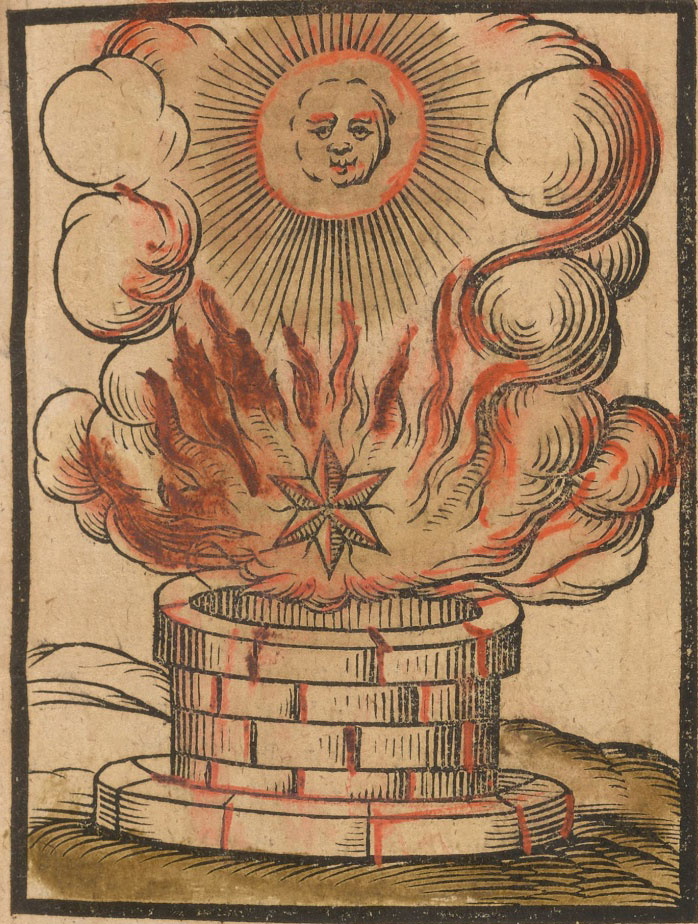
If you have virtue at hand,
with wisdom you attain both (of them).
After the foundation has been laid,
take hold of righteousness swiftly;
do no man wrong,
neither with words nor yet with deeds.
Burden no one with oppression;
whatever you do not gladly suffer,
spare your neighbour from the same;
live with him in all friendship.
And what you would have men do to you,
do the same to others, late and early.
This is the true law mark me well
which Nature herself teaches you.
If you will not keep this pure,
you cannot be pleasing unto God;
and after death you shall thereafter
not look upon heaven there.
Do not wound another man’s honour,
nor delight yourself in another’s goods;
strife, discord, wrath, also hate and envy,
and all evil desire shun these as well.
Show help to the godly with haste;
do good also to the wicked at times,
that they may harm you the less,
nor burden you with grievance.
Do not let yourself be drawn away from what is right;
flee far from gifts and bribes.
Likewise, love and hate treachery,
for men very often bring regret:
they blind a man’s sight,
and also turn him from the right path;
and many a time the last hour is already at hand.
You should consider this every day:
Ah God, how few people truly
can wholly avoid what is earthly,
and, before all things, rejoice,
lifting their hearts up into heaven.
For it is hard, I say here;
but the great reward, freely given,
makes all labour light upon earth.
What greater thing can come to man
than to know God, pure and clear
to see Him and to proclaim Him?
Therefore we should, late and early,
shrink from no labour, fear, or toil,
to attain that great good
which makes our heart rejoice;
while the lazy, after their custom,
[do nothing] but (fill) their belly with words.
The lazy would also like to enjoy
ease, and yet they alone begrudge the toil;
the path of wisdom is rough indeed
yet a hardworking man
may walk it easily.
Great is the reward, truly, I say.
Yet I must still teach you further;
I will rightly explain every matter to you:
why fire, and also the earth,
are nobler than the heavens are,
since they indeed have no need
of any other mover at all,
but act of themselves in the center,
or rightly desire thereto.
Therefore it is to be believed here
that the heavens, free in themselves,
as also fire and the earthy,
are each moved in their own proper way;
for Nature is much stronger
than its movement in its time.
God alone overcomes them
in the heavenly essence:
nothing greater and better, without mockery,
is there than to accept God.
But I mean Nature,
which is clear, pure, and clean,
and also its being without any compulsion:
it is the beginning of every thing;
nothing exists without it;
it remains always henceforth,
so long as the world stands, unwearied.
This is poured into everyone;
yet the shape I must confess
is what the Latins call Formas:
for it gives to all things alike
their being and their execution;
it also accomplishes its command,
which it has received from God.
Each thing, through the form,
has its being and its continuance,
as it is ordered by God;
thus it remains always fruitful.
This is Nature properly:
Form and Matter (mark me)
it far surpasses;
for it is a good beginning
from it, as created, proceeds the pure
since it is pure Nature.
So that we may speak of this otherwise with reason,
and talk without a false mouth,
and bring it forth clearly:
that Nature, with few things,
is content and well satisfied,
and even takes what is lowly for good.
Yet because of our sin at hand
we have no understanding of things:
all the human race
judges rightly only with the senses,
and all that floats before the eyes.
Therefore I also say: whatever lives
under Fortune’s rule
which indeed is all fulfilled by God
riches, comfort, joy, lordship,
come to men from above;
our will cannot give that.
Who is it that can turn these things aside?
But to strive against it does not help,
when such things are not done by God;
rather it harms us far more.
So many have burdened themselves,
with unrest they have mounted high,
against the will of God nonetheless.
They have become “poured out” (wasted),
and have shortened their own life;
whereas, at every time,
he to whom heaven is favourable,
often has great good fortune at hand:
without all labour and unrest,
without all wondrous hoping
fortune comes to him of itself,
and seeks him out at home in his huts,
and pours him over with grace,
so that he indeed attains
the highest good, lacking nothing at all.
So that one may also quench hunger
may it help them without ceasing!
Too much is enough for no man;
when we now daily have enough,
then people only complain harshly.
But whoever desires only “enough,”
he can bring it easily to pass;
for Nature, with few things,
is content and keeps silent still
which God indeed wills to have so.
Now I will also say at once
that which arises from understanding.
Since, then, the divine Nature
is thus pure also fair and clean
nothing vain at all is found (in it).
What God has created, indeed,
He has made it free in itself,
so that its power is not in vain,
nor hidden away in mockery.
Now God has been able to create
endless things take note of that
so that He has great power;
His power also shows itself in every way,
and has left nothing purposeless.
Therefore the Form is powerful and good,
if one rightly recognizes it;
for it is not defective
thus from it flows all power.
Therefore also the “shape” (Gestalt)
must be altogether manifold;
eternal benefit, as it is born,
is always perceived in them.
In it there is neither deceit nor guile,
nor is there any suspicion at all;
God’s foreknowledge is at hand,
which always opposes resistance.
So great is His wisdom and goodness,
which eternally grows green and blossoms;
the vapour from the mountains, always,
He gives as matter to the winds;
but in the air He makes the living (spirit),
moving by day and by night.
O Highest God, upon Thy throne,
be gracious unto me,
so that I may yet show
how one remains in the right path,
and how one so I freely say
may without ceasing be pleasing (to Thee).
First, forsake the lust of the flesh,
and wholly avoid it;
take heed firmly of the tree’s content:
it harms man in many ways.
The sweet and pleasant poison,
which strikes many men’s hearts
avoid it, I counsel you freely,
so that it does not rob you of your joy.
When the last hour comes,
then your goods and wealth fail;
money, goods, understanding you must lose,
and all that adorns your body.
For a small short pleasure (mark this well)
you sell off eternal life.
Then you will cry out, “How much!,”
when the goal of your end arrives,
when you see how swiftly time is at hand
how fast are year, month, and day!
How have I not neglected it sooner?
No comfort, I poor man, is there for me,
since you have flown away so soon,
and have departed from me so quickly.
Ah God, that my wish might succeed:
that I might become young again!
The Pythagorean teaching, pure,
would I take more to heart;
I would keep to the right side (path);
the harsh wind should not drive me off;
the narrow road would I now walk
as everyone should act uprightly
and always love wisdom,
which stands in eternity,
which gives praise and honour alone,
also in this temporal life,
and which can die neither here nor there,
nor perish even in death.
But me poor, unthinking
lust has brought to ruin;
now it is gone and wholly vanished,
and leaves me a deadly wound.
Ah God, in my youth
then improper desire assailed me hard,
and yet I also loved this and that:
they toyed with me, and made me carouse;
so I went idle, serving my belly,
and long waited on sleep besides.
I gave little thought to what is good,
but lay in nothing but shame;
I despised all good teaching,
and considered what is useful scarcely at all.
Now I am clumsy and rude,
have no one’s favour nor praise;
in body wholly poor and bare,
in understanding poor and reckless.
I poor man have, alas, lived
like one who drifts about in a dream,
who thinks he is truly awake;
yet he is mistaken and goes astray.
O you poor man, so foolish
you are without all wisdom.
You who, with your sins indeed,
have grievously angered God
now I instruct you herein
how you may be freed of sins.
First, with your mouth,
and likewise deep from your heart’s ground,
call upon God’s name with a flat (clear) voice,
so that it may open itself to you.
It is not enough to pray once:
true prayer has no number;
one must desire long and much.
God sets neither measure nor goal,
if otherwise a man here on earth
would become capable of the divine light.
Truly, a great oak
does not fall from a single stroke.
A drop alone mark me well
does not make a great stone hollow.
Moreover, the city of Rome, I say further,
was not built in one day.
How then would you, in such a fashion,
quickly obtain such things from God?
Then, with princes and lords
everyone has free access.
One must often run after Him for a long time,
until they speak with a steady speech (with Him).
Should not the eternal God and Lord
far surpass all others?
How could He then incline Himself to us,
and show us His grace and help,
if He is not forever
run to early and late
as one does many a time
with great lords everywhere?
Therefore every day henceforth,
two, three, four times without ceasing,
you should lift up your voice
and dedicate yourself to God the Lord.
Then, concerning sins indeed,
nothing secret will be revealed:
how we are to leave off sins,
I will show you.
First we would consider,
and lay the cause to light,
how and why a man, without mockery,
may serve God and please Him
when he has nobility, goods, and money,
splendour and lordship in this world.
Such things he cannot obtain;
for God the Lord does not turn His face
toward such things.
Ask not who is fair and mighty (here),
even because of these things,
which he holds for bad and of little worth:
He will not show us grace for them,
nor incline His ears to us.
Therefore I teach another way,
which brings us such honour.
How this now comes about
that I freely declare in this place:
First: readiness for cleanness/purity,
of the body and also of the soul;
through this one becomes pleasing to God,
and wisdom also becomes fitting to us.
For whatever is unclean in any way
God loathes this utterly;
for His life is surely
pure, noble, fair, subtle, and clear.
Therefore we should strive
that we not only shine outwardly,
but inwardly be clean and pure,
according to divine nature.
This to accomplish, in every thing,
Is hard, and by no means small.
Who can be without sin on earth?
Who is clean, without all blemish?
No one, truly; for every man hath
His fault and lack, early and late.
On earth is nothing so fair by nature,
That it hath not some vice upon it.
Yet there are certain sins before God,
So small and slight (I say it without mock),
That they do not wound him sorely,
Nor make him unready for the journey;
For they are not evil sores,
But rather small infirmities,
That show themselves upon the body.
These God doth forgive us,
He knoweth how weak and wholly mortal
Man’s nature is, plainly seen.
But the heavy sin, abominable,
God hateth all, from the heart, grievously;
The knaves he curseth first of all,
And such he cannot hear at all,
Unless they bewail their wickedness,
And humbly appear before God.
Wash also away your sin at once,
With tears from the heart’s deep ground;
Clothe yourselves from black into white,
For your salvation and God’s praise.
Lament also sorrowfully your guilt,
And call upon the Divine favor;
Step soon upon the path of Virtue,
And live uprightly before every man.
Cast off your rough skin as well,
After the manner of the old serpent,
Which in May draws off its skin,
And again creeps forth anew.
Leave the skin clinging to the stones,
And lift your head toward Heaven;
Be bold and courageous, unconquered,
Hiss with your threefold tongues.
In this way God is reconciled,
Who formerly was angered against us;
If one calls upon Him in this manner,
He graciously lets Himself be entreated by us,
So that we have the Divine voice,
And belong to Him alone.
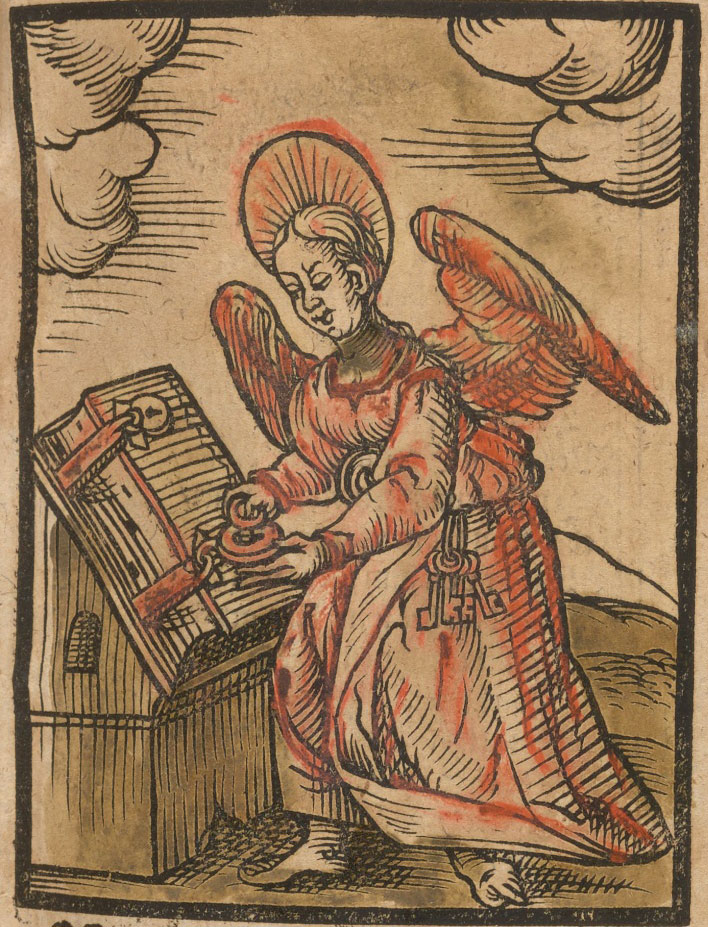
One (thing) is good for the white bath as well;
To it, too, the red colour belongs.
Fair seems the countenance, at any time,
When white and red are mingled in their prime.
Say what does the red hue here betoken?
Nothing else but gentle Love, unbroken.
Love is likened unto Fire by name;
It gives of itself a ruddy flame.
From it go forth both warmth and shining light;
Therefore it must needs be held aright:
That we should greatly love God here on earth,
So that we too be loved of equal worth.
Who burns toward God in love indeed,
With such a fire within his heart enkindled,
Lives therewith devout and just and right;
Such a man by Him is not despised.
What he desires is granted unto him,
That he may lead a blessed life within.
In such a wise, I say for certain plain,
All sin is wholly swept away again,
And also, straightway, without ceasing,
He is endowed with Wisdom great and pleasing
Which here upon this world below
Cannot be purchased with money, though;
Therefore, of Wisdom (without mock or scoff)
It must be won from God alone, not bought.
In such wise, as I truly say,
I have faithfully shown it clear.
Therefore, if thou wouldst have Wisdom,
And rightly understand the Mystery
Of Nature and the Fifth Essence,
Of which I have read full much,
Then must thou in truth beseech God,
That He may reveal the same unto thee,
And therein also lend thee aid,
To give thee Wisdom and Understanding;
So that thou also, with thine own sight,
Mayst behold the bright Light,
Which very many have seen.
Yet first of all call upon God
For true Wisdom and Understanding,
Which all have attained,
When they have but prayed for it,
So far as they also became devout,
And thus inclined themselves unto God,
As I have shown before.
Then may we, without mockery,
Perfectly hearken unto God,
And behold the eternal Light,
From Face to Face.
God is the ever-enduring Sun,
Of the good a heavenly Fountain;
Whoso here hath this Prince,
The same standeth ever in peace,
And doth also far surpass, pure,
All other men in common.
He feeleth also heavenly power,
And is made partaker of divine help;
Which I also, as the highest Good,
Do perceive within my mind.
For He, through His subtle teaching,
Openeth unto us many secrets.
On earth there is no fairer thing,
So noble, high, and not small,
That maketh us blessed and rich,
So that vile poverty must yield;
And those who yet dwell upon earth
Are already high in heaven,
When they have the glorious Virtue.
Few doth God endow therewith.
Askest thou what it is called, and what it is,
I answer thee freely: Wisdom,
To which all goods here upon earth
Can in no wise be compared.
No greater good henceforth
Can God bestow upon mankind;
Straightway must all money
And goods that are in this world
Give way:
The gold that Hermus and Tagus,
And Dactolus too, in abundance
Do carry and from them pour forth,
Is not to be compared at all
With this Virtue.
Yea, all kingdoms, though praiseworthy,
It surpasseth Art and Wisdom by name.
It is the highest, without any choosing;
Heroes it doth beget as well.
Blessed is he, early and late,
Whom God hath with it endowed.
Now might one also ask yet more:
What then is that same Wisdom?
It is the highest Science,
Whereby the mind is made pure and true,
Without all earthly attachment,
And also without the compulsion of desire;
It ascendeth to the best Good,
And taketh delight therein;
It maketh its dwelling also in Heaven,
And despiseth all foolish things.
All things wanton and wholly perishable,
The wise mind perceiveth evermore;
Even as the fire standeth above itself,
So doth it wholly flee what is earthly.
Unto high things is it intent;
It can well know both evil and good,
And separateth the false from the truth,
Which yet abideth always.
The truth no man can blot out;
For it shineth unto us night and day.
And the marked star so clear
May utterly destroy his power,
In which star we plainly see
That it alone is perfect;
For the ancient Sages, pure and true,
Have found it for their Stone
Through their sharp wit, so wise,
Which hath given them enough.
A certain maintenance, moreover,
Have they had in every place;
They lacked neither victuals nor money
So long as they lived in the world.
In this manner have they likewise
Many lands, cities, and kingdoms.
Experienced, and many other things besides,
That art, wisdom, and doctrine have brought him.
Nothing is more glorious than she (Wisdom),
Here in this bewildered life.
Yet no man can become wise,
Unless he drive from himself
All vices and unclean sin,
And make his heart pure;
For Wisdom, bright and clear,
Dwelleth not (in truth)
In any unclean mind.
Hate also, as a thing pure and tender,
All that is of unclean kind.
Furthermore belongeth unto Wisdom
Natural forethought,
And Astronomy in abundance;
Thus one climbeth the ladder
Unto Wisdom, high and subtle.
Of this I could yet say much,
But it might weary some;
I must now conclude the book.
O highest God upon thy throne,
A King of kings, devoutly served,
Thou who through thy Wisdom hast
All things at the last ordained and fashioned.
O Thou Beginning, Middle, and End,
To whom all things obedient stand,
Than whom, at every time and tide,
Nothing is better, nothing more glorified;
Thou who above the heavens all
Art exalted, with rich-sounding call,
And dwellest in blessedness,
Now and for ever, in eternity;
My heart toward Thee most fervently
With sighing doth uplift itself,
And calleth upon Thee every hour;
Thee also I beseech from heart’s deep ground:
That Thou wouldst to my labour grant
A good end and blessed event,
That it may a happy issue win
Through Thy help and grace within;
Enlighten most of all my heart,
O Lord, with Thy Holy Spirit;
For Thy wisdom hath no number,
Thy power is wholly infinite;
Thy glory, might, and sovereignty
Appear in manifold variety;
When now my soul well from the place,
From the prison of my body, goes forth,
And with it, ready, fear three things:
Namely sin and mutability.
It will seek Heaven there,
And thenceforth be wholly perfect.
For whoever dwells gently with God,
He attains likewise a godly nature.
O thou high Heaven above all,
Thou fair, royal hall,
How pure art thou, how clean and clear,
How glorious and how wonderful!
Being of stars and planets,
Thou givest forth of thyself a noble shine.
Thou art full of delight and joy;
In thy realm one lives right well.
But since in thee the earth is of little account,
It too hath far fairer things
Than here in the world, the worst house,
And a wretched vale likewise set before it.
What is there, compared with thee, to be held fair,
Where the angels in high throne
Stand before the Divine Majesty,
And praise Him eternally, early and late?
Yet one thing more will I set forth,
That thou also mayest have knowledge of it.
As for my age, as I truly say,
Which is three and twenty years,
I will not conceal from thee either
That I am bound to service
Already to a most high-worthy Prince,
And am to him wholly subject;
I have also still my portion under him,
And also wish him luck and welfare,
Since, through God’s gift,
I have completed this little book of mine
With much labor and many things;
Let it now be finished by me.
How can I thank thee enough,
Thou heavenly King, wise and prudent,
That I have ventured myself
To take up, with careful heed of Nature,
Her fair and glorious works, steadfast,
And to set them forth thus before the hand?
Thou hast also, besides this, given me
Help, strength, power, and victory,
That I have been able to carry it out.
Praise, honor, laud, and fame are all thine.
Whatever therein is fine and good,
The same flows forth from thee.
Thine is the beginning and the end.
Thou hast given me heart, mind, and hand;
Therein Thou hast guided me without mockery.
To Thee I say thanks, Thou highest God.
Thine is, as was foretold, the praise.
To Thee I bring all things home with diligence.
Thus I beg Thee from the ground of my heart:
When my last hour shall come,
And I must leave this life,
Which I have spent in abundance,
Passing my waking hours without sleep,
And even by day with much disquiet,
Consumed in all bitterness,
In pain, affliction, and labor
(as one to whom misery is pitiful,
Yet to a discerning man well known),
How much anguish and distress there is without measure
I have said before.
Therefore I beg Thee, as aforesaid,
Thou wilt graciously
Lead me out of this world,
And have mercy upon me,
That I may stand, O Lord, before Thee.
Lord, blot out my sin for me.
Forgive me my guilt beforehand,
which I may have committed,
out of dullness and darkness,
through the distress of weak flesh.
And in thy goodness grant me,
to dwell forever in thy kingdom,
so that I may also praise
thy Majesty always, early and late.
Hear now, thou my dear little book:
search through many a place and many a town.
Thou wilt see much envy and hatred;
they will add to thee without measure,
and rage and storm against thee;
few (I fear) will praise thee.
Everyone will mock thee.
Thou wilt also find many people
who, for themselves, write nothing noble,
yet from thee only draw their scoffing,
and in this way shame thee as well;
they will not cease from it at all.
They also seek praise and honor for themselves,
while they greatly rail at others
those savage wolves and dogs
thou shalt avoid at every hour.
Seek out pious and learned folk;
though there are few of such today;
yet be content with a few,
and be wholly thankful.
Little good is found upon the earth;
evil runs through all places.
Therefore go only to the godly;
our labour is to discover it.
If it please them rightly,
then that is enough.
What the common crowd may say of it
of that you need not complain much.
Despise their shame and slanderous words;
in ignorance they go on speaking.
Their judgement and their mind are weak;
let not this matter lead you astray.
Fools and simpletons
only foolish things please them.
Each one, with diligence, after his own taste,
seeks for himself a special drink and food.
Not everyone strives after one and the same thing,
as one sees plainly today;
but the wise and the pious
have gladly received it at all times.
What is honest and virtuous
is a shame to them all.
Such books they hold in high esteem
and they still like to read them.
That is their food and comfort besides,
therein they have joy and rest.
To such people shalt thou be fitting,
and without doubt be welcome.
They will be disposed toward thee
with a wholly cheerful countenance.
Therefore go forth, my dear book,
remain long, for all men’s curse.
Turn thyself unto all peoples,
make me known in every place.
Spread abroad my labour at all times
over the whole wide face of the earth.
Finish.
Printed at Halle in Saxony by Peter Schmidt, at the publishing expense of Joachim Krusicke.
In the year 1618.